
Planting
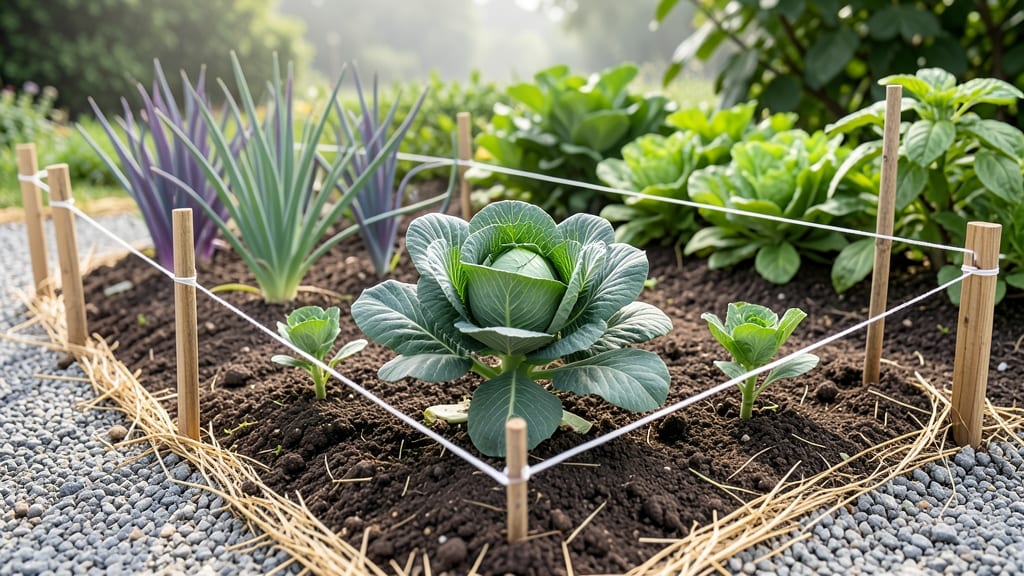
Proper cabbage garden spacing determines whether your 🥬 plants grow into tight, rotten heads or plump, disease-free harvests—and the difference is all in the math.
If you’ve ever watched your cabbage seedlings crowd together, only to see heads split or rot before harvest, you’re not alone. Overpacking steals nutrients, spreads pests, and leaves you with smaller yields—not to mention the frustration of wasted effort.
The right spacing, though, turns that into a game-changer for both size and health.
In this guide, I’ll break down the exact row distances and plant-to-plant spacing for every cabbage variety—from bok choy to savoy—plus how soil type and climate tweak those numbers. You’ll also learn how to fix common spacing mistakes before they ruin your harvest.
By the end, you’ll know exactly how far apart to plant your cabbage for bigger heads, fewer pests, and a smoother growing season—no guesswork required.
Optimal cabbage plant spacing by variety: row distances for maximum growth
Getting your cabbage spacing right isn't just about fitting more plants into your garden—it’s the foundation for bigger heads and healthier plants. Too close, and you’ll battle pests and diseases; too far apart, and you waste valuable garden space.
The key lies in understanding how each cabbage variety responds to space, from compact bok choy to sprawling savoy cabbage.
Proper spacing also impacts air circulation, which reduces fungal diseases like black rot and downy mildew. When plants are crowded, moisture lingers longer, creating the perfect environment for pathogens.
Meanwhile, adequate space allows sunlight to reach all leaves, ensuring even growth and uniform head formation. Let’s dive into the exact measurements that work for each type.
For green cabbage and red cabbage, maintaining 18-24 inches between plants ensures their 6-8 inch heads develop without competition. These varieties are heavy feeders, so spacing also prevents nutrient depletion in the soil.
I’ve found that 30-36 inches between rows gives me enough room to maneuver my hoe for weed control without disturbing the roots.
If you’re growing savoy cabbage, give them a little more room—24-30 inches apart—because their crinkled leaves create more surface area for pests like cabbage moths. The wider row spacing (36-42 inches) helps improve airflow, which is critical for preventing fungal diseases.
I’ve lost entire rows of savoy cabbage to downy mildew in the past, so I now treat spacing like a non-negotiable.
Bok choy and mini cabbage are the exceptions to the rule, thriving in tighter quarters. Bok choy’s 6-12 inch spacing lets you fit more plants in a small garden, while mini cabbage’s 12-16 inch spacing works perfectly for container gardening. These varieties are also bolt-resistant, making them ideal for warm-season planting when larger cabbages might struggle.
One mistake I see often is assuming all cabbages need the same space. Overcrowding leads to stunted growth, while overspacing wastes space you could use for companion plants like radishes or onions, which deter pests.
For example, I plant radishes between cabbage rows—they mature quickly, break up the soil, and confuse cabbage moths with their strong scent.
For succession planting, I recommend staggering your bok choy every 2-3 weeks in spring and fall. This ensures a continuous harvest without overloading your garden at once.
Meanwhile, larger varieties like savoy cabbage should be planted in blocks rather than single rows to maximize space efficiency and make harvesting easier.
Always adjust your spacing based on your garden layout. If you’re using raised beds, you can space plants slightly closer together (e.g., 16-20 inches for green cabbage) because the soil stays warmer and drains better. Just monitor your plants closely
How to adjust spacing for different soil types and climates
Your cabbage plants thrive in ideal conditions, but soil type and climate can drastically alter the spacing rules. Heavy clay soil, for example, drains poorly and compacts roots, while sandy soil loses moisture too quickly.
These differences mean you’ll need to adjust both row spacing and plant-to-plant distances to avoid stunted growth or disease.
Climate plays a role too—high humidity or frequent rain can spread fungal diseases faster, so wider spacing becomes even more critical. Meanwhile, dry climates may require closer spacing to conserve moisture. Let’s break down how to tweak your cabbage spacing for these variables while keeping yields strong.
🚨 WARNING: Overpacking in heavy clay or humid climates can lead to rotten heads and pest outbreaks. Adjust your spacing by 10-20% wider than standard guidelines in these conditions.
For example, if standard spacing is 18 inches apart, increase it to 20-22 inches in clay soil to prevent root suffocation.
⚠️ Soil and Climate Adjustments for Cabbage
Heavy Clay Soil: Increase spacing by 20% (e.g., 22" instead of 18") to prevent root rot. Add organic matter like compost to improve drainage.
Sandy Soil: Reduce spacing by 10% (e.g., 16" instead of 18") to conserve moisture. Mulch heavily to retain water.
High Humidity: Space rows 12-18 inches apart (instead of 12") to improve airflow and reduce fungal diseases like downy mildew.
Dry Climates: Use succession planting with closer spacing (e.g., 16" apart) to maximize water efficiency.
For transplanting crowded seedlings, thin them aggressively. If seedlings are 2-3 inches tall but packed too closely, remove every other plant immediately. This prevents competition for nutrients and reduces the risk of cabbage loopers or aphids spreading from plant to plant.
In succession planting, space your second planting 3-4 weeks after the first to extend harvests. Use the same spacing guidelines but stagger rows by 12-18 inches to avoid overcrowding as both batches mature. This works especially well in cool-season climates like Zone 5 or 6.
Finally, monitor your cabbage’s leaf growth as an indicator. If outer leaves start yellowing or curling inward too early, it’s a sign of root stress from poor spacing. Adjust by thinning or adding compost to improve soil structure.