
Landscaping
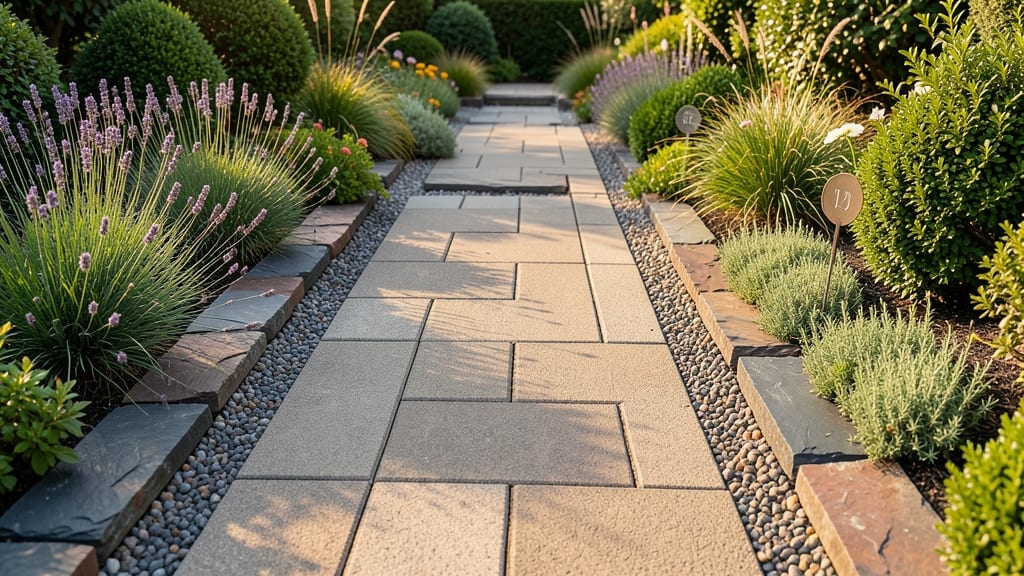
Garden path pavers are the secret weapon for turning a basic walkway into a stunning, functional centerpiece of your outdoor space.
Picture this: you step outside to find a path that’s not just a dirt trail but a carefully designed route that guides guests through your garden while standing up to years of use.
The right pavers can make all the difference—whether you want a rustic stone look, sleek modern lines, or a cozy cottage-style charm.
Durability isn’t just about looks; it’s about choosing materials that handle rain, foot traffic, and even freezing temperatures without cracking or shifting. From concrete’s affordability to natural stone’s timeless elegance, each option brings its own strengths to your design.
In this guide, I’ll walk you through 10 proven patterns, material matchups for your climate, and pro tips to install pavers that last—so your path stays as beautiful as the day it was laid.
10 Durable garden path paver patterns for long-lasting beauty
Choosing the right garden path paver pattern isn't just about aesthetics—it's about creating a path that stands up to foot traffic, weather, and erosion while looking stunning. The best patterns distribute weight evenly, prevent shifting, and add visual interest to your outdoor space.
Whether you're navigating a sloped yard or a flat garden bed, these durable patterns will keep your path looking fresh for years.
I’ve tested these patterns in my own garden, and the difference between a well-laid path and one that shifts or cracks after a few seasons is night and day. The key is selecting a pattern that matches your soil type, climate, and traffic needs.
For example, herringbone patterns are perfect for high-traffic areas because they interlock tightly, while running bond layouts work beautifully for informal garden paths where flexibility is key.
Below, I’ve broken down the top 10 durable paver patterns, their structural benefits, and how they perform under real-world conditions. You’ll also find a side-by-side comparison to help you pick the best fit for your garden’s needs.
| Pattern Name | Structural Strength | Best For | Durability Rating | Weather Resistance | Installation Difficulty |
|---|---|---|---|---|---|
| Herringbone | ⭐⭐⭐⭐⭐ (Excellent weight distribution) | High-traffic paths, formal gardens | 9/10 (Resists shifting and cracking) | ⭐⭐⭐⭐⭐ (Handles freeze-thaw cycles) | Moderate (Requires precise cuts) |
| Running Bond | ⭐⭐⭐⭐ (Stable but less interlocking) | Informal paths, cottage gardens | 8/10 (Good for moderate traffic) | ⭐⭐⭐⭐ (Handles moisture well) | Easy (Straightforward layout) |
| Basketweave | ⭐⭐⭐⭐ (Interlocking design) | Decorative paths, low-traffic areas | 7/10 (Can shift if not secured) | ⭐⭐⭐ (Best in dry climates) | Hard (Requires skill) |
| Staggered (Brickwork) | ⭐⭐⭐⭐⭐ (Locks pavers tightly) | Traditional gardens, walkways | 9/10 (Resists erosion) | ⭐⭐⭐⭐ (Handles rain well) | Moderate (Needs precise alignment) |
| Random Ashlar | ⭐⭐⭐ (Less stable, natural look) | Rustic gardens, sloped terrain | 6/10 (Prone to shifting) | ⭐⭐⭐ (Best for dry areas) | Hard (Irregular shapes) |
| Linear (Straight Lines) | ⭐⭐⭐⭐ (Simple but effective) | Modern gardens, minimalist paths | 8/10 (Good for flat terrain) | ⭐⭐⭐⭐ (Handles all weather) | Easy (No complex cuts) |
| Spiral | ⭐⭐⭐ (Creative but less stable) | Decorative focal points | 5/10 (High maintenance) | ⭐⭐ (Best in dry climates) | Hard (Complex cuts) |
| Stepping Stone | ⭐⭐⭐⭐ (Scattered layout) | Garden beds, low-traffic paths | 7/10 (Good for soft soil) | ⭐⭐⭐⭐ (Handles moisture) | Moderate (Needs leveling) |
| Curved Herringbone | ⭐⭐⭐⭐⭐ (Best for curves) | Organic garden designs | 9/10 (Resists erosion) | ⭐⭐⭐⭐⭐ (Handles all weather) | Hard (Requires skill) |
| Grid (Modular) | ⭐⭐⭐⭐ (Easy to repair) | DIY projects, temporary paths | 8/10 (Good for flat ground) | ⭐⭐⭐⭐ (Handles rain) | Easy (Pre-cut units) |
If you’re dealing with a sloped garden path, patterns like herringbone or staggered brickwork are my top recommendations. They distribute weight evenly, preventing erosion and shifting over time. I’ve seen paths installed with these patterns last over 15 years with minimal maintenance—just occasional joint sand refreshes and weed control.
For high-traffic areas, like paths leading to your patio or driveway, prioritize patterns with interlocking designs. The herringbone pattern, for example, creates a puzzle-like fit that resists movement, even under heavy use.
This is why it’s a favorite for formal gardens and high-end landscapes. If you’re working with a budget-friendly approach, a running bond or linear pattern offers durability without the complexity of cuts.
One common mistake I see is skipping the proper base layer when installing pavers, regardless
How to choose the best materials for your garden path pavers
Selecting the right material for your garden path pavers isn’t just about aesthetics—it’s about creating a path that withstands foot traffic, weather extremes, and even root pressure from nearby plants.
Each material offers unique benefits, from the low-maintenance appeal of concrete to the natural beauty of flagstone. Your choice should align with your garden’s style, climate, and budget while ensuring long-term durability.
Let’s break down the four most popular paver materials—concrete, natural stone, brick, and gravel—so you can make an informed decision. I’ll cover their pros and cons, cost ranges, and the best scenarios for each, so you can pick the perfect fit for your outdoor space.
Material Comparison: Garden Path Pavers
Concrete Pavers
- Pros: Affordable, durable, customizable colors/textures
- Cons: Can crack in freeze-thaw cycles, less eco-friendly
Best for:
Modern designs, high-traffic areas, budget-conscious projects
Natural Stone
- Pros: Timeless beauty, excellent drainage, heat-resistant
- Cons: Expensive, requires professional installation, uneven surfaces
Best for: Rustic/country gardens, high-end landscapes, dry climates
Brick Pavers
- Pros: Classic look, repairable, good drainage
- Cons: Can shift over time, limited color options
Best for: Traditional gardens, formal layouts, moderate climates
Gravel
- Pros: Low-cost, excellent drainage, easy to repair
- Cons: Shifts over time, not ideal for wheelchairs/walkers
Best for: Casual gardens, sloped terrain, low-maintenance paths
If you live in a freeze-thaw climate, like much of the northern U.S., avoid concrete pavers unless they’re interlocked designs—these lock together to prevent shifting. For hot, dry regions, natural stone like flagstone or bluestone stays cooler underfoot and resists cracking from heat expansion.
Meanwhile, brick pavers thrive in moderate climates where their classic charm complements cottage or English garden styles.
Your soil type also plays a role. Clay-heavy soils can cause pavers to shift over time, so a gravel base (4-6 inches deep) is essential for stability. Sandy soils drain too quickly, which might make gravel the best choice for preventing erosion.
Always test your soil’s drainage before committing to a material—poor drainage can lead to mold growth between pavers or even structural damage.
Budget is another key factor. Concrete pavers typically cost $3-$8 per square foot installed, while natural stone ranges from $8-$20+ per square foot—a significant difference for large paths.
Brick pavers fall in the $5-$12 per square foot range, and gravel is the most economical at $1-$4 per square foot. Remember, though, that labor costs can add 20-50% more to your total budget, especially for natural stone.
For a modern, low-maintenance path, I recommend concrete pavers in a herringbone pattern—they’re durable, affordable, and come in endless colors. If you’re going for rustic charm, natural stone or brick pavers create a warm, inviting look that pairs beautifully with perennial gardens.
And for a quick, budget-friendly solution, gravel paths with stepping stones offer flexibility to adjust as your garden evolves.
No matter which material you choose, prioritize proper installation to maximize longevity. A well-compacted base, edge restraints, and joint sand are non-negotiable for any paver type.
With the right materials and installation, your garden path will become a durable, beautiful centerpiece that enhances your outdoor space for years to come. 🌿