
Picking
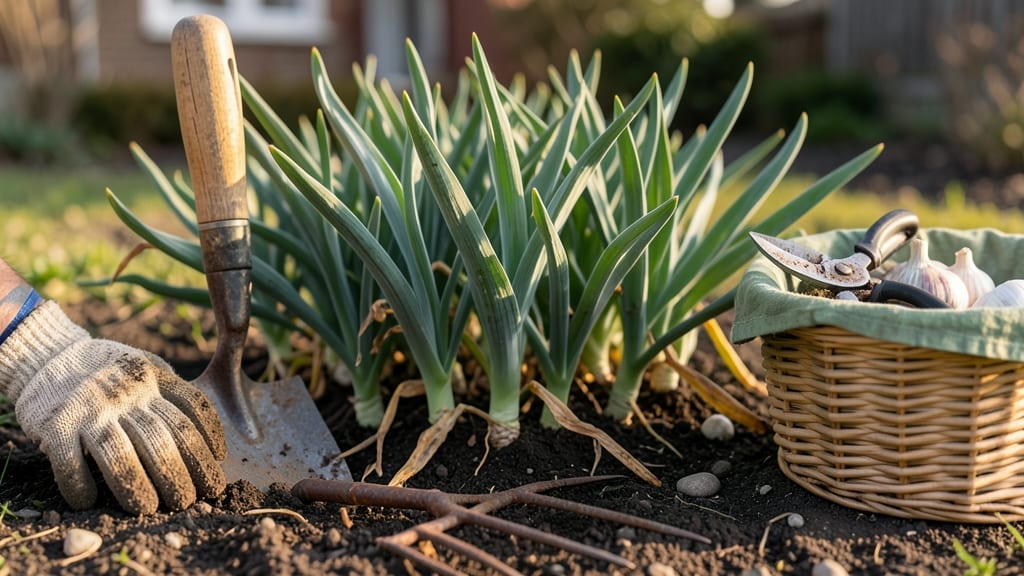
Picking garlic from your garden at the right time transforms it from a simple harvest into a flavor-packed victory—so timing is everything.
Picture this: you’ve nurtured your 🧄 cloves all season, only to pull them too early and end up with tiny, pungent bulbs—or worse, leave them too late and watch them rot in the soil.
Knowing the exact moment to harvest is the key to storing garlic that’s plump, sweet, and ready for months of use.
In Zone 6a, where fall planting is the norm, the window narrows to just a few weeks in late summer. But the real secret isn’t the calendar—it’s what your plants are telling you.
Lower leaves turning brown, bulbs firming up under your fingers, and papery skins forming around the cloves? That’s your cue.
Below, I’ll walk you through the three foolproof signs your garlic is ready, plus how to cure and store it for maximum shelf life—because even the best harvest won’t last if you skip these steps.


3 Visual clues your garlic is ready for harvesting
Harvesting garlic at the right time transforms your labor into a pantry full of robust, flavorful bulbs. But how do you know when those underground treasures are perfectly ripe? Unlike many vegetables, garlic doesn't give obvious external signals like fruit ripening.
Instead, you'll need to watch for three key visual cues that reveal when your plants have reached peak maturity.
The most reliable indicator is the lower leaves turning brown and crispy. This isn't the same as yellowing from disease—it's a natural sign that the plant is redirecting energy from leaf production to bulb development.
I've learned the hard way that waiting too long after this change can actually reduce storage life, while harvesting too soon means smaller, less flavorful cloves.
Here's where many gardeners make mistakes: focusing only on the leaves. The bulb size and stem condition also play crucial roles. A fully mature garlic bulb should feel firm when gently squeezed, with papery skins forming around each clove.
These visual and tactile clues work together to give you the perfect harvest window.
🌱 How to Spot Perfectly Ripe Garlic
-
1. Lower Leaves Turn Brown & Crispy
The bottom 3-4 leaves should dry up completely while upper leaves stay green. This happens 4-6 weeks before harvest. -
2. Bulbs Feel Firm When Gently Squeezed
Dig up one bulb to check - it should be 2-3 inches wide with well-defined cloves wrapped in papery skins. -
3. Stems Bend Easily When Pulled
The flower stalk (scape) should bend at the base when you gently pull upward - a sign of maturity. -
Bonus: Papery Skins Fully Formed
Each clove should be completely wrapped in dry, white papery layers - this protects during storage.
The leaf browning process actually begins at the base and works upward. I recommend checking your garlic plants weekly during the final growth stages by gently lifting one plant to examine the bulb.
This non-destructive check lets you monitor progress without risking the entire crop. Remember, garlic bulbs continue growing even after the leaves start browning, so timing is everything.
One common misconception is that garlic must be harvested when all leaves are brown. This isn't true! In fact, harvesting at this stage often results in smaller bulbs with poor storage life.
The ideal time is when about half the leaves have turned brown while the other half remain green. This balance indicates the plant has completed most of its energy transfer to the bulb below ground.
Let me share what I've observed in my own garden: hardneck garlic varieties often show these maturity signs earlier than softneck types. For example, my Music variety typically shows browned leaves around mid-July in my Zone 6a climate, while Silverskin garlic might not be ready until early August.
Always check the specific variety's growing days for your region.
Don't overlook the stem condition as your final confirmation. When garlic is ready, the flower stalk (called a scape) should bend easily at the base when you gently pull upward. This flexibility indicates the plant's energy has shifted from top growth to bulb development.
If the scape snaps instead of bending, your garlic may still need a few more weeks to mature.
Here's a quick test you can do right in your garden: gently dig up one bulb when you notice the first brown leaves. If the bulb is 2-3 inches wide with well-formed cloves wrapped in papery skins, your garlic is ready.
If it's smaller than a golf ball, wait another week and check again. This simple test has saved me from harvesting too early more times than I can count!
Remember that garlic harvest timing also depends on your climate zone. In warmer regions, these visual cues may appear earlier, while cooler climates might need an extra 2-3 weeks.
The key is to watch for these three signs working together: browned leaves, firm bulbs, and flexible stems. When all three align, you've found your perfect harvest window.
Once you've confirmed your garlic is ready, act quickly! The bulbs will continue to grow underground for another 2-3 weeks, but the leaves provide protection from sun and rain. Harvesting too late can lead to skin splitting and reduced storage quality, while harvesting too early means smaller, less flavorful cloves.
These visual cues give you that perfect narrow window where timing is everything.
Best time of year to harvest garlic by climate Zone
Harvesting garlic at the wrong time can ruin months of hard work, but your climate zone plays a bigger role than you might think. In cool climates like Zone 6a, where I garden, the ideal harvest window is tight—just a few weeks in late summer.
But in warmer zones like Zone 8 or 9, garlic may mature months earlier or later, depending on when you planted.
Garlic thrives in cool-season growing, which means timing varies dramatically. If you planted in fall (October-November), most zones will see harvests between July and August.
Spring-planted garlic, however, may need to be harvested as early as June in warm zones or as late as September in cooler regions.
| Climate Zone | Planting Time | Harvest Month | Key Cue |
|---|---|---|---|
| Zones 3-5 (Cool) | Fall (Oct-Nov) | July-August | Lower leaves brown |
| Zone 6a (Moderate) | Fall (Oct-Nov) | Late July-Early Aug | Bulbs firm to touch |
| Zones 7-9 (Warm) | Spring (Feb-Mar) | June-July | Papery skins form |
| Zone 10+ (Hot) | Winter (Dec-Jan) | April-May | Stems bend easily |
In my Zone 6a garden, I’ve learned that July is critical—don’t wait until August unless you’re in a cooler microclimate. The moment the lower leaves turn brown and the bulbs feel firm when gently squeezed, it’s time to harvest.
If you’re in a warmer zone, like Zone 9, you might need to harvest as early as June to avoid heat stress.
For spring-planted garlic, watch for the papery skins forming around the cloves—this is your best indicator. In Zone 7-9, this often happens by late June, while in cooler zones, it may stretch into early August.
The key is to act quickly once you see these signs, as garlic bulbs can overmature and split if left too long.
If you’re unsure, dig up one test bulb to check its size and firmness. A fully mature bulb should have layers of papery skin and feel solid when squeezed.
If it’s still small or soft, wait another week. Remember, garlic doesn’t store well once harvested, so timing is everything for that perfect harvest.
Once you’ve mastered the timing, the next step is proper curing, which I’ll cover in the next section. Trust me, your future self will thank you for paying attention to these climate-specific cues!