
Tools
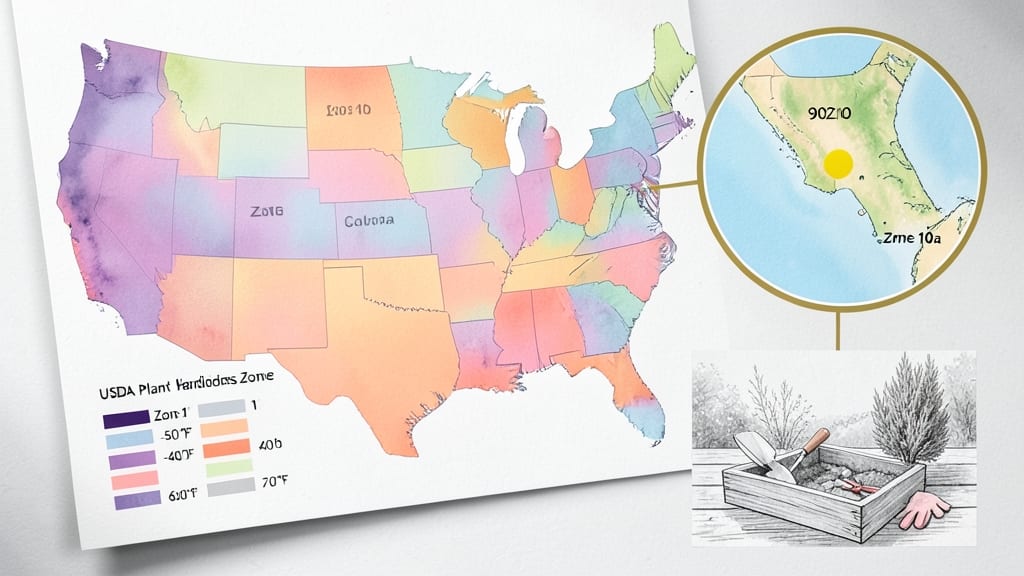
To find your garden zone map by zip code, use the USDA Plant Hardiness Zone Finder by entering your location—this reveals your frost-resistant zone, helping you select plants that thrive in your local climate for healthier growth.
The USDA Plant Hardiness Zone system divides North America into 13 main zones (1-13) based on average annual minimum temperatures, with each zone further split into a and b subzones. 🌱 For example, Zone 5b ranges from -15°F to -10°F, while Zone 9a spans 20°F to 25°F—this temperature range directly impacts which plants will survive winter in your area.
Knowing your zone helps avoid costly mistakes like planting tropical species in cold climates or frost-sensitive plants in warm regions.
Once you've identified your zone, you can match it to plants' hardiness ratings (like those on seed packets) to ensure success. Many nurseries and gardening apps now integrate this system, making it easier than ever to plan your garden layout with confidence.
💡 In This Article
- How USDA Plant Hardiness Zones Determine Your Gardening Success
- Best Free Tools to Locate Your Garden Zone by Zip Code
How USDA plant hardiness zones determine your gardening success
The USDA Plant Hardiness Zone system is built on average annual minimum temperatures, measured over a 30-year period—this baseline helps predict which plants can survive winter's coldest nights.
For example, Zone 3 (the coldest) endures temperatures as low as -40°F, while Zone 10 (the warmest) rarely drops below 30°Fa and b subzones, representing a 5°F difference—like Zone 7a (-10°F to 0°F) versus 7b (0°F to 10°F).
This precision matters because a 5°F shift can mean the difference between a thriving rose bush and a frozen one.
Frost-free periods also play a critical role. Plants in Zone 5 (like peony bushes) need 140-160 days of frost-free growing time, while Zone 9 (think citrus trees) thrives with 240+ days.
The system accounts for these variations by mapping microclimates—urban areas often run 2-5°F warmer than rural zones due to heat absorption from buildings and pavement.
This urban heat island effect can push a city's zone up by half a level (e.g., Zone 6b instead of 6a), making local adjustments essential for accurate gardening.
Understanding your zone translates directly to plant selection. A zone 4 gardener (like in Minneapolis) can safely grow hardy perennials such as coneflowers or daylilies, but would risk killing tender annuals like impatiens with a single late frost.
Meanwhile, a zone 10 resident (like in Los Angeles) might struggle with cold-sensitive crops like tomatoes unless using row covers. The zone system acts as a survival guide, ensuring your plants match your climate’s extremes.
Here’s how to interpret zone labels on seed packets: A plant marked "Zones 5-9" means it tolerates -20°F to 30°F winters, while "Zone 10+" indicates it needs consistent warmth above 30°F.
This labeling aligns with the USDA’s 13 main zones, but remember—microclimates and elevation changes (like mountains being 3-5°F colder per 1,000 feet) can shift your effective zone. For instance, Denver (Zone 5b) might feel like Zone 6a in sheltered garden spots.
Beyond temperature, zones indirectly influence soil health and rainfall. Cooler zones (like Zone 3) often have shorter growing seasons and acidic soils, while warmer zones (like Zone 10) may face drought stress.
Knowing your zone helps you adapt: Zone 4 gardeners might prioritize mulching to extend the season, while Zone 9 growers focus on shade cloth to protect plants from summer heat. The system isn’t just about cold tolerance—it’s a framework for holistic garden planning.
To visualize this, imagine planting a blueberry bush in the wrong zone. In Zone 6 (-10°F to 0°F), it thrives, but in Zone 8 (10°F to 15°F), it may struggle without winter chilling—a critical factor for fruit production.
The USDA zones simplify this complexity, turning gardening from guesswork into a data-driven strategy. 🌿