
How To
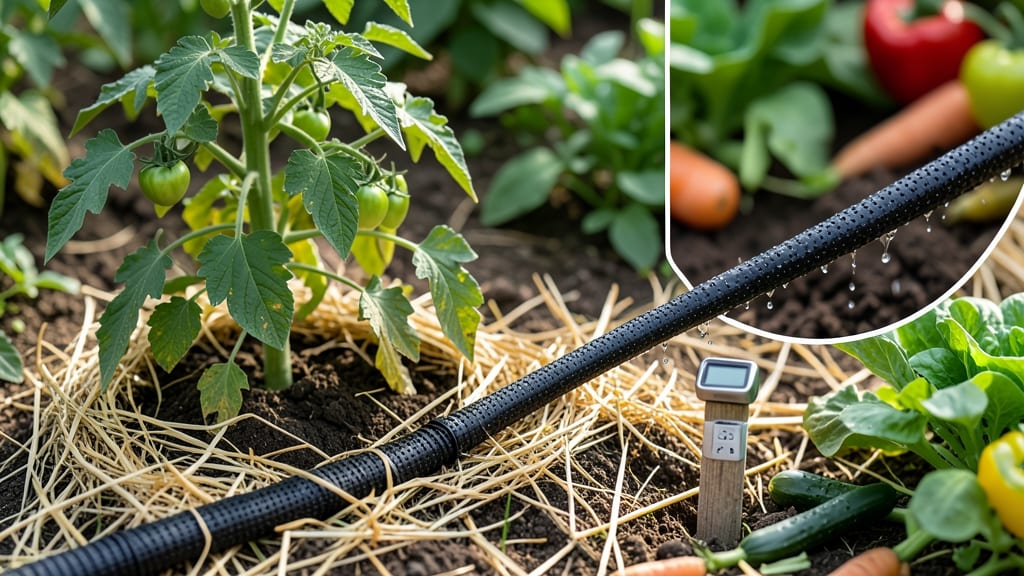
Leaving a soaker hose on your vegetable garden for the right amount of time ensures deep, even watering without drowning your 🥬—and the answer depends more than you think on what’s growing.
Struggling to balance overwatering and underwatering with your soaker hose? The right duration makes all the difference between thriving vegetables and wilted disappointment.
Too short, and roots stay shallow; too long, and you risk fungal diseases or wasted water. Below, I’ll break down the science-backed timing for leafy greens, root crops, and fruiting plants—plus how to adjust for soil type, weather, and plant maturity.
You’ll also discover how to spot overwatering signs (like yellowing leaves) and fix common mistakes, so your garden stays lush without the guesswork.
Soaker hose watering times by vegetable plant type (science-backed guidelines)
Mastering your soaker hose runtime is the secret to lush vegetables without wasted water. Unlike overhead sprinklers, soaker hoses deliver moisture directly to the root zone, where plants absorb 90% of their water. But how long should you run it?
The answer depends on your plant type, soil composition, and growth stage. For leafy greens like lettuce, I run mine for 20-30 minutes daily, while deep-rooted tomatoes need 45-60 minutes every other day once established.
Soil absorption rates vary wildly—sandy soil drains in 15-20 minutes per inch of water, while clay holds moisture for 6+ hours. That’s why I always check soil moisture 2 inches deep before watering.
Use your finger: if it feels dry, your plants need more time under the hose. Pro tip: Morning watering (before 10 AM) prevents fungal diseases by letting foliage dry quickly.
| Plant Type | Soaker Hose Runtime (Mature Plants) | Frequency | Key Notes |
|---|---|---|---|
| Leafy Greens (Lettuce, Spinach, Kale) | 20-30 min | Daily (shallow roots) | Keep soil consistently moist; avoid soggy soil |
| Root Vegetables (Carrots, Beets, Radishes) | 30-45 min | Every 2-3 days | Deep watering prevents forked roots; sandy soil needs more |
| Fruiting Plants (Tomatoes, Peppers, Cucumbers) | 45-60 min | Every other day (established) | Focus on root zone; avoid wetting leaves |
| Herbs (Basil, Parsley, Cilantro) | 15-25 min | Every 1-2 days | Light watering prevents bolting; mulch helps |
| Seedlings (All Types) | 10-15 min | Daily (gentle flow) | Use low pressure to avoid washing away soil |
For leafy greens, I prioritize frequent, shallow watering because their roots are concentrated near the surface. A 20-minute soak in the morning keeps them crisp without drowning them. In contrast, tomatoes need deeper watering—45-60 minutes every other day—to develop strong root systems and prevent blossom-end rot.
I always run the hose longer in sandy soil, where water drains like a sieve, versus clay soil, which holds moisture for days.
Herbs like basil and parsley are finicky about watering. Too much causes them to bolt (flower prematurely), so I limit their soaker hose time to 15-25 minutes every 1-2 days. Mulching with straw helps retain moisture without overwatering.
For root vegetables like carrots, deep watering is critical—30-45 minutes every 2-3 days—to prevent woody, forked roots. I bury the soaker hose 2 inches deep near the rows to encourage downward growth.
New seedlings are the most delicate. I use a gentle 10-15 minute soak daily with the hose barely above the soil surface. The goal is to keep the top inch moist without disturbing the fragile roots.
Once seedlings hit 2 inches tall, I gradually increase duration and reduce frequency. Overwatering at this stage leads to damping-off disease, a fungal killer of young plants.
Adjust your runtime based on weather conditions. On 90°F+ days, I extend watering by 20-30% to compensate for evaporation. After heavy rain, I skip watering entirely and check for puddles or runoff, which signals overwatering.
A simple moisture meter (or your finger) is worth its weight in gold—literally saving you from wasted water and wilted plants.
Pro move: Group plants by water needs in your garden layout. Place high-need tomatoes next to moderate basil, and keep low-need carrots in a separate bed. This way, I can run the soaker hose for one
5 Critical factors that change your soaker hose runtime (beyond plant type)
Your soaker hose runtime isn't just about the plant type—it’s also heavily influenced by factors you might overlook. For example, sandy soil drains water 3x faster than clay, meaning your tomatoes might need 2 hours in one bed but only 45 minutes in another just 10 feet away.
Even weather conditions can double your watering time. A 90°F day with no wind might require 30% longer runtime than a 70°F morning with a breeze. These hidden variables are why your neighbor’s identical setup works perfectly while yours struggles.
Let’s start with soil composition, the most overlooked factor. If your garden has sandy soil, water drains like a sieve—you’ll need to run your hose for only 30-45 minutes to reach the root zone.
But clay soil holds water like a sponge, requiring 2+ hours for the same depth. I recommend doing a simple percolation test:
Dig a 6-inch hole, fill it with water, then time how long it takes to drain. If it’s gone in 10 minutes, you’ve got fast-draining soil.
If it’s still wet after 2 hours, you’re dealing with clay. Adjust your runtime based on these results—it’s the fastest way to avoid overwatering or underwatering.
Next, consider weather conditions. On a 90°F day, evaporation rates skyrocket, meaning your hose needs to run 15-30 minutes longer to compensate. Wind exacerbates this—soil loses moisture 30% faster in breezy conditions.
My trick? Water early morning (before 8 AM) to minimize evaporation and reduce fungal risks like blight or powdery mildew.
Don’t forget your hose’s flow rate. A 1 gallon-per-minute (GPM) hose covers about 50 square feet per hour, while a 0.5 GPM hose takes twice as long. To check your flow, collect water in a 1-gallon container for 60 seconds.
If it fills in less than 60 seconds, your hose is high-flow; if it takes 90+ seconds, it’s slow. Adjust your runtime accordingly—this simple step can save hours of watering per season.
Finally, plant maturity changes everything. A 2-week-old seedling only needs 15-30 minutes because its roots are tiny. But a 6-foot tomato plant with a 2-foot-deep root system might need 1.5-2 hours. My rule of thumb?
Stick your finger 2 inches deep into the soil—if it’s dry, increase runtime by 20-30%. For seasonal adjustments, summer runtimes should be 50% longer than spring, while fall needs drop by 30-40%.
Pro tip: Use a moisture meter to track soil moisture at the root zone. Aim for 1-1.5 inches of water per week, adjusting based on rainfall. With these factors in mind, you’ll never second-guess your soaker hose runtime again—your vegetables will thank you with bigger yields and health