
Watering
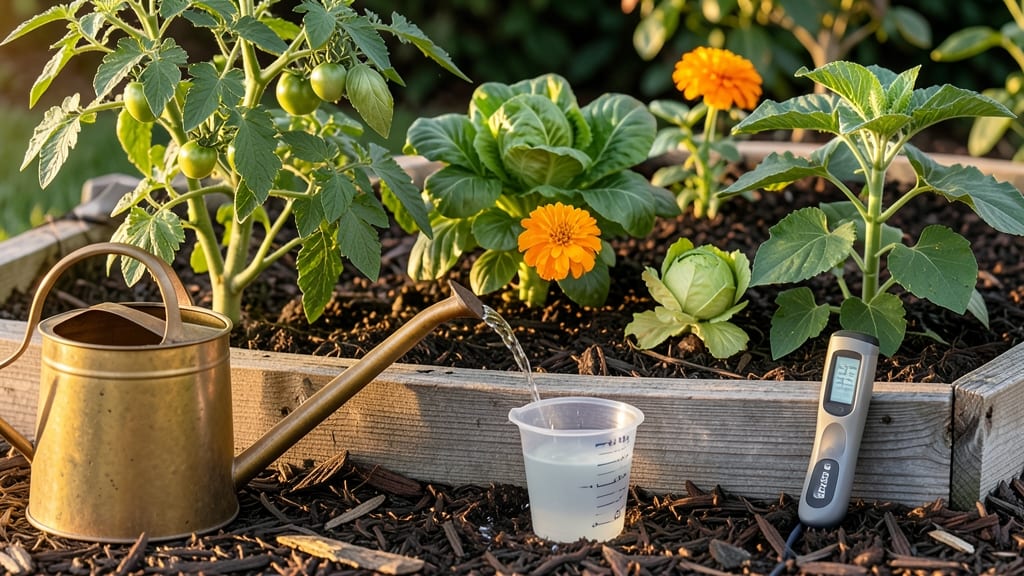
A garden needs how much water does a garden need per day—about 1 to 2 inches of water per week to thrive, but the real secret lies in understanding how climate, soil, and plant types rewrite that rule every season.
Picture this: your tomatoes are wilting by noon, your basil bolts to flower, and your soil feels like a sponge one day, then turns to dust the next. That’s not just bad luck—it’s a mismatch between what your garden craves and what you’re giving it.
The truth? Water needs aren’t one-size-fits-all, and guessing leads to wasted resources or stunted growth.
In this guide, we’ll break down the science behind daily water needs—from drought-resistant herbs to water-loving veggies—and how to adjust for Zone 6’s hot summers and chilly springs.
You’ll learn the three key factors that determine how much (or little) your plants truly need, plus a foolproof method to calculate it without a degree in horticulture.
Ready to stop overwatering or underwatering? Here’s how to water your garden like a pro, with zero guesswork and maximum results.
Daily water requirements by plant type: a science-backed breakdown
Understanding how much water your garden needs daily isn’t about a one-size-fits-all approach. Different plants have unique hydration needs based on their root depth, leaf structure, and climate zone.
For example, tomatoes and peppers demand consistent moisture to prevent blossom-end rot, while succulents and lavender thrive on neglect. The USDA zone you’re in also plays a critical role—Zone 9 plants like citrus need more frequent watering than Zone 4 kale, which tolerates frost and drier conditions.
Let’s break down the science so you can water like a pro.
Soil type dramatically alters water retention. Sandy soil drains quickly, requiring daily watering for most plants, while clay soil holds moisture longer, often needing water only every 3-5 days.
Even within the same soil type, shallow-rooted herbs like basil need 1 inch of water per week, whereas deep-rooted trees like oak require 10-15 gallons weekly during peak growth. Evaporation rates also shift with seasons—summer can double your watering needs compared to spring or fall.
Use these insights to tailor your approach and avoid both overwatering (which suffocates roots) and underwatering (which stresses plants).
For vegetables like tomatoes and peppers, aim for 1–1.5 inches of water weekly, delivered deeply to encourage root growth. These plants are shallow-rooted but need consistent moisture to prevent blossom-end rot.
I’ve found that drip irrigation works best—it delivers water directly to the roots while keeping foliage dry, reducing fungal risks. Mulching with straw or wood chips retains moisture and keeps soil temperatures stable, cutting water needs by up to 30% in hot climates.
If you’re in Zone 9, expect to water daily in summer, while Zone 4 gardens may only need water every 5–7 days unless there’s a drought.
Herbs like basil and cilantro are more forgiving but still need 0.5–1 inch of water weekly. Their shallow roots mean they dry out faster, so I water them in the morning to prevent evening moisture from promoting fungal diseases. Over
How to calculate your garden’s exact water needs (step-by-step formula)
Calculating your garden’s water needs isn’t rocket science—it’s a simple formula that combines plant type, soil composition, and local climate. Start by measuring your garden’s square footage. For example, a 10’x10’ bed equals 100 square feet.
Multiply this by the water depth your plants need (typically 1-2 inches per week), then adjust for evaporation and soil type.
Next, factor in your USDA Zone 6 climate. Summers here can evaporate water 30% faster than cooler seasons, so summer water needs often double. Use a catch-can test: Place a shallow container in your garden for 24 hours to measure natural rainfall.
Subtract this from your manual watering total to avoid overhydration.
For a 100 sq ft garden with tomatoes (1.5 inches/week), sandy soil (needs 2x water), and summer evaporation: 100 sq ft × 1.5 inches × 2 (soil) × 1.3 (evaporation) = 390 gallons/week.
Divide by 7 days = 55 gallons/day. Use a drip irrigation timer to automate this—no math required!
Pro tip: Group plants by water needs. Pair drought-tolerant lavender (0.5 inches/week) with water-loving peppers (1.5 inches/week) in separate zones. This cuts your water bill by 20% while keeping everyone happy.
Finally, monitor soil moisture with a moisture meter or the finger test: Stick your finger 1-2 inches deep. If dry, water; if damp, wait. This beats overwatering by 50%—your wallet and plants will thank you.
Now you’ve got a precision watering plan tailored to your garden’s unique needs. No more guesswork, just thriving plants and happy roots! 💧