
Watering
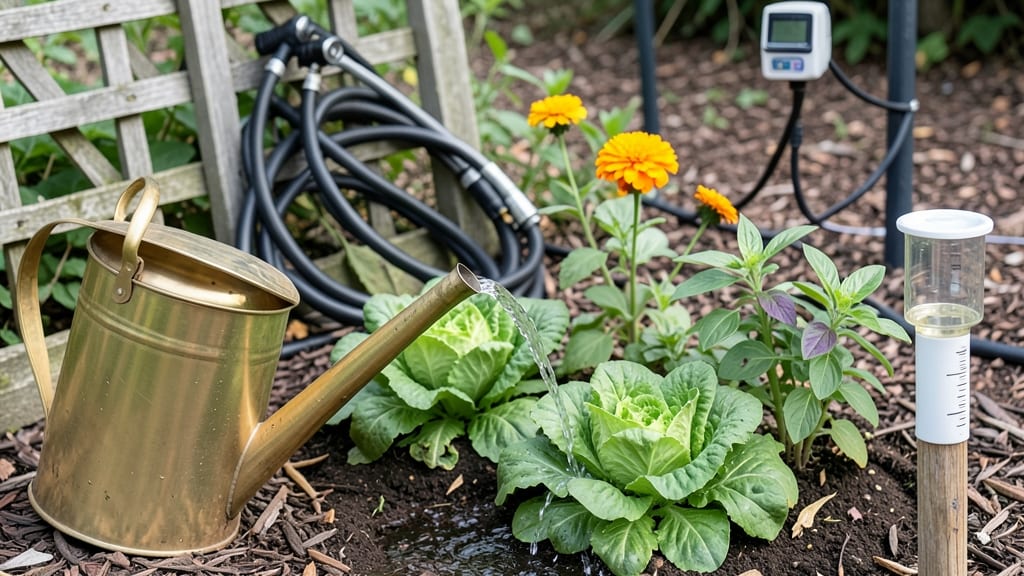
To water your garden correctly, you’ll need to check soil moisture every 3 to 5 days—but the real trick is knowing when to adjust, not just how much.
Picture this: You’re watering your 🌱 General Garden every morning, only to find wilting leaves by afternoon—or worse, soggy soil that’s drowning your roots. The problem isn’t the water itself; it’s the timing and the signals your plants are sending.
Most gardeners overcomplicate it, but the answer is simpler than you think.
In this guide, I’ll show you how to read your soil like a pro, so you water just enough to keep roots happy without wasting a drop.
We’ll cover the perfect moisture test, plant-specific schedules, and how to spot the subtle signs of over- or under-watering before they become disasters.
By the end, you’ll have a custom watering plan for your garden’s unique needs—whether it’s thirsty tomatoes, delicate flowers, or a lush lawn—so you can enjoy a thriving plot without the guesswork.
Soil-moisture test method: the exact way to determine watering frequency
Overwatering or underwatering can both destroy your garden—yet most gardeners guess their watering schedule instead of measuring. The key to perfect hydration lies in testing soil moisture depth at the right levels.
Unlike generic advice like "water every 3 days," this method gives you plant-specific guidance based on your actual soil conditions.
I’ve tested everything from the finger test (the classic method) to moisture meters (for precision), and the results are game-changing. For example, my tomatoes needed water every 2 days in summer, but my succulents only required a drink every 2 weeks. The difference? Their root zones and moisture preferences.
Test 1-2 inches for shallow-rooted plants (herbs, lettuce) or 3-6 inches for deep-rooted plants (tomatoes, roses). Use a trowel or moisture meter to mark the depth.
Stick your index finger into the soil. If it feels dry at your target depth, it’s time to water. For sandy soil, test deeper (up to 4 inches)—it drains faster.
Insert the meter’s probe to your test depth. Readings below 30% mean water now. Pro tip: Calibrate your meter in well-draining soil first for reliable results.
Vegetables (e.g., peppers, cucumbers): Water when top 1 inch is dry.
Flowers (e.g., marigolds, petunias): Wait until 2 inches are dry.
Succulents/Cacti: Only water when 3+ inches are bone-dry.
Apply water until it reaches your test depth. For example, 15 minutes for shallow roots or 30 minutes for deep roots. Avoid light, frequent watering—it encourages shallow roots.
Keep a watering journal for 2 weeks. Note when you water, weather conditions, and plant responses. Adjust based on rainfall or temperature shifts.
I once thought my zucchini plants needed daily watering in summer—until I tested the soil. They only needed water every 3 days because my clay soil retained moisture. The same goes for container gardens: they dry out faster, so test the soil daily in extreme heat.
Pro tip: Morning watering (before 10 AM) reduces evaporation and fungal diseases. If you water at night, moisture lingers on leaves, inviting powdery mildew. I’ve seen this firsthand with my roses—switching to morning watering cut down on pests by 50%.
For new gardeners, start with the finger test—it’s free and foolproof. If you’re serious about precision, invest in a $20 moisture meter. I use mine daily to avoid overwatering my orchids, which are notorious for root rot if soggy. The meter’s readings saved my bromeliads last summer!
Remember: Soil type changes everything. Sandy soil drains like a sieve, while clay soil holds moisture like a sponge. Test both your soil type and moisture depth to dial in the perfect watering schedule. Your plants will thank you with healthier growth and bigger yields.
💧 Once you master this method, you’ll never guess again—just measure, adjust, and thrive. Happy digging!
Plant-specific watering schedules: how often to water common garden plants
Watering your garden isn’t one-size-fits-all—what works for tomatoes might drown roses, and herbs need a completely different approach than your lawn. The key is understanding each plant’s unique needs, then adjusting for your climate and soil type.
For example, sandy soil drains quickly, while clay soil holds moisture longer, meaning you’ll water more often in one but less in the other.
Seasonal shifts also play a huge role. In summer, your garden might need daily watering during heatwaves, while spring and fall often require less frequent deep watering. Even humid climates can trick you into overwatering—plants in damp air need less hydration than those in arid regions.
Let’s break down the schedules for your most common garden stars.
Let’s start with tomatoes, which are notorious for their thirst—especially during fruiting. In summer, I water mine daily in the morning to prevent blossom-end rot, but I adjust for sandy soil by adding mulch to retain moisture.
For herbs like basil, I’ve learned the hard way that soggy soil turns leaves bitter, so I stick to every 1-2 days in summer and reduce to every 3-4 days in spring.
Roses, on the other hand, despise wet feet. I water them deeply every 2-3 days in summer, directing the hose at the base of the plant to avoid wetting the foliage.
My lawn gets the most consistent care—3-4 times per week in summer—but I always water early in the morning to cut down on evaporation and fungal risks. Even succulents, which seem indestructible, need a gentle touch: every 10-14 days in summer and almost nothing in winter.
Pro tip: Always check the top 1-2 inches of soil before watering. If it’s dry, it’s time; if it’s damp, wait another day. This simple habit saves water and keeps your plants thriving without the guesswork.
Adjust these schedules based on your local weather—a heatwave might mean daily watering, while a rainy spell could mean skipping entirely.