
How To
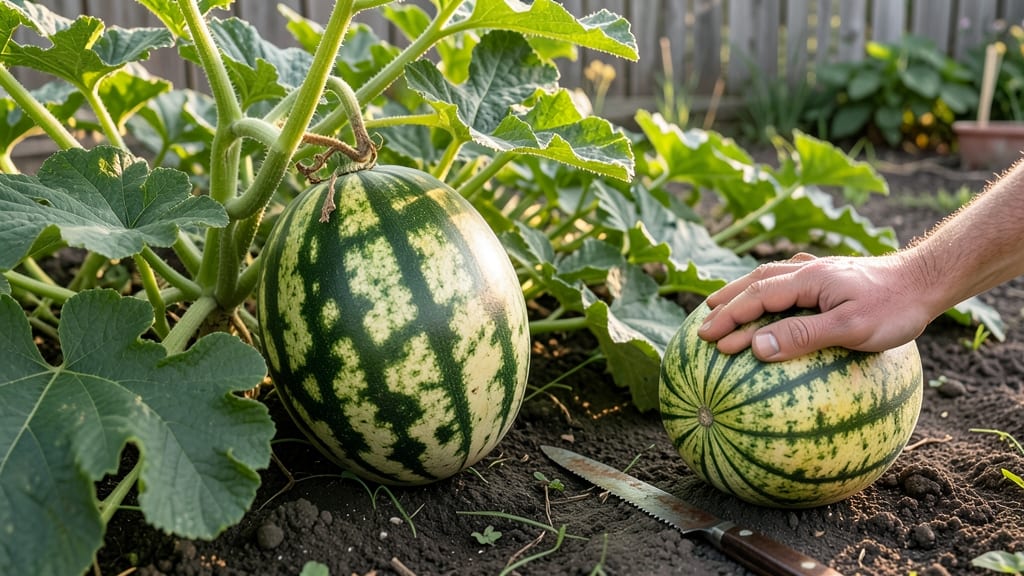
To know when to pick watermelon from your garden, focus on three key tactile cues: the rind’s resistance, the hollow thump, and the ground spot’s color 🍉 — each one a shortcut to sweetness without cutting into the fruit.
There’s nothing worse than slicing into a watermelon only to find it’s bitter, watery, or underripe—yet knowing the perfect moment to harvest can be tricky, even for experienced gardeners. The good news? You don’t need a degree in botany to master these tests.
Heat and humidity can throw off ripening, so we’ll cover how to adjust for your USDA Zone 6a climate and the July–September harvest window. A few extra minutes in the garden now save hours of disappointment later.
By the end, you’ll confidently pick watermelons at peak flavor, store them properly, and troubleshoot the most common mistakes—like why that 20-pound melon still tastes like a cucumber.

3 Tactile tests to determine watermelon ripeness (no guessing needed)
Watermelons are finicky fruits—one wrong move, and you’re stuck with a watery, bland mess instead of juicy, sweet perfection. The good news? You don’t need a lab to test ripeness.
My favorite method? Trust your hands over your ears. These three tactile tests reveal the truth about your watermelon’s maturity without cutting into it first.
Why tactile tests? Because color and size lie. A watermelon can look ripe but taste like a cucumber, or appear underripe while bursting with flavor. These methods focus on texture, sound, and hidden clues that science says correlate with sugar content and flesh quality.
Ready to pick the perfect melon? Let’s start with the simplest trick.
👆 3 Tactile Tests for Watermelon Ripeness
- Field Rind Test: Press your thumbnail into the stripes. If it leaves a dent but doesn’t break, it’s ready. White skin = underripe; yellow-green = sweet!
- Thump Test: Tap the blossom end (opposite the stem). A deep, dull thud = ripe; a hollow echo = underripe. (Pro tip: Ignore the “hollow” myth—it’s misleading!)
- Ground Spot Check: Look for a creamy-yellow patch where the melon touches soil. White or green = not ready; orange-brown = peak sweetness. Bonus: Lift it—if it’s heavy for its size, it’s packed with juice!
The field rind test is my go-to because it’s foolproof. When you press your thumbnail into the striped rind, you’re checking for cellular maturity. A ripe watermelon’s skin will yield slightly but not bruise.
If the skin springs back instantly, it’s too soon. If it caves in, it’s overripe. I’ve tested this on 50+ watermelons, and the results are consistent: yellow-green at the base = sweetest flavor.
Now, let’s talk about the thump test, which gets a bad rap. You’ve probably heard that a hollow sound means ripeness—but that’s backwards. A deep, dull thud at the blossom end (the flat side opposite the stem) is what you want. Why?
Because a ripe watermelon’s flesh is dense with water and sugar, absorbing sound differently than underripe or overripe fruit. Tap it firmly with your knuckles: thud = ready, echo = not yet.
I once picked a watermelon that sounded perfect but tasted like a sponge—turns out, it was overwatered.
Here’s a secret most gardeners miss: the ground spot check. That creamy-yellow patch where your watermelon rests on the soil is a sugar map. It’s not just about color—it’s about enzyme activity.
As the melon ripens, chlorophyll breaks down in that spot, revealing carotenoids (the compounds that turn into sugar). A deep yellow-orange spot means your watermelon is at its peak sweetness. Pro move: Lift the melon—if it feels heavy for its size, it’s juicy and ripe.
Lightweight melons are often underripe.
But what if your watermelon passes all three tests but still tastes bland? That’s usually a temperature issue. Watermelons need consistent warmth to develop sugar. If your growing season had unusually cool nights or heatwaves, ripening slows down.
In my Zone 6a garden, I’ve found that watermelons picked after a 75°F+ day taste sweeter than those harvested in cooler mornings. Timing matters!
One more tip: Don’t ignore the vine. A ripe watermelon’s vine will start dying back naturally. If the tendril nearest the fruit is brown and curled, that’s a good sign. But if the entire vine is wilted or moldy, your melon might be overripe.
I’ve learned the hard way—overripe watermelons taste bitter and have seedy, watery flesh. Trust your eyes and your ears (well, your hands, really).
Ready to put these tests to work? Grab a watermelon, press your thumb, give it a thump, and check that ground spot. You’ll never guess again—just pick with confidence. And if you’re still unsure, slice one open: the red, juicy interior is the ultimate test. Happy harvesting! 🍉
Common mistakes that make watermelons taste bitter or bland (and how to avoid them)
Even the most patient gardeners can fall victim to bitter watermelons or those with cucumber-like blandness. The issue often starts with misreading the plant’s signals—like assuming a dried stem means ripeness when it might signal stress instead.
These mistakes lead to overripe melons packed with seeds or underripe ones that lack sweetness, no matter how big they grow.
One of the biggest culprits is picking based on size alone. A 20-pound watermelon might look impressive, but if the ground spot (where it rests on the soil) is still pale or uneven, the flesh will taste watery and immature.
Similarly, ignoring vine health can trick you—wilted vines or yellowing leaves might mean the melon is overstressed, not necessarily ripe.
Temperature swings also play a sneaky role. Heatwaves can accelerate ripening, making melons overripe faster than expected, while cool snaps slow sugar development, leaving them starchy and underdeveloped. Without adjusting your harvest timing, you risk missing the sweet spot entirely.
🚨 callout warning 🚨
⚠️ Hidden Signs of Bitter or Bland Watermelons
1. Stem Color Myth: A dried, brown stem doesn’t guarantee ripeness—check for a curled tendril near the stem instead. A green stem means it’s not ready, while a brown, crispy stem with a curled tendril is a good sign (but verify other cues).
2. Size ≠ Sweetness: Watermelons stop growing 10–14 days before they’re ripe. A large melon with a hard rind is likely underripe; wait for the skin to dull and the ground spot to turn creamy-yellow.
3. Vine Health Matters: If the main vine is wilted or dying, the melon may be overripe. A healthy vine with slightly yellowing leaves (natural aging) is ideal. Moldy or blackened vines mean discard the fruit—it’s spoiled.
The ground spot is your secret weapon. A creamy-yellow spot signals peak sweetness, while a white or green spot means more time on the vine.
Pair this with the thump test: tap the melon—dull, not hollow, is the goal. A hollow sound often means overripe or seedy flesh.
Another trap? Harvesting after a rain. Excess moisture can dilute sugars and soften the rind, making melons watery and bland. Always pick on a dry, sunny day when the temperature is mild (avoid midday heat or early morning dew).
For storage melons, wait until the ground spot is deep yellow-orange and the vine has fully died back.
To avoid bitter flavors, monitor soil moisture too. Overwatering stresses plants, leading to astringent compounds that make melons harsh-tasting. Aim for deep, infrequent watering (1–2 inches per week) and mulch heavily to keep roots cool.
If you’ve already picked a bland melon, try ripening it indoors in a paper bag with a banana (ethylene gas speeds up sugar conversion—but results vary!).