
Tools
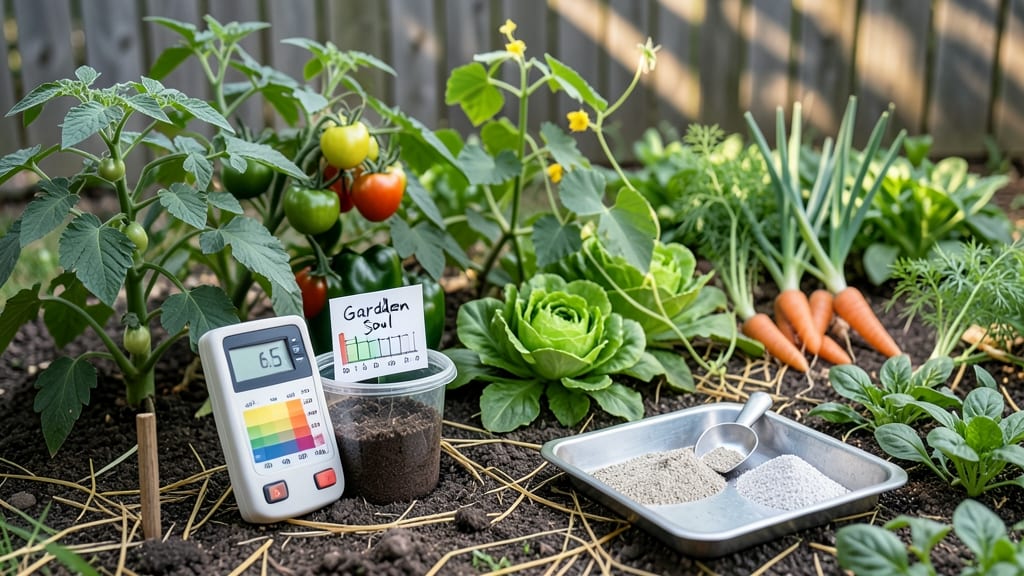
The ideal pH level for garden vegetables varies by type: most vegetables grow best in slightly acidic to neutral soil (6.0 to 7.0), while acid-loving plants like blueberries thrive at 4.5 to 5.5, and alkaline-tolerant crops such as asparagus prefer 7.0 to 8.0. Testing your soil's pH ensures nutrients are available for maximum plant health.
The right pH level for your garden vegetables isn't just about numbers—it's about unlocking the nutrients your plants need to thrive. 🌱 For example, tomatoes and peppers prefer slightly acidic soil around 6.0 to 6.5, while carrots and onions do well in a neutral range of 6.0 to 7.0.
Too high or too low can lead to nutrient deficiencies, like yellowing leaves from iron deficiency in alkaline soil or stunted growth from phosphorus shortages in overly acidic conditions.
Many gardeners don't realize how quickly soil pH can shift, so regular testing is key to keeping your garden productive year after year.
Adjusting your soil's pH is simpler than you might think. To lower it, organic matter like pine needles or sulfur works well, while raising pH calls for lime or wood ash.
I've found that making adjustments in early spring gives plants plenty of time to adapt before the growing season kicks off. The goal is balance—your vegetables won't just grow faster, they'll also develop stronger roots and better resistance to pests.
💡 In This Article
- Optimal Soil pH Ranges for Common Vegetable Crops
- How to Adjust Garden Soil pH for Vegetable Growth
Optimal soil pH ranges for common vegetable crops
Soil pH directly influences nutrient availability, and each vegetable has its own sweet spot. For instance, tomatoes—one of the most popular garden crops—thrive in slightly acidic soil with a pH range of 6.0 to 6.8.
At this level, they can absorb essential nutrients like phosphorus and potassium efficiently, which are critical for fruit development. 🌿 If the pH drops below 5.5, aluminum and manganese become toxic, causing brown spots on leaves and stunted growth.
On the other hand, peppers prefer a similar range (6.0 to 6.5) but struggle in alkaline conditions where iron becomes locked away, leading to yellowing leaves despite healthy-looking soil.
Root vegetables like carrots and potatoes have different needs. Carrots grow best in a neutral to slightly acidic range of 6.0 to 7.0, where the soil's calcium and magnesium levels support their crisp, sweet development.
Too acidic (below 5.5) can cause forked or bitter-tasting roots, while alkaline soil (above 7.5) may result in woody, tough textures. Potatoes, meanwhile, prefer a slightly acidic environment (5.0 to 6.0) to prevent scab diseases caused by calcium deficiencies, which thrive in alkaline conditions.
Leafy greens like lettuce and spinach are more flexible, tolerating a broader range of 6.0 to 7.0, but they still show signs of stress outside this window.
For example, spinach grown in soil with a pH below 5.5 may develop iron toxicity, causing brown leaf edges, while alkaline soil (above 7.5) can lead to calcium deficiencies, resulting in weak stems and yellowing between veins. 🥬 The key takeaway is that even small pH deviations can trigger nutrient imbalances, affecting both yield and quality.
Some vegetables are outliers with unique pH preferences. Blueberries, for example, are acid-lovers that require a pH of 4.5 to 5.5 to absorb iron and manganese, which are vital for their vibrant blue color and sweet flavor.
Growing them in soil with a pH above 6.0 can turn their fruit pale and tasteless, no matter how much fertilizer you add.
Conversely, asparagus is one of the few vegetables that thrives in alkaline soil, preferring a pH of 7.0 to 8.0, where its deep roots can access calcium and magnesium without competition from other plants.
Understanding these ranges helps explain why some vegetables struggle in the same soil. For example, planting tomatoes and blueberries side by side in the same bed is a recipe for failure unless you amend the soil differently for each crop.
The pH affects not just nutrient uptake but also microbial activity in the soil—beneficial bacteria and fungi that help break down organic matter thrive within specific pH ranges, further influencing plant health.
To put this into perspective, imagine your garden soil as a chemical lab where nutrients are the reactants. The pH level acts as the catalyst—too high or too low, and the reactions either stall or produce harmful byproducts.
For instance, in alkaline soil, phosphorus becomes locked away as insoluble compounds, making it unavailable to plants even if you add fertilizer. 🧪 This is why soil testing isn't just a suggestion; it's a diagnostic tool that reveals what your plants are truly hungry for.