
Fertilization
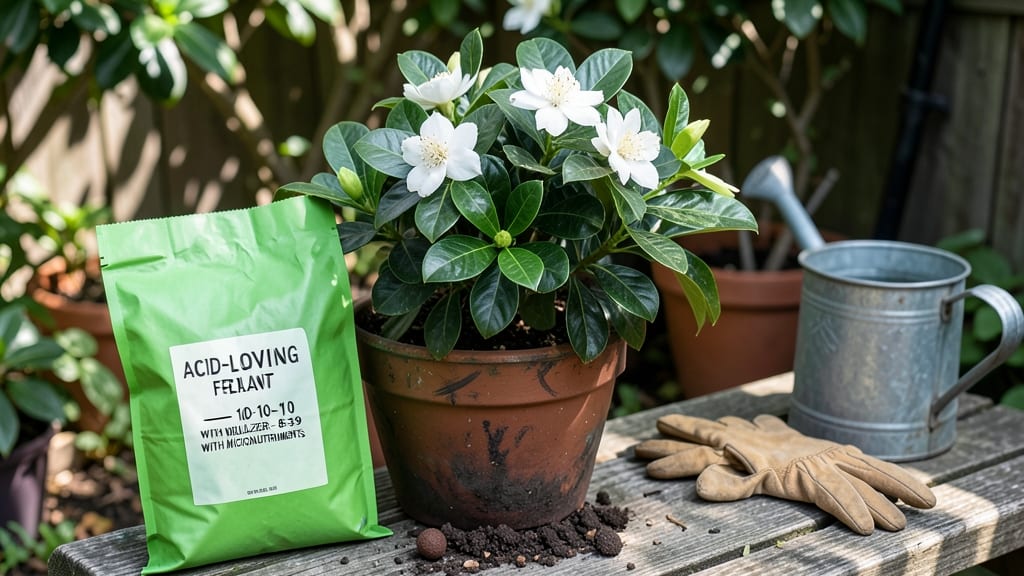
You fertilize gardenias in early spring and late summer to fuel their fragrant blooms—timing that makes all the difference between lush foliage and sparse flowers.
Picture this: your gardenias sit dormant through winter, then burst into life with new buds by May. That’s your cue to feed them lightly, but wait until after the last frost—April 15 in Zone 6—to avoid shocking tender roots.
Miss this window, and you’ll end up with half-hearted blooms or worse, leaf burn from overzealous feeding.
Most gardeners skip summer fertilization, but that’s where the real secret lies. A second feeding in late August (just before fall’s chill) primes next year’s flowers, while avoiding the heat stress that weakens plants. In warmer climates, stretch this to September—but never fertilize in winter, when gardenias rest.
Here’s what you’ll learn: the exact spring and summer schedule for your climate, how to spot over- or under-fertilization, and the best acid-loving fertilizers to keep your 🌸 gardenias thriving—no guesswork, just science-backed timing.
Optimal fertilization schedule for gardenias: spring vs fall timing explained
Gardenias reward patience and precision—especially when it comes to fertilization timing. Unlike many plants, these acid-loving shrubs thrive when fed during two critical windows: early spring and late fall. Why?
Because gardenias follow a natural growth cycle tied to temperature shifts, not just calendar months. Spring awakening (March–April) signals new root and foliage growth, while fall replenishment (September–October) prepares them for winter dormancy. Skipping these windows means fewer blooms and weaker stems.
Most gardeners mistakenly fertilize in summer, thinking it’ll boost blooms—but heat stress and over-fertilization actually burn roots and stunt growth. Meanwhile, winter fertilization is a common mistake that forces plants to grow when they should rest. Understanding these seasonal cues is the key to lush, fragrant gardenias year after year.
🌱
| Season | Best Time | Why Fertilize? | Fertilizer Type | Regional Adjustments |
|---|---|---|---|---|
| Spring | Early March–April | Stimulates new growth after dormancy | Acid-based (8-3-9 NPK) | Zone 7+: Wait until April; Zone 5: March |
| Summer | Avoid | Heat stress risks; focus on watering | None (except iron supplements if chlorotic) | Tropical zones (e.g., Florida): Light feed in June |
| Fall | September–October | Strengthens roots for winter | Slow-release organic (compost) | Zone 8+: October; Zone 6: September |
| Winter | Avoid | Plant is dormant; risks root damage | None | Mulch instead (2–3 inches) |
Spring fertilization kickstarts growth after winter dormancy. Aim for early March to April—right after your last frost date. This timing aligns with gardenias’ natural root flush, when they absorb nutrients most efficiently.
Use a low-nitrogen, high-phosphorus fertilizer (like 8-3-9 NPK) to encourage blooms, not just foliage. In USDA Zone 7 and warmer, delay until April to avoid shocking roots with early warmth.
Fall fertilization might seem counterintuitive, but it’s about root strengthening, not blooms. Apply a slow-release organic fertilizer (e.g., compost or cottonseed meal) in September–October. This gives roots time to absorb nutrients before winter, ensuring next year’s blooms.
In colder climates (Zone 5–6), prioritize September; in mild zones (Zone 8+), October works better.
Summer is the only season you should avoid fertilizing gardenias—unless you’re correcting iron deficiency (yellow leaves). High temperatures cause fertilizer salts to burn roots, while gardenias focus energy on bloom production, not growth. Instead, prioritize deep watering and mulching to protect roots during heatwaves.
Winter fertilization is a common mistake that forces gardenias to grow when they’re dormant. Cold soil limits nutrient uptake, and new growth is vulnerable to frost damage. Instead, mulch heavily (2–3 inches) to insulate roots and conserve moisture. This passive approach is more effective than any fertilizer in winter.
For tropical climates (e.g., Florida, Hawaii), adjust timings slightly: fertilize in June and September to match their year-round growth cycle. In containers, gardenias need more frequent feeding (every 3–4 weeks in spring/fall) because potting soil depletes faster. Always water thoroughly before and after fertilizing to prevent root burn.
Signs your gardenias need fertilizer (and when to skip it)
Your gardenias whisper their needs through subtle clues—yellowing leaves, sparse blooms, or stunted growth—all signals they’re hungry for nutrients. But here’s the catch: these signs can also mean over-fertilization if you see crispy leaf edges or leaf drop.
The key is reading the season. For example, pale green leaves in spring often mean it’s time to feed, while browned tips in summer scream "stop now!"
Gardenias are acid-loving plants, so their needs shift with the seasons. A new growth spurt in April is your green light to fertilize lightly, while fall’s golden leaves signal it’s time to pause.
Even the soil temperature matters—cool roots in spring need gentle feeding, while summer’s heat demands caution. Let’s decode these signals so you never guess wrong again.
When to Fertilize Gardenias
✅ Do Fertilize
- Early spring (after last frost): Stimulate new growth with light feeding
- Late summer (August-September): Prime next year’s blooms before dormancy
- When you see new leaf buds or pale foliage
- For container gardenias every 4-6 weeks during growing season
❌ Skip Fertilizing
- Winter months (December-February): Dormant roots can’t absorb nutrients
- When leaves show brown crispy edges or yellowing between veins
- During summer heatwaves (above 90°F/32°C)
- After recent transplanting (wait 6-8 weeks)
Let’s talk organic vs. synthetic fertilizers—because not all feeds work equally. Organic options like cottonseed meal or fish emulsion release nutrients slowly, perfect for gardenias’ delicate roots. Synthetic fertilizers with high nitrogen (like 30-10-10) might seem tempting, but they can burn leaves if overused.
My rule? Stick to balanced 10-10-10 or acid-loving plant blends in spring, then switch to low-nitrogen 8-3-9 in summer to encourage blooming.
Watch for these seasonal cues to adjust your approach: Spring’s new shoots mean it’s time for a light feeding, while summer’s heat stress demands you skip fertilizing entirely.
Even the soil’s moisture level matters—dry soil can concentrate fertilizer salts, harming roots. Always water 24 hours before applying fertilizer to dilute salts and protect tender foliage.
One common mistake? Fertilizing newly transplanted gardenias. Wait 6-8 weeks to let roots establish—feeding too soon stresses the plant. And if your gardenias drop buds before blooming, it’s often a sign of nutrient imbalance or root stress.
The fix? A light feeding of iron sulfate (for chlorosis) or simply reducing fertilizer if you’ve been overdoing it.
Remember: Gardenias reward patience. A well-timed spring feed and one summer boost will give you fragrant blooms all season—no need for monthly feeding. Listen to your plants, and they’ll tell you exactly when they’re hungry or full.