
Picking
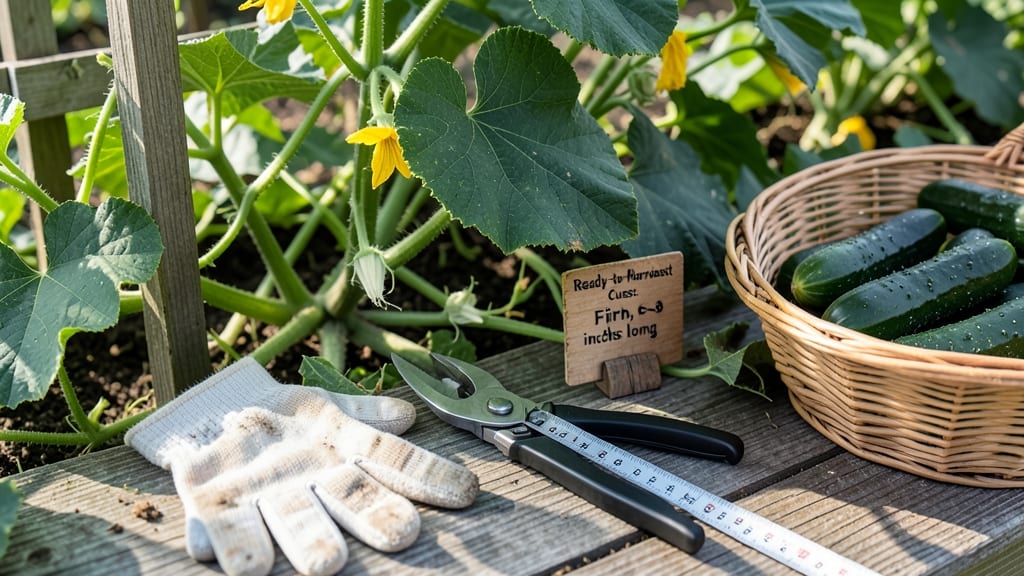
Harvest cucumbers from your garden when they reach 6–8 inches and their skin yields slightly to pressure—this is the sweet spot for crisp, flavorful slices 🥒.
Picking too early means tiny, underdeveloped fruit, while waiting too long turns them bitter and seedy. I’ve learned the hard way that skipping this window can leave you with a harvest that’s more disappointing than delicious.
Beyond size, pay attention to color (deep green for slicing types) and texture (firm but not rock-hard). Some varieties, like pickling cucumbers, need harvesting even sooner—often at 4–6 inches—to stay tender.
In this guide, I’ll break down the exact cues by variety, regional adjustments for USDA Zone 6a, and how often you should check your plants to keep the harvest rolling all summer.


How to identify perfect cucumber harvest size by variety (with exact measurements)
Harvesting cucumbers at the wrong size ruins their crisp texture and sweet flavor—especially when you’re growing three different varieties in one garden. Slicing cucumbers need 6–8 inches of length, while pickling varieties should be 2–3 inches at harvest.
Heirlooms often mature larger, up to 12 inches, but their diameter matters just as much as length.
Overripe cucumbers develop woody stems and seeds the size of BBs, turning your garden’s bounty into bitter, seedy disappointment. The key is checking diameter, length, and surface texture—not just color.
For example, a 1-inch diameter is perfect for slicing types, while pickling cucumbers should max out at 2 inches around.
Here’s how to tell when each variety is ready to pick, with exact measurements and visual cues:
For slicing cucumbers, aim for a 6–8 inch length and a 1-inch diameter. These varieties like 'Straight Eight' or 'Marketmore' stay crisp when harvested at this size. If you wait too long, the skin thickens, and the inside becomes spongy and seedy.
I’ve learned this the hard way—once, I let a batch grow to 12 inches, and they tasted like wooden shoelaces!
Pickling cucumbers are trickier because they’re smaller and bumpier. Look for 2–3 inch lengths with rough, textured skin. Varieties like 'Boston Pickling' or 'Calypso' are perfect for this size.
Harvest them when the stem snaps cleanly—this means they’re ready for the jar. If you miss this window, they’ll turn pale and mealy inside.
Heirloom cucumbers like 'Lemon' or 'Armenian' often defy the rules. They can grow up to 12 inches with a 3-inch diameter, but their skin thickness is the real giveaway. Thin-skinned heirlooms are best when 8–10 inches long, while thicker-skinned types can wait until 12 inches. Always check the stem end: if it’s yellow or soft, the cucumber is past its prime.
Watch for surface bumps too—these indicate overripeness. A cucumber’s skin should be smooth and slightly waxy at harvest. If it feels dry or leathery, it’s too late. I once grew a 20-inch monster cucumber, and it was inedible. The lesson? Harvest early and often to avoid giants!
Use a gentle thumb press to test firmness. A ripe cucumber should yield slightly but not feel mushy. If it’s too soft, it’s overripe; if it’s rock-hard, it’s underripe.
This trick works for all varieties, from slicing to pickling. Pro tip: Harvest in the morning when cucumbers are cool and crisp.
Regional climate plays a role too. In hot, dry climates, cucumbers ripen faster—check them every 2 days. In cooler zones, they take longer, so weekly checks suffice. I’ve seen cucumbers explode in heatwaves, so stay vigilant during summer peaks.
Finally, frequency matters. Harvesting every 2–3 days encourages more production. If you skip this, your plants will focus on ripening existing cucumbers instead of growing new ones. My most productive season came when I treated cucumber harvesting like a daily ritual—no more, no less.
Color, texture, and taste tests: the 3 non-negotiable cucumber ripeness checks
When I first started growing cucumbers, I assumed bigger always meant better—but that’s where I went wrong. The color gradient from vibrant green to pale yellow isn’t just about aesthetics; it’s your first clue about ripeness.
For slicing varieties like Marketmore, look for deep, glossy green skins, while lemon cucumbers should turn pale yellow-green at the stem end. Ignoring these cues often leads to bitter, seedy cucumbers that ruin salads 🥒.
Texture is your second secret weapon. A perfectly ripe cucumber’s skin should feel firm yet slightly yielding when you press your thumb against it. If it feels rock-hard, it’s underripe; if it’s mushy, it’s overripe.
I learned this the hard way when I picked a cucumber that squished between my fingers—turns out, it was past its prime and tasted like rubber. Check the stem end too: it should snap cleanly when bent, not drag or tear.
Don’t forget the taste test. The best cucumbers have a crisp, refreshing crunch with minimal bitterness. If you’re unsure, take a small bite—if it’s overly bitter or has large seeds, it’s overripe.
For pickling cucumbers like Boston Pickling, harvest them at 4–6 inches to keep them tender and sweet. Waiting too long turns them tough and unappetizing.
✅ Harvest Cucumbers at Peak Ripeness
Do This
- 🌱 Check color: Deep green (slicing) or pale yellow (lemon types)
- 🤏 Test texture: Firm but yields slightly to thumb pressure
- ✂️ Snap stem: Clean break at the stem end
- 📏 Measure size: 6–8" for slicing, 4–6" for pickling
Avoid This
- ❄️ Pale/waxy skin: Sign of underripe or overripe cucumbers
- 📉 Hard stem end: Cucumber isn’t ready yet
- 🌡️ Soft spots: Indicates rot or overripeness
- 🌱 Waiting too long: Leads to bitter, seedy fruit
Pro Tip: Harvest in the morning for the crispest cucumbers—this is when their moisture content is highest.
One of the biggest mistakes I see gardeners make is harvesting based on size alone. A cucumber might be 8 inches long but still taste bland if it’s not fully ripe. Always combine color, texture, and taste checks for the best results.
For example, heirloom varieties like Armenian cucumbers can stay on the vine longer and develop a slightly waxy texture—this is normal and doesn’t mean they’re overripe.
Regional adjustments matter too. In USDA Zone 6a, heatwaves can accelerate ripening, so check your cucumbers every 2–3 days during summer. If you notice cucumbers turning yellow or developing soft spots faster than usual, it’s a sign they’re ripening quicker—harvest them immediately to avoid waste.
Conversely, in cooler climates, cucumbers may take longer to reach peak ripeness, so be patient and monitor their progress closely.
Remember, the more frequently you harvest ripe cucumbers, the more your plants will produce. I’ve found that picking every 2–3 days keeps my vines prolific all season long.
And if you’re growing bush varieties, they’ll reward you with compact, easy-to-reach harvests—just don’t let them linger on the vine past their prime 🌿.