
Picking
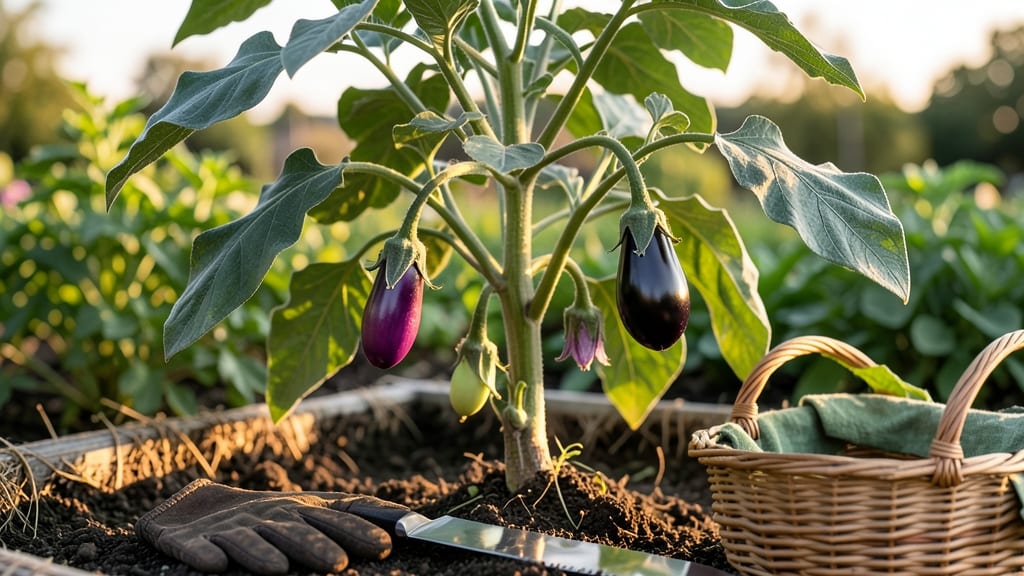
To pick eggplant in your garden at the perfect moment, watch for a deep color shift and glossy skin—this is when flavor peaks and texture is ideal.
Ever wondered why your 🍆 never reach their full flavor potential? Timing is everything—pick too early, and you’ll sacrifice taste; wait too long, and the fruit becomes tough and bitter. The secret lies in a simple color shift test that ensures perfect ripeness every time.
Most gardeners assume eggplants are ready when they turn completely purple or black, but that’s not always true. Regional varieties like white or striped eggplants have different ripening cues, and climate can speed up or slow down the process.
In this guide, I’ll walk you through the exact color and firmness cues to harvest at peak ripeness, plus how to store them afterward to keep that garden-fresh flavor for weeks.
Eggplant ripeness guide: color changes to watch for harvest time
Harvesting eggplants at the right time transforms a bland garden experiment into a flavor explosion. The key lies in watching for color shifts that signal peak ripeness. Most varieties transition from green to deep purple or black, but some—like white or striped varieties—have their own unique cues.
Understanding these changes ensures you never miss the perfect moment to harvest.
Eggplants start life as bright green fruits that gradually darken as they mature. This color evolution isn’t just about aesthetics—it’s a ripeness indicator tied to flavor and texture.
The glossy skin and stem separation are equally important clues. Let’s break down what to watch for, variety by variety, so you can confidently harvest your crop.
📌 PRO TIP: Use a small knife to gently score the skin—if it’s smooth and firm, it’s ready. If it yields or feels spongy, it’s past its prime.
For purple varieties, the color shift from green to deep purple or black is your primary guide. Start checking when fruits reach about half their mature size. The skin should develop a glossy sheen—a sign of full ripeness.
If the skin feels dull or matte, it’s not ready yet. In hot climates (Zones 9-11), this transition happens faster, often within 60-70 days.
White eggplants, like the 'Casper' variety, follow a similar pattern but turn creamy white instead of purple. These varieties often ripen slightly slower, so don’t rush the harvest.
The skin should feel firm and slightly leathery, not soft or wrinkled. In cooler regions (Zones 4-6), expect a longer ripening window of 80-100 days.
Striped varieties, such as 'Italian Long', are a gardener’s delight because their purple stripes become more pronounced as they ripen. Harvest when the stripes are fully defined and glossy.
These eggplants often grow longer and thinner, so size alone isn’t the best indicator. Pay close attention to the stem separation—a gentle twist should detach the fruit cleanly.
Green eggplants, like 'Ichiban', stay green but darken as they mature. The key is watching for a darker, glossier hue and a slightly elongated shape. These varieties are often harvested younger for a milder flavor, so don’t wait for full size.
In tropical climates (Zones 10-11), they may ripen in as little as 50-60 days.
Regional variations play a huge role in ripening speed. In hot, dry climates, eggplants ripen faster due to increased sun exposure and heat. Conversely, in cooler or cloudy regions, they take longer to develop color and firmness.
Always adjust your expectations based on your local USDA zone and microclimate.
One common mistake is waiting for eggplants to turn fully black, especially with purple varieties. While this indicates extreme ripeness, the fruit can become bitter and tough. Aim for a deep purple or black-purple hue—not jet black.
The same rule applies to white varieties: harvest when the color is consistent and creamy, not yellowed or spotted.
To test for doneness, gently press the eggplant with your thumb. It should feel firm but slightly yielding, like a ripe avocado. If it’s too hard, it’s underripe; if it’s soft or mushy, it’s overripe.
This simple test saves you from harvesting too early or too late. Remember, consistency in color and texture is your best friend in the garden.
Once you’ve mastered the color
5 Signs your eggplant is ready to harvest (beyond color)
Harvesting eggplant at the right moment transforms your garden bounty from good to extraordinary. While color changes are the most obvious cue, the real magic happens when you combine visual clues with tactile tests—like firmness and weight—that reveal true ripeness.
I’ve learned this the hard way: overripe eggplants turn bitter, while underripe ones stay watery and bland.
Don’t rely solely on color—especially if you’re growing white or striped varieties where the color shift is less dramatic. Instead, focus on these five sensory indicators that guarantee peak flavor and texture.
These methods work for all eggplant types, from classic purple to heirloom varieties like Rosa Bianca or Ichiban.
-
1Firmness Test: Press gently with your thumb—ripe eggplants yield slightly but don’t dent. If it feels mushy or leaves an indentation, it’s overripe.
-
2Weight Check: Lift the fruit—heavy for its size means juicy, flavorful flesh. Lightweight eggplants are often underripe.
-
3Seed Development: Cut open a small sample (if unsure)—seeds should be fully formed but still soft. Hard, black seeds mean it’s past prime.
-
4Stem Twist: Gently twist the stem—it should snap cleanly at the base. A stubborn stem means it’s not ready.
-
5Glossy Skin: Ripe eggplants have a satiny, almost waxy surface. Dull or cracked skin signals it’s time to harvest before pests or weather damage it.
If your eggplants are ripening too quickly in hot climates, try harvesting slightly before they’re fully colored—they’ll continue ripening indoors. For cooler regions, focus on the firmness and weight over color, as some varieties (like Black Beauty) take longer to develop their signature hues.
Premature ripening? Check for stress signs like uneven color or soft spots—these often mean the plant is underwatered or over-fertilized. Adjust your care routine immediately to save future harvests. The key is consistency: eggplants thrive with even moisture and balanced nutrients, so troubleshoot early.
Once you master these tactile cues, you’ll never guess at eggplant ripeness again. The first time I used the finger-press test and compared it to a store-bought eggplant, I was amazed by the difference in texture and flavor.
Now, I harvest mine at the perfect moment every time—and so can you!