
Picking
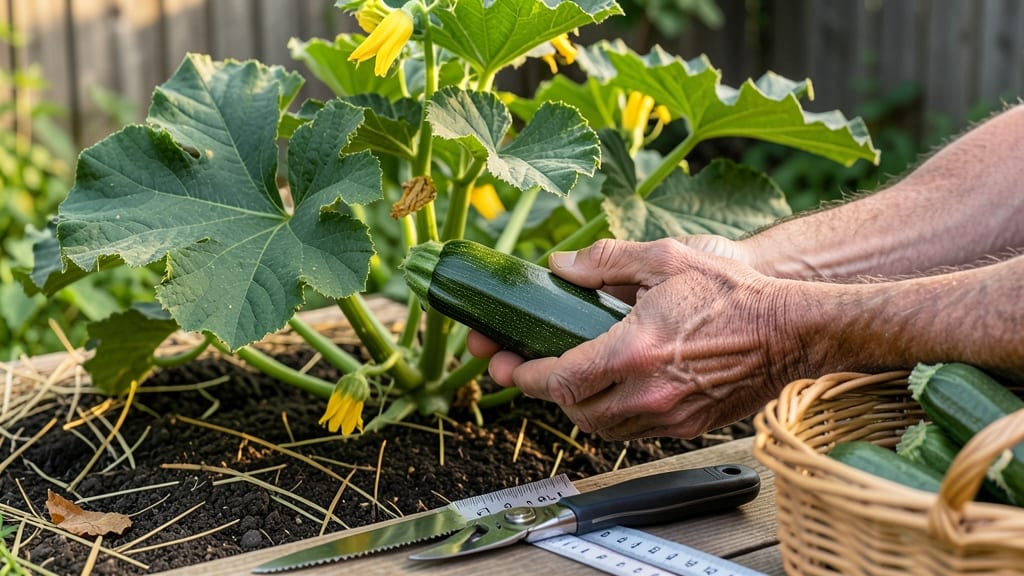
Picking zucchini from your garden at the right time ensures tender, flavorful squash 🎃—not tough, seedy overgrowth that’s barely edible.
Zucchini grows so fast that one day you’re admiring its vines—and the next, you’re drowning in a mountain of squash. Knowing the exact moment to harvest ensures you get the best flavor and texture, not disappointment.
Look for three key signs: a deep, consistent color, a firm but slightly yielding skin, and a length between 6 and 8 inches. These cues tell you the zucchini is at its peak, ready to be picked for salads, grilling, or storage.
In this guide, I’ll walk you through the visual cues, common mistakes to avoid, and how often you should pick to keep your plants producing all summer long.
3 Visual cues to harvest zucchini at perfect ripeness
Harvesting zucchini at the right moment transforms your garden bounty from bland to bursting with flavor. The key lies in three simple but critical visual cues that tell you—without a doubt—when to grab your pruners.
Miss these signs, and you risk ending up with tough, seedy squash that’s more suitable for compost than cooking.
I’ve learned the hard way that zucchini doesn’t wait for you. One day, you’re admiring a tiny, bright green nub, and the next, you’re wrestling with a foot-long monster that’s rock-hard and full of seeds.
The secret? Pay attention to these three foolproof indicators to ensure every zucchini you pick is tender, sweet, and packed with nutrients.
Size: 6-8 inches long
Zucchini reaches peak flavor when it’s 6 to 8 inches long. Any shorter, and it’s still developing; any longer, and it becomes woody and seedy. Use a ruler or your hand (span from thumb to pinky) as a quick guide.
Color: Deep, consistent green
Look for a uniform, glossy green hue without yellowing or dull patches. Some varieties (like golden zucchini) will have a rich yellow-orange color, but they should still be deep and vibrant—not pale or streaked.
Texture: Firm but yielding
Gently press your thumbnail into the skin. If it leaves a slight indentation but doesn’t puncture, it’s ready. If the skin resists completely, wait a day or two; if it gives way easily, you’ve missed the window.
Pro tip: Check your zucchini every 2-3 days during peak growing season (late summer). I set a reminder on my phone because these squash grow overnight.
When you spot all three cues, grab a sharp knife or pruners and cut the zucchini 1 inch above the stem—this prevents damage to the plant.
Don’t overlook the stem test, either. Bend the stem gently near the fruit; if it snaps cleanly, that’s another green light. A stubborn stem means the zucchini is still maturing.
This trick works especially well for bush varieties like ‘Black Beauty,’ which can hide ripe squash under dense foliage.
One common mistake I see is waiting until zucchini turn yellow or start flowering. By then, they’re past their prime—bitter, fibrous, and seedy. Yellowing is a sign the plant is redirecting energy to seed production, not fruit quality.
Harvest before this happens, and you’ll enjoy sweet, versatile zucchini for grilling, spiralizing, or baking.
For container gardeners, size is your best friend since space is limited. A zucchini that fills its pot is definitely overripe. In-ground plants give you more wiggle room, but don’t rely on that—check texture and color even if the squash seems small.
Some varieties, like ‘Eight Ball’ zucchini, stay compact but still need harvesting at the right stage.
Remember: The more you pick, the more your zucchini plant produces. It’s a feedback loop—harvest consistently, and your vines will keep flowering and fruiting. Ignore these cues, and you’ll end up with a jungle of oversized squash and frustrated neighbors asking for “zucchini help.”
Now that you know the signs, grab your basket and enjoy the harvest! With these visual cues, you’ll never again wonder when to pick zucchini—you’ll just know. 🌱
Zucchini harvesting mistakes that ruin your squash (and how to avoid them)
Even experienced gardeners make zucchini harvesting mistakes that turn tender squash into tough, seedy disappointments. The most common error? waiting too long—once zucchini grows past 8 inches, its skin thickens and seeds enlarge, ruining texture and flavor.
I’ve seen foot-long monsters that were barely edible, while perfect 6-inch specimens went to waste nearby.
Another frequent blunder is picking at the wrong time of day. Harvesting in the midday heat stresses plants, while waiting until late afternoon can leave squash vulnerable to pests. The ideal window? Morning hours when temperatures are mild and plants are hydrated.
Many gardeners also ignore subtle plant signals like yellowing leaves or stunted growth—these often mean the plant is overburdened by too many fruits. When you see new flowers but no developing zucchini, it’s time to prune older fruits to redirect energy.
⚠️ Critical Harvesting Mistake: Picking When Skin is Too Soft
A mushy texture means your zucchini is overripe. The skin should yield slightly to gentle thumb pressure—not collapse. When you press and see dent marks, it’s past prime. Harvest immediately when size reaches 6-8 inches and color deepens to matte dark green.
I’ve also noticed gardeners using dull tools that crush stems instead of cleanly severing them. Always use a sharp knife or pruners to avoid damaging vines. Leave 1 inch of stem attached—this prevents rot and helps the plant redirect nutrients to new growth.
One surprising mistake? Storing harvested zucchini in the fridge too soon. These squash thrive at room temperature for 3-5 days before refrigeration extends shelf life to 1-2 weeks. Cold temperatures convert their starches to sugars, making them mealy instead of tender.
To maximize your harvest, pick every 2-3 days during peak production. This prevents the plant from shutting down due to stress. I’ve had seasons where consistent picking gave me 30+ pounds of zucchini—while neglected plants barely yielded 10 pounds of poor-quality fruit.