
Vegetables
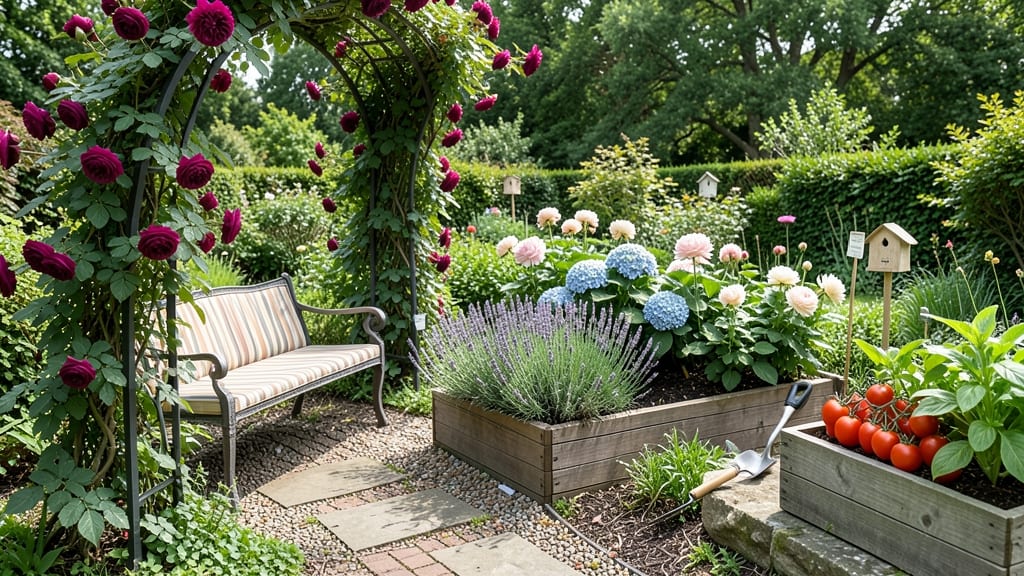
AHS Reciprocal Gardens help gardeners determine the best planting times by matching plants with USDA planting zones and local frost-free dates, maximizing growth potential for vegetables and flowers in your specific region.
These gardens simplify the planting process by pairing each crop with its ideal frost-free window, accounting for regional temperature variations. 🌱 For example, cool-season crops like lettuce thrive in early spring or fall, while heat-lovers such as tomatoes need warmer soil temperatures.
The system also accounts for last-frost dates, which can vary by 1-2 weeks even within the same zone. I’ve found that using this method reduces transplant shock and increases yield consistency—especially for beginners who might otherwise guess wrong on timing.
Beyond just planting dates, AHS Reciprocal Gardens also recommend successive planting schedules to extend harvests. For instance, sowing radishes every 2 weeks ensures a continuous supply instead of a single large batch.
The program’s strength lies in its ability to adapt to microclimates—like urban heat islands or sheltered valleys—where traditional zone maps might oversimplify conditions.
💡 In This Article
- How AHS Reciprocal Gardens Match Planting Zones
- Practical Guide to Using AHS Reciprocal Gardens for Your Region
How AHS Reciprocal Gardens match planting zones
The USDA planting zones divide North America into 13 distinct climate regions based on average annual minimum temperatures, which directly influence plant hardiness. Each zone—ranging from Zone 1 (-60°F) to Zone 13 (60°F+)—represents a 10°F increment in cold tolerance, creating predictable growing conditions.
AHS Reciprocal Gardens leverages this system by cross-referencing zone data with local frost-free dates, which can vary by 1-3 weeks even within the same zone due to elevation, proximity to water, or urban heat effects.
Frost-free dates are the backbone of the system because they define the safe window for planting warm-season crops like peppers and cucumbers.
For example, in Zone 5, where last-frost dates typically fall between April 15-30, gardeners can start tomatoes 2-3 weeks after the final frost when soil temperatures reach 50-55°F.
The science here is rooted in seed viability: most vegetable seeds require soil temps above 40°F to germinate, while transplants need warmer roots to establish. AHS Reciprocal Gardens accounts for these thresholds by providing zone-specific "plant after" dates that align with local climate data.
What makes this system particularly effective is its focus on transplant survival rates. Young seedlings are vulnerable to cold snaps, and even a single 28°F night can kill tender crops like basil or eggplants.
By matching planting windows to frost probabilities (typically 90% confidence of no frost after the listed date), the system minimizes risk.
For instance, in Zone 7, where first-frost dates average November 15, gardeners can extend fall harvests by planting cold-hardy crops like kale 6-8 weeks before the first frost—long enough for maturity but short enough to avoid winterkill.
Beyond hardiness, the system also accounts for daylength sensitivity in certain plants. Photoperiod-sensitive crops like spinach or onions bolt (flower prematurely) when exposed to long daylight hours, which happens earlier in northern zones. AHS Reciprocal Gardens adjusts planting schedules to avoid this by recommending staggered sowings for continuous harvests.
For example, in Zone 3, where days exceed 15 hours by early June, gardeners are advised to plant spinach in late summer for a fall crop rather than spring.
Another key innovation is the integration of microclimate adjustments. While zone maps provide a baseline, real-world conditions often differ.
AHS Reciprocal Gardens includes modifiers for urban areas (where pavement can delay frost by 1-2 weeks) or sheltered valleys (where frost may arrive 3 weeks later than the zone average).
This granularity is why gardeners in Zone 6b might see recommendations for Zone 7a crops in protected microclimates, or vice versa for exposed sites.
For those curious about the data sources, AHS Reciprocal Gardens pulls from 30+ years of NOAA climate records, local cooperative extension reports, and real-time weather station inputs.
The result is a dynamic system that evolves with climate shifts—like the 1-2°F warming observed in many zones over the past decade—ensuring recommendations stay relevant. 🌡️