
Pests
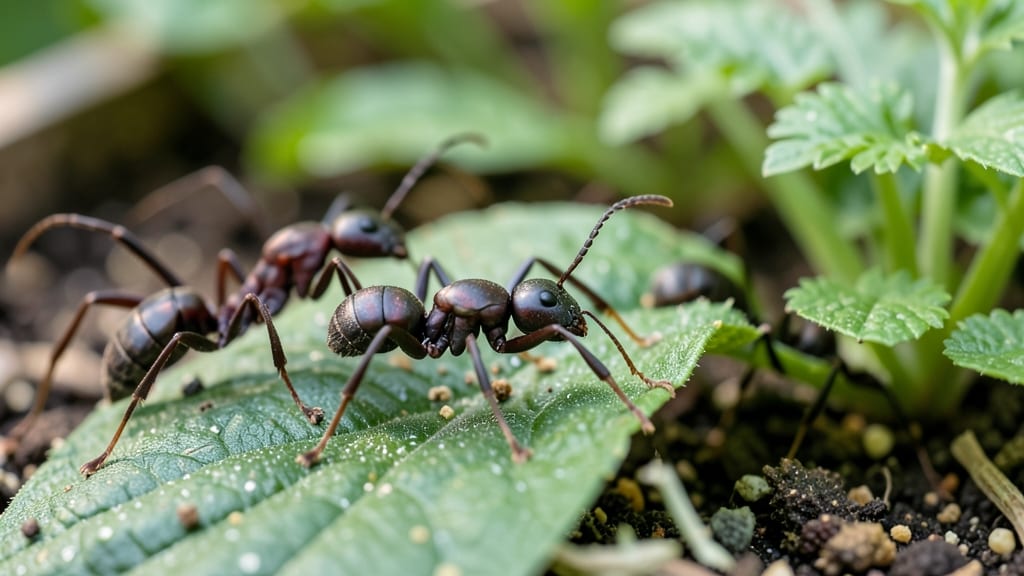
Dealing with ants in raised garden beds? While they rarely damage plants directly, their tunneling can disrupt roots and attract pests like aphids. Try natural solutions like diatomaceous earth, citrus peels, or cinnamon to keep them away without harming your garden.
Ants actually play an important role in garden ecosystems—they aerate soil and help break down organic matter. 🌱 However, when they overpopulate your raised beds, they can become a nuisance by creating tunnels that weaken plant roots or drawing other insects like aphids.
The key is balancing their benefits with effective, plant-safe deterrents that don't disrupt this natural cycle.
For best results, I recommend combining multiple methods. Spread diatomaceous earth around the bed edges as a physical barrier, while placing citrus peels or coffee grounds near entry points to mask scent trails.
These approaches work because they disrupt ants' communication systems without introducing harsh chemicals that could harm your soil or plants.
💡 In This Article
- Why Ants Invade Raised Garden Beds
- Top 5 Natural Ant Repellents for Garden Soil
Why ants invade raised garden beds
Ants are nature's tiny engineers, and your raised garden bed might feel like a five-star hotel to them.
These insects are drawn to the warm, moist soil environment—ideal for nesting—and the abundant food sources like fallen fruit, nectar, and even plant sap. 🌱 The soil in raised beds often has higher organic matter content than ground soil, releasing sugars and proteins that ants detect through pheromone trails.
A single ant scout can locate a food source and recruit hundreds of colony members within hours, creating visible trails that lead straight to your plants.
The real issue begins when ants start tunneling extensively. Their burrows can disrupt root systems, especially for shallow-rooted plants like lettuce or radishes, by breaking soil structure and reducing oxygen availability. Studies show that excessive tunneling can decrease soil aeration by up to 30% in heavily trafficked areas, stressing plants.
What's worse, ants often farm aphids—tiny sap-sucking pests that leave behind sticky honeydew—which attracts more ants and creates a vicious cycle. 🐜 The combination of physical soil disruption and pest attraction is why overpopulation becomes problematic.
Moisture levels play a critical role in ant attraction. Raised beds retain moisture differently than ground soil, creating microclimates that ants prefer. During rainy seasons or after watering, the increased humidity signals to ants that conditions are perfect for nesting.
The texture of raised bed soil—often a mix of compost, peat, and perlite—provides the loose, aerated environment ants need to establish colonies. Unlike compacted ground soil, raised beds offer easy access for excavation, making them prime real estate for ant colonies.
Not all ants are equal when it comes to garden damage. Carpenter ants, for instance, focus on wood structures rather than soil, while pavement ants and fire ants are more aggressive soil foragers. Fire ants, in particular, can create mounds that disrupt plant roots and create unsightly damage.
Their stings also pose risks to gardeners working in the beds. Identifying the specific ant species helps tailor your repellent strategy—some methods work better against certain types than others. 🔍
Seasonal patterns influence ant activity too. In spring and summer, when plants are actively growing, ants become more visible as they seek out the increased sugar sources from flowering plants and fruits. During these peak periods, you might notice trails becoming more pronounced.
Understanding these seasonal triggers allows you to implement preventative measures before ant populations explode. The key is maintaining a balance—letting ants perform their natural soil-aerating functions while preventing their numbers from becoming overwhelming.
What most gardeners don't realize is that ants actually help with nutrient cycling. Their tunneling mixes organic matter into the soil, improving drainage and microbial activity. The challenge is finding natural deterrents that preserve these benefits while discouraging overpopulation.
Methods like diatomaceous earth create a physical barrier that ants avoid without harming the soil's beneficial properties. The solution lies in strategic placement and regular maintenance to keep ant activity at a sustainable level. ✨