
Vegetables
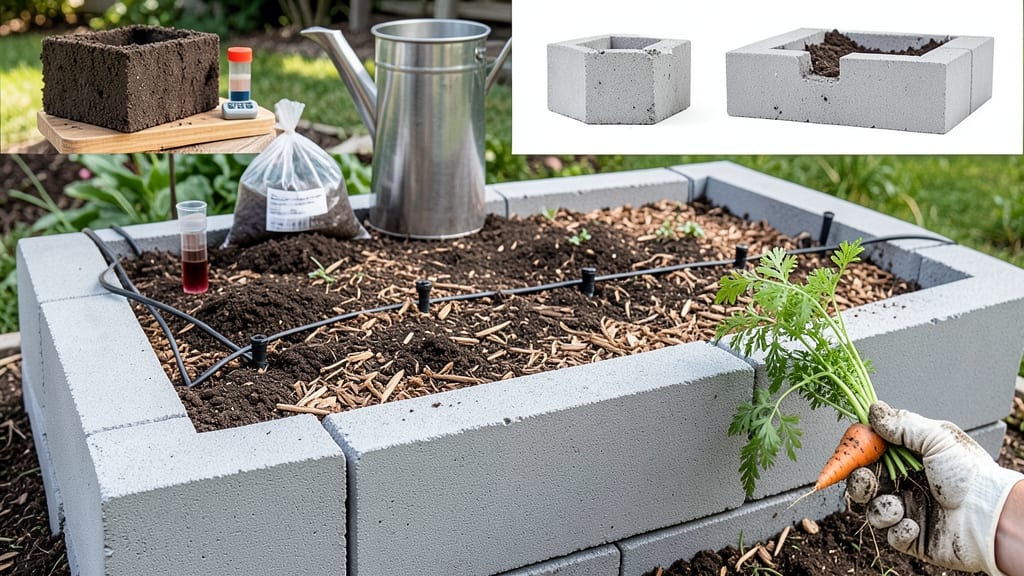
Cinder blocks are safe for vegetable gardens when used as raised bed borders since they don’t release toxic chemicals, but their alkaline properties can gradually raise soil pH over time. Always use landscape fabric to block mortar residue and test soil pH regularly to maintain healthy plant growth.
Cinder blocks themselves are non-toxic, but their alkaline composition can shift your soil's pH balance over time—especially if used long-term. 🌱 Most vegetables prefer a neutral pH (around 6.0-7.0), so crops like tomatoes or peppers may struggle in more alkaline conditions.
The good news? You can mitigate this by testing soil annually and amending with sulfur or peat moss if needed. I've found that lining blocks with heavy-duty landscape fabric prevents mortar contamination while still allowing drainage.
For best results, pair cinder blocks with crops that tolerate slightly alkaline soil, like Swiss chard, kale, or beans. 💛 If you're concerned about pH changes, consider alternatives like untreated wood or composite materials that won't affect soil chemistry.
The key is balancing convenience with plant health—cinder blocks work great as borders, but always monitor your soil's response over seasons.
💡 In This Article
- How Cinder Blocks Affect Soil pH and Plant Health
- Safe Ways to Use Cinder Blocks in Vegetable Gardens
How cinder blocks affect soil pH and plant health
Cinder blocks are made from fly ash and other industrial byproducts, giving them a naturally alkaline pH—typically around 8.0-9.0 when measured. This alkalinity comes from calcium carbonate and other basic compounds in the concrete mix.
When used as raised bed borders, they don’t leach harmful chemicals, but their alkaline surface can gradually raise soil pH over time through leaching and erosion. 🌱 Most vegetables prefer neutral soil (pH 6.0-7.0), so prolonged exposure to cinder blocks may reduce nutrient availability, particularly for micronutrients like iron, manganese, and zinc, which become less accessible in alkaline conditions.
The impact depends on soil type and moisture levels. Sandy soils, which drain quickly, show less pH change than clay soils, where moisture lingers against the blocks. For example, tomatoes—ideal for pH 6.0-6.8—may develop iron deficiency (yellowing leaves) if planted near cinder blocks for years.
Conversely, leafy greens like Swiss chard or spinach tolerate pH up to 7.5 and may thrive in these conditions. The key is monitoring soil pH annually, especially in raised beds where the block-soil interface is direct.
Nutrient availability shifts dramatically with pH changes. In alkaline soil, phosphorus becomes bound and unavailable, while nitrogen remains stable. This explains why plants like beans (which fix their own nitrogen) often grow well near cinder blocks, while fruiting crops suffer.
To test your soil’s response, use a simple pH meter or send a sample to a lab—most extension services offer affordable testing. 💛 If pH rises above 7.5, amend with elemental sulfur (1 pound per 100 square feet) or peat moss to lower it gradually.
Long-term use also affects soil structure. Cinder blocks don’t decompose, but their rough texture can trap moisture against the soil-block interface, creating anaerobic zones where roots struggle. This is why lining them with landscape fabric (not plastic) is critical—it blocks mortar residue while allowing drainage.
The fabric also prevents direct contact between the alkaline block surface and soil, reducing pH creep. For maximum safety, avoid using blocks with visible cracks or mortar stains, as these release more alkaline particles.
Consider the crop rotation implications too. If you plant acid-loving vegetables (like blueberries or potatoes) in a cinder-block-lined bed, you’ll need to amend the soil aggressively each season.
For example, blueberries require pH 4.5-5.5, which is nearly impossible to maintain near untreated cinder blocks without regular sulfur applications. 🌿 The solution? Reserve cinder-block beds for alkaline-tolerant crops and use separate containers for acid-loving plants.
What most gardeners overlook is the cumulative effect. Even if your soil starts neutral, years of border contact can shift pH upward by 0.5-1.0 units per decade.
This slow change is why many urban gardeners swear by cinder blocks—they’re durable and cheap—but it’s also why veteran growers recommend pairing them with pH-testing routines. Think of it like a slow-release alkaline fertilizer: the blocks themselves aren’t toxic, but their long-term presence demands proactive soil management.