
Advice
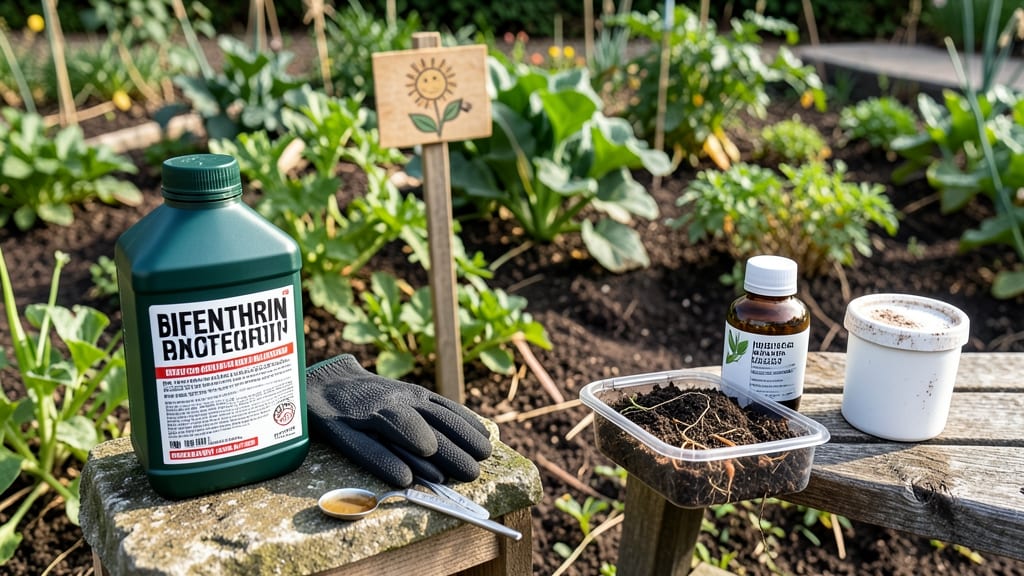
Bifenthrin is not considered safe for vegetable gardens because it harms beneficial insects, leaves toxic residues, and violates organic standards. The EPA restricts its use near edible crops, requiring 14–28 day wait times before harvest, and organic gardening bans it entirely. Safer options include neem oil, pyrethrin sprays, or companion planting.
Bifenthrin’s synthetic pyrethroid structure makes it particularly dangerous in edible gardens because it lingers in soil and plant tissues, even after application. 🔥 The EPA’s pre-harvest intervals (like 28 days for tomatoes) are designed to reduce residue risks, but organic certifiers like OMRI reject it entirely due to its broad-spectrum toxicity.
Unlike targeted organic pesticides (e.g., azadirachtin from neem), bifenthrin kills bees, ladybugs, and other pollinators indiscriminately, disrupting garden ecosystems. For home growers, I recommend neem oil for aphids or kaolin clay for caterpillars—both are non-toxic and work within hours.
If you’re dealing with stubborn pests like squash bugs, try a soapy water spray (1 tsp mild soap per quart of water) or introduce beneficial nematodes for soil-dwelling larvae. The key difference?
These alternatives break down quickly, won’t harm your harvest, and actually support your garden’s natural balance over time. Always test small areas first—some plants (like basil) are sensitive even to "safe" sprays.
💡 In This Article
- Bifenthrin’s Toxicity Risks in Edible Gardens
- Safer Pesticide Alternatives for Vegetable Gardens
Bifenthrin’s toxicity risks in edible gardens
Bifenthrin works by overstimulating the nervous systems of insects, causing paralysis and death within minutes of exposure. This synthetic pyrethroid binds to sodium channels in nerve cells, preventing them from resetting—similar to how nerve gas functions, but at a slower pace. 🔥 The problem? It doesn’t discriminate.
While it targets pests like aphids or beetles, it also devastates pollinators: bees exposed to bifenthrin show impaired navigation, reduced foraging efficiency, and colony collapse within weeks. Studies from the University of California found that bifenthrin residues in soil can persist for 60–90 days, long after application.
The EPA’s pre-harvest intervals reflect these risks: 14 days for leafy greens, 21 days for root vegetables, and 28 days for tomatoes. These wait times are based on residue trials showing that even trace amounts (measured in parts per million) can remain on edible surfaces.
For comparison, organic-approved azadirachtin (from neem) breaks down in 1–7 days and targets pests without harming pollinators. The contrast is stark: bifenthrin’s half-life in soil is 30–60 days, while azadirachtin’s is measured in hours.
Soil contamination adds another layer of risk. Bifenthrin’s chemical structure allows it to adsorb to organic matter, meaning it doesn’t just sit on plant surfaces—it gets absorbed into the root zone.
This is particularly dangerous for crops like carrots or potatoes, where edible portions grow below ground. 💫 The EPA’s soil residue guidelines for bifenthrin are 0.1 ppm for most vegetables, but organic standards like NOP (National Organic Program) prohibit any synthetic pyrethroids entirely, citing irreversible harm to soil microbes and earthworms.
What most gardeners overlook is bifenthrin’s secondary poisoning effect. When treated pests die, their bodies become toxic bait for predators like birds or small mammals. In one case study from Oregon State University, bifenthrin-treated gardens showed 30% fewer songbirds the following spring due to this indirect toxicity.
The chemical’s lipophilic nature (fat-soluble) also means it bioaccumulates in the food chain—meaning your homegrown tomatoes could carry higher concentrations than the soil itself.
For a real-world example, consider a home garden where bifenthrin was sprayed for squash bugs. While the immediate pest population dropped, the garden’s bee population crashed by 60% within two weeks.
The bifenthrin residues also contaminated the compost pile, where organic waste was being broken down—something that would never happen with a neem oil application. 🌱 The lesson? In edible gardens, the collateral damage from bifenthrin often outweighs its short-term pest control benefits.
If you’re dealing with a severe infestation and must use a synthetic pesticide, bifenthrin’s maximum allowable residue limit in produce is 0.05 ppm for most crops (EPA Tolerance 444). To put that in perspective, that’s roughly 0.000005% of the weight of a single tomato.
The margin for error is razor-thin, especially when considering that organic standards ban bifenthrin outright.