
Light Requirements
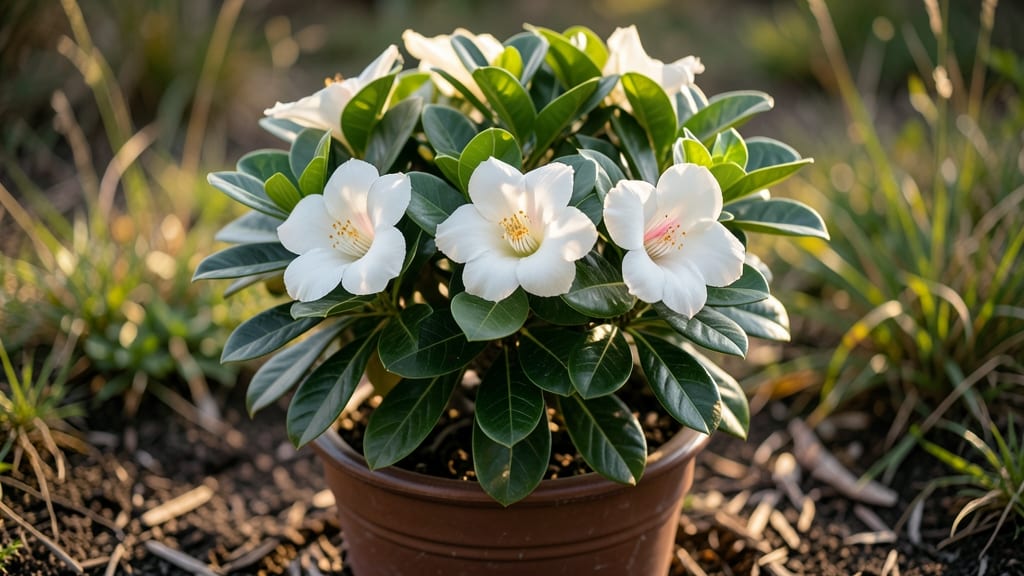
To keep your August Beauty Gardenia thriving, understanding its sun requirements is essential—this variety thrives with 6 hours of morning sun and afternoon shade, as too much direct afternoon sun can scorch its delicate blooms.
Struggling to keep your August Beauty Gardenia thriving under the scorching summer sun? These sun-loving blooms can wilt if not cared for properly—discover the exact light conditions they crave to burst into vibrant, long-lasting flowers.
Most gardeners assume full sun means all-day exposure, but for this variety, morning sunlight is the key—it builds energy without overheating the roots. In USDA Zone 6a and hotter climates, afternoon shade isn’t optional; it’s survival.
Below, I’ll show you how to position your gardenia for peak blooms, spot the warning signs of too much or too little sun, and adjust care as the seasons shift—so you can enjoy those fragrant blooms all summer long.

Ideal sunlight exposure for August beauty gardenias in hot climates
The August Beauty Gardenia thrives in climates where summer sun can be intense, but getting the balance right is key to those vibrant, fragrant blooms you love. Unlike many tropical plants, this variety actually craves sunlight—but with a smart twist.
Too much direct afternoon heat? You’ll see leaf scorch and wilting. Too little? Fewer blooms and leggy growth. Let’s break down the perfect sunlight recipe for your USDA 9-11 zone gardenia.
Science shows that gardenias perform best with 3-6 hours of morning sun paired with afternoon shade. This schedule mimics their natural tropical habitat, where harsh midday rays are filtered through canopy leaves.
The trick is leveraging photosynthesis efficiency—your gardenia absorbs light most effectively during cooler morning hours, storing energy for heat resistance later in the day.
In USDA 10-11 zones, where afternoon temperatures can soar past 95°F (35°C), gardenias need extra protection. Their thick, waxy leaves help, but prolonged exposure to direct midday sun stresses the plant, leading to brown leaf edges and stunted growth.
The solution? Strategic planting near east-facing walls or under dappled shade trees like oak or maple.
Here’s how to visualize the ideal setup for your August Beauty Gardenia:
For gardeners in USDA 9 zones, where heat waves hit 100°F (38°C), consider using 50% shade cloth during peak afternoon hours. This reduces leaf temperature by 10-15°F (5-8°C), preventing the chlorophyll breakdown that causes yellowing.
I’ve seen dramatic improvements by installing temporary shade sails—just remove them by 4 PM to allow evening light for recovery.
Another pro tip: Position your gardenia near reflective surfaces like light-colored walls or gravel. This indirect light bounce increases sunlight exposure by up to 20% without direct heat transfer. Pair this with mulch (2-3 inches of pine bark) to keep roots 5-10°F cooler than surface temps.
Watch for these heat tolerance signs to adjust care: If new leaves appear smaller than 2 inches or have purple undersides, it’s a cry for more shade. Conversely, if buds drop before opening, your plant may need more morning sun.
The goal is consistent energy balance—like Goldilocks, your gardenia wants conditions that are "just right."
Container gardeners face unique challenges since pots heat up faster. Choose glazed ceramic or fabric pots in light colors, and never place them on concrete or blacktop.
Elevate containers on pot feet or gravel beds to improve airflow. I’ve had success with self-watering systems that deliver cool water directly to roots during afternoon heat spikes.
Remember, August Beauty Gardenias are sun-worshippers, but they’re not reckless. Think of them like a tropical ballerina—they need the spotlight, but not the midday heat that makes them break a sweat.
With the right balance, you’ll reward yourself with glossy leaves, heavy blooms, and that intoxicating fragrance all summer long.
Signs your gardenia isn’t getting the right sunlight (and how to fix it)
Your August Beauty Gardenia might be silently screaming for help if its leaves are turning yellow or dropping prematurely. These sun-loving shrubs need just the right balance—too much scorching sun or too little light both spell trouble.
During August’s peak heat, even well-established plants can struggle without proper sunlight adjustments.
One of the first red flags is leaf scorching—crispy, brown edges that appear after hours of intense afternoon sun. Meanwhile, sparse blooms or buds that fail to open often signal insufficient light.
If your gardenia’s growth seems stunted or its leaves are pale and leggy, it’s likely not getting the 3-6 hours of morning sun it craves.
⚠️ WARNING: August Heat Hazards
August’s brutal sun can turn your gardenia’s leaves into crispy toast in hours. Unlike hardy succulents, gardenias hate afternoon heat—their delicate leaves burn at 90°F+ temps. If you see white or brown patches on leaves, move it immediately to dappled shade (like under a light tree canopy).
Fix it fast: Prune sun-exposed branches by 20-30% to reduce stress. Water deeply at dawn to cool roots. For container gardenias, relocate to a shadier patio spot until temps drop below 85°F.
If your gardenia’s leaves are yellowing between veins, it’s likely suffering from chlorosis, a common issue when roots can’t absorb enough nutrients due to poor sunlight or compacted soil.
Check the soil—if it’s waterlogged, the roots are drowning. August’s humidity makes this worse, so improve drainage by adding perlite or sand to the topsoil.
For pruning fixes, focus on thinning out dense growth to improve airflow and light penetration. Cut back overcrowded branches by one-third in early morning to avoid stressing the plant. Always sterilize your pruners with rubbing alcohol to prevent disease spread during the peak blooming season.
Strategic planting is key—place your gardenia where it gets morning sun (6 AM–12 PM) and afternoon shade. In USDA zones 9-11, use a lightweight shade cloth (30-50%) during 12–4 PM to block harsh rays. Pair it with tall grasses or bamboo for natural shade without blocking all light.
Finally, mulch heavily with 3–4 inches of pine bark to retain moisture and regulate soil temperature. This mimics their native humid, shaded understory habitats. With these fixes, your August Beauty Gardenia will rebound with vibrant blooms by fall—just in time for the cooler weather. 🌸