
Pests
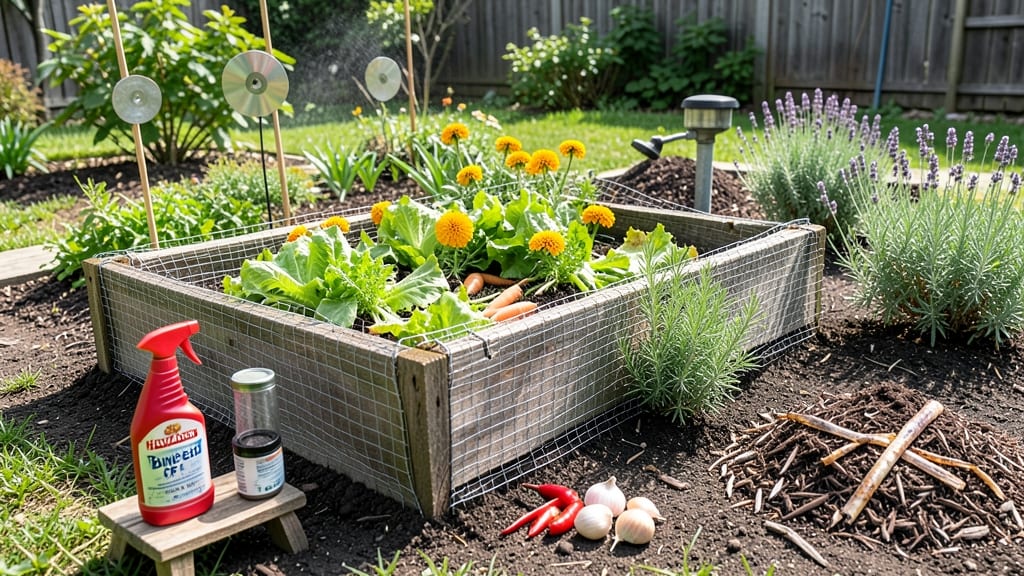
The best way to keep bunnies out of your garden combines sturdy fencing with natural deterrents: bury 1-inch hardware cloth 6 inches deep around beds, reinforce with predator urine or garlic sprays, and plant rabbit-resistant herbs like rosemary. Regular checks for gaps and reapplication every few days maximize effectiveness.
The key to success lies in understanding rabbit behavior—these creatures dig and nibble with relentless determination, which is why flimsy wire fencing fails. 🌿 Hardware cloth's tight weave prevents even the most persistent diggers from squeezing through, while the buried depth stops tunneling attempts.
Natural repellents work by creating unpleasant sensory experiences: the strong scent of garlic or predator urine disrupts their foraging patterns, and certain plants like rosemary release compounds that rabbits instinctively avoid.
For best results, I recommend combining these methods with seasonal maintenance. After planting your protective herbs, monitor the garden weekly for new chew marks or disturbed soil—this lets you address issues before they become major problems.
The combination of physical barriers and sensory deterrents creates a multi-layered defense that's far more effective than any single solution.
💡 In This Article
- Why Bunnies Target Gardens and How Fencing Works
- DIY Rabbit-Repellent Garden Barriers and Sprays
Why bunnies target gardens and how fencing works
Bunnies see gardens as all-you-can-eat buffets because they're primarily grazers with an insatiable appetite for tender young plants.
Their natural foraging behavior drives them to nibble on leaves, stems, and roots, which contain the nutrients they need to survive. 🌱 A single rabbit can consume up to 1 pound of vegetation per day, making your garden an irresistible target.
Their digging instincts—used to create burrows for shelter—mean they'll tunnel under fences or chew through weak barriers to access your prized plants.
The reason traditional chicken wire fails is simple physics: its large 1-inch square openings allow bunnies to squeeze through with ease.
Their bodies can compress to fit through gaps as small as 3 inches wide, but their heads are the real issue—rabbits can push through openings just 2 inches wide when motivated. Hardware cloth, on the other hand, features 1/4-inch or 1/2-inch mesh, which completely blocks their access.
When buried 6 inches deep, it also prevents them from digging underneath, addressing their primary escape tactic.
The science behind repellent effectiveness lies in rabbits' highly developed senses. Their sense of smell is 14 times stronger than humans', making strong odors like garlic or predator urine highly effective deterrents. 🐇 These scents trigger their natural aversion to potential threats, creating a psychological barrier.
Similarly, plants like rosemary release volatile oils that rabbits find unpleasant—these compounds disrupt their foraging patterns by making the garden smell like a predator's territory. The key is consistency: repellents need to be reapplied every 3-7 days or after rain to maintain their effectiveness.
Another critical factor is the height of your barriers. Bunnies can jump up to 2 feet vertically, so fencing should extend at least 3 feet above ground level to prevent them from simply hopping over.
The combination of buried depth, tight mesh, and height creates a physical fortress they can't penetrate. This multi-layered approach exploits their behavioral weaknesses—digging, chewing, and jumping—while making your garden an unattractive target through sensory deterrents.
What most gardeners don't realize is that bunnies learn from experience. If they encounter a barrier that's easy to bypass—like flimsy chicken wire—they'll remember and return with increased determination. 🔥 This is why hardware cloth's durability is crucial: it won't sag, rust, or provide handholds for climbing.
The material's rigidity maintains its protective properties season after season, making it the gold standard for rabbit-proof fencing. When combined with repellents, this creates a defense system that addresses both their physical capabilities and sensory preferences.
For maximum effectiveness, consider adding a 6-inch lip of fencing outward from the plant bed. This prevents rabbits from reaching over the top to nibble plants growing just outside the protected area.
The outward angle creates a natural barrier that complements the vertical height requirement. This simple modification eliminates a common vulnerability where rabbits can access plants while avoiding the main barrier.