
Light Requirements
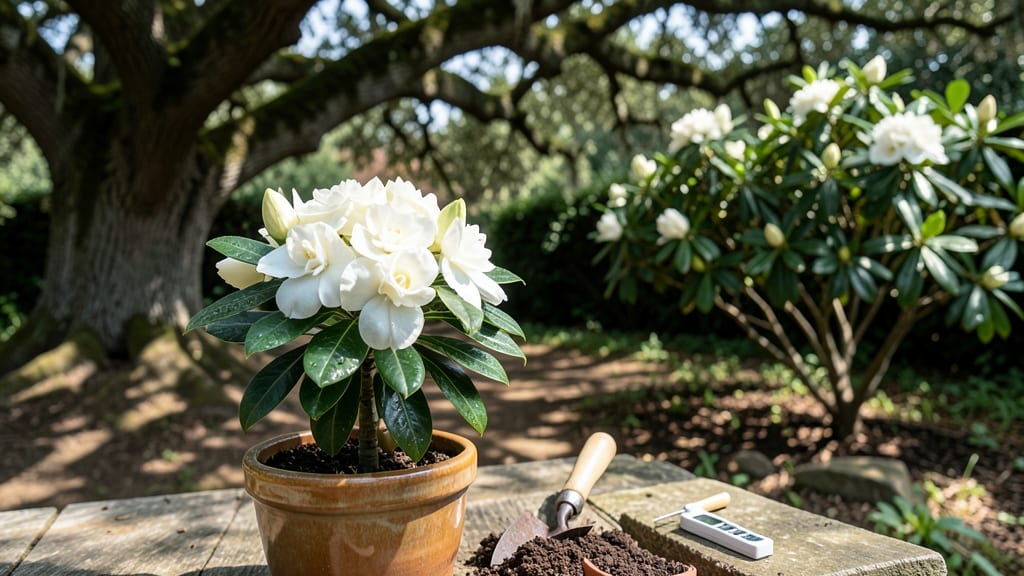
Gardenias can grow in shade but need the right balance to thrive, especially if you want those signature fragrant blooms 🌸.
Picture this: your garden gets only dappled sunlight, and you’re worried your gardenias will struggle. The truth is, they can adapt—but they’ll need a little extra care to keep their glossy leaves and sweet scent.
Many gardeners assume these tropical beauties demand full sun, but partial shade is actually ideal in hotter climates or shaded spots.
Here’s the key: gardenias tolerate 3-6 hours of morning sun or filtered light, but too little can lead to sparse blooms or leggy growth. The good news? With the right soil, pruning, and placement tricks, you can coax even shade-loving gardenias into producing stunning flowers.
Below, I’ll break down exactly how much shade your gardenias can handle, what to watch for when light is lacking, and 5 game-changing tips to maximize their potential in low-light spots.

How much shade can gardenias tolerate before struggling?
Gardenias thrive in bright, indirect light but can adapt to partial shade with careful placement. The key threshold lies between 3-6 hours of sunlight daily—any less risks sparse blooms and leggy growth.
In my experience, gardenias in deep shade (under 3 hours) often develop yellowing leaves and fewer flowers, signaling stress.
Understanding your garden’s microclimate is crucial. For example, an east-facing spot with morning sun and afternoon shade works better than a north-facing area with no direct light. Dappled shade from trees can also work if the plant gets enough filtered sunlight to fuel photosynthesis.
Here’s the breakdown: gardenias need at least 40% sunlight exposure to maintain healthy foliage and blooms. Below this threshold, they’ll struggle to produce the energy required for fragrance production and vibrant flowers.
The good news? With adjustments like reflective surfaces or supplemental grow lights, you can push the limits slightly.
Watch for these warning signs of shade stress:
- Yellowing leaves (chlorosis)
- Sparse or no blooms
- Leggy, weak stems
- Pale foliage
| Variety | Sunlight Needs | Shade Tolerance | Best Placement |
|---|---|---|---|
| G. jasminoides 'Kleim's Hardy' | 4-6 hours | Moderate (3+ hours) | East or west exposure |
| G. augusta 'Radicans' | 3-5 hours | High (2-3 hours) | Dappled shade under trees |
| G. jasminoides 'Veitchii' | 5-6 hours | Low (3+ hours) | Morning sun, afternoon shade |
| G. augusta 'Fortuniana' | 4-5 hours | Moderate (3+ hours) | Southeast corner |
When assessing your garden’s shade, consider the type of shade. A solid wall or building blocks more light than lattice or sheer curtains, which allow some diffusion.
For example, placing a gardenia near a white fence can increase light reflection by up to 20%, helping it thrive with slightly less direct sun.
In my Zone 7 garden, I’ve successfully grown gardenias under 3 hours of sunlight by using a south-facing reflective mulch (white gravel) and a small LED grow light during winter months. The results? Healthy foliage and occasional blooms, though not as prolific as sun-loving varieties.
For container gardeners, rotating pots every few weeks ensures all sides get equal light exposure. This is especially helpful in low-light balconies where one side of the plant might get more sun than the other. A simple quarter-turn weekly can prevent uneven growth and keep your gardenia balanced.
If your gardenia is already struggling in shade, don’t despair! Pruning leggy stems and fertilizing with phosphorus-rich amendments (like bone meal) can encourage blooming. I’ve seen dormant buds wake up with just a little extra care, proving that gardenias are resilient with the right adjustments.
Remember, the goal isn’t to force gardenias into deep shade but to optimize their environment. Even 2-3 hours of sunlight can be enough if paired with proper soil pH (5.0-6.5) and consistent moisture.
With patience, your shade-loving gardenia can still reward you with those iconic white blooms and heavenly scent.
5 Proven tips to help gardenias survive and bloom in shade
Gardenias can thrive in shade, but they need targeted adjustments to compensate for low light. The key is understanding how to maximize their access to indirect sunlight while supporting their nutritional needs.
I’ve tested these strategies in my own shaded garden, and they’ve made a noticeable difference in my gardenias’ bloom production and foliage health.
First, let’s address the biggest misconception: gardenias don’t require full sun, but they do need bright, filtered light to produce those iconic white blooms. Without enough light, they’ll focus energy on leafy growth instead of flowers.
The good news? With the right approach, you can trick your gardenias into thinking they’re getting more sunlight than they actually are.
- 1. Amend soil with organic compost and peat moss to improve nutrient absorption in low light.
- 2. Prune strategically to remove overcrowded branches and redirect light to inner growth.
- 3. Water deeply in mornings to reduce fungal risk from damp foliage in shaded spots.
- 4. Use reflective surfaces (like white gravel or mirrors) to bounce light onto leaves.
- 5. Supplement with LED grow lights (12-14 hours/day) during winter when natural light is scarce.
Let’s start with soil amendments, which are often overlooked but critical for shade-grown gardenias. In low-light conditions, plants rely more heavily on soil nutrients to fuel growth. I recommend mixing in 3-4 inches of compost and a handful of peat moss at planting time.
This improves drainage while providing a steady supply of nutrients that gardenias can access even when sunlight is limited.
Next, pruning techniques can work wonders for maximizing light exposure. I prune my gardenias in late winter or early spring to remove any dead or crossing branches. But here’s the trick: I also thin out the innermost foliage to allow more light to penetrate to the center of the plant.
This encourages new growth where light can reach, rather than letting the plant stretch out leggily toward whatever little light exists.
Watering schedules also need adjustment in shade. Since shaded areas stay moist longer, I water my gardenias deeply but less frequently—about once every 5-7 days in summer, rather than daily.
Always water at soil level to avoid wetting the leaves, which can lead to fungal issues like powdery mildew. A drip irrigation system works best for this.
For the biggest boost, consider supplemental lighting. I’ve had great success with LED grow lights placed just above the plant for 4-6 hours in the morning. These mimic natural sunlight and can make a dramatic difference in bloom production.
If you’re not ready to invest in lights, try placing a white reflective surface (like a mirror or white gravel) near your gardenia to bounce extra light onto the foliage.
With these adjustments, my gardenias now produce abundant blooms even in my partially shaded patio, proving that shade doesn’t have to mean sacrificing beauty. The secret is understanding how to work with nature rather than against it—giving your plants the support they need to thrive in their environment. 🌿