
Container Gardens
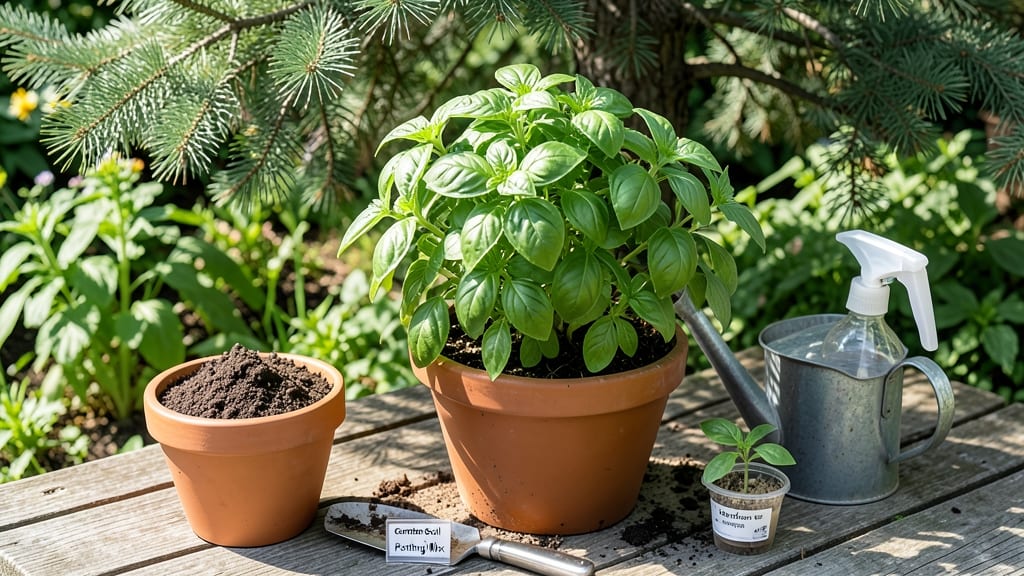
You can use garden soil in pots, but only after amending it with perlite, sand, and compost to prevent drainage issues, root suffocation, and pest problems that threaten container-grown plants.
Garden soil's heavy clay and organic matter compact easily in pots, creating a dense barrier that blocks water and oxygen from reaching roots. 🌱 This causes root rot and stunted growth—common issues in containers where drainage is critical. The solution?
Mixing in 20-30% perlite or vermiculite opens up the soil structure, while compost adds nutrients without the weight. For heavy clay soils, I recommend adding coarse sand to improve water flow, especially for drought-sensitive plants like succulents or herbs.
Even after amending, avoid using garden soil straight from the yard—it often contains weed seeds and pathogens that thrive in confined spaces. Pre-mixed potting soils with added wetting agents work better for most container gardens, though DIY blends give you control over texture and fertility.
The key is balance: too much sand drains too fast, while too much garden soil suffocates roots.
💡 In This Article
- Why Garden Soil Fails in Pots: Drainage and Compaction Issues
- How to Modify Garden Soil for Potted Plants: Best Mixes and Additives
Why garden soil fails in pots: drainage and compaction issues
Garden soil's natural composition makes it a poor fit for containers. When you dig it from your yard, it typically contains 45-50% clay particles that pack tightly together, creating a dense matrix.
In pots, this compaction happens even faster than in garden beds because the limited space forces roots to compete for air pockets. Without proper aeration, roots suffocate—similar to how your lungs would struggle if buried under heavy blankets.
This lack of oxygen triggers anaerobic conditions, where harmful bacteria thrive and release toxic compounds that stunt growth.
The drainage problem stems from clay's tiny particle size (0.002mm diameter), which holds water like a sponge. While this works for in-ground plants with deep root systems, container plants have nowhere for excess water to escape.
Imagine trying to water a plant in a 10-inch pot with garden soil—after 24 hours, the bottom may still feel damp. This moisture buildup creates the perfect environment for root rot, where fungal pathogens like Phytophthora multiply rapidly.
Even drought-tolerant plants like lavender or rosemary will struggle in unamended garden soil because their roots can't access the oxygen they need.
Texture plays a critical role too. Garden soil often contains 10-20% organic matter (like decomposed leaves or grass clippings) that breaks down over time, further compacting the mix. In contrast, ideal potting soil has 20-30% perlite or vermiculite to create air pockets.
These additives increase porosity by 40-50%, allowing water to drain while roots access oxygen. For example, a 50/50 mix of garden soil and perlite will drain 3 times faster than pure garden soil, preventing the waterlogged conditions that kill container plants.
Another hidden issue is the weight difference. A 5-gallon pot filled with garden soil can weigh 40-50 pounds when saturated—enough to crack unreinforced concrete planters.
The dense structure also makes it harder for young roots to penetrate, forcing them to grow in a shallow layer near the surface where they're more vulnerable to temperature fluctuations. This is why seedling trays always use lightweight mixes: they allow roots to explore the entire growing medium without resistance.
Consider this comparison: in-ground soil has 10-20% air space naturally, while unamended garden soil in pots drops to just 5-10% air space. That's why amended mixes often include coconut coir or rice hulls—these materials add structure while maintaining moisture without suffocating roots.
The science is clear: without these amendments, garden soil creates a physical barrier that limits root expansion and nutrient uptake, leaving plants stunted and stressed.
Even with these issues, garden soil isn't useless—it's just the wrong starting point. Its high nutrient content (especially nitrogen) makes it valuable when properly blended. The key is understanding that containers require a different physics of soil behavior: lighter weight, faster drainage, and better aeration.
Think of it like comparing a swimming pool (garden bed) to a kiddie pool (container)—the same water behaves differently in each, and so does soil.