
Container Gardens
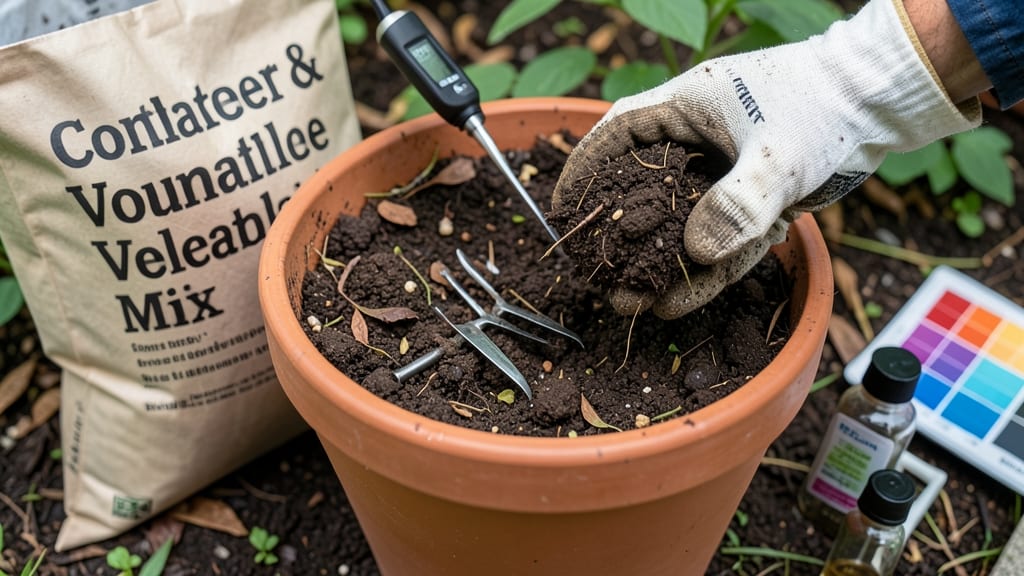
For garden soil in pots, use a lightweight mix with good drainage to prevent root rot and encourage strong growth, blending peat moss, perlite, and compost in a 3:1:1 ratio for balanced aeration and moisture control.
Container gardening thrives when your soil mimics natural conditions but with better airflow. The 3:1:1 ratio of peat moss, perlite, and compost creates the perfect balance—peat holds moisture while perlite prevents compaction. 🌱 This mix also improves nutrient availability, which is crucial for plants in confined spaces.
I've seen firsthand how this simple adjustment can transform struggling container plants into thriving ones within weeks.
Why does this matter? Regular garden soil compacts easily in pots, suffocating roots and trapping excess water. The lightweight components in this blend work together: peat moss retains moisture without drowning roots, perlite adds air pockets for oxygen flow, and compost provides essential nutrients.
This combination supports both shallow-rooted herbs and deep-rooted vegetables equally well.
💡 In This Article
- Why Lightweight Potting Soil Prevents Root Rot
- Best DIY Potting Soil Recipes for Container Gardening
Why lightweight potting soil prevents root rot
Root rot starts when soil becomes too dense, blocking oxygen and trapping excess moisture around plant roots. In pots, this happens quickly because water can't drain away as easily as in garden beds.
The 3:1:1 mix solves this by combining peat moss (which holds moisture), perlite (which creates air pockets), and compost (which feeds roots). This trio prevents compaction while maintaining ideal moisture levels—critical for plants confined to small containers. 🌱
The science behind this works like a sponge with ventilation: peat moss absorbs water like a sponge, but perlite acts as tiny air chambers that prevent suffocation. Without perlite, soil particles pack tightly, reducing oxygen to less than 10%—a deadly level for most plants.
Studies show that well-aerated mixes maintain oxygen at 20-30%, allowing roots to breathe and grow. The compost adds microbial activity, breaking down nutrients into forms plants can absorb immediately.
pH balance also plays a hidden role. Lightweight mixes typically maintain a neutral 6.0-7.0 pH, ideal for most vegetables and herbs, while garden soil can vary wildly. This consistency helps prevent nutrient lockout, where minerals become unavailable due to extreme acidity or alkalinity.
For example, tomatoes thrive in slightly acidic soil (6.0-6.8 pH), but garden soil might be too alkaline without adjustment.
Consider this real-world example: basil plants in regular garden soil often develop yellow leaves within weeks due to poor drainage, while the same plants in a 3:1:1 mix stay vibrant for months.
The difference? The lightweight blend prevents waterlogged roots that suffocate plants. Even with daily watering, excess moisture drains away within 30-60 minutes, keeping roots healthy. 💧
For flowering plants, the aeration benefits extend to root development. Petunias, for instance, develop stronger root systems in lightweight mixes because their roots can spread freely without resistance. Without proper aeration, roots grow outward in search of oxygen, creating a shallow, weak system that collapses under the plant's weight.
The 3:1:1 ratio prevents this by maintaining loose, breathable soil structure.
One common misconception is that more organic matter always equals better soil. While compost is essential, too much can create a dense, water-retentive mix that defeats the purpose. The 3:1:1 ratio strikes the perfect balance—enough organic matter for nutrients without sacrificing drainage.
This is why commercial potting mixes often include sand or vermiculite alongside peat and compost: to maintain that critical air-to-moisture ratio. ✨