
Advice
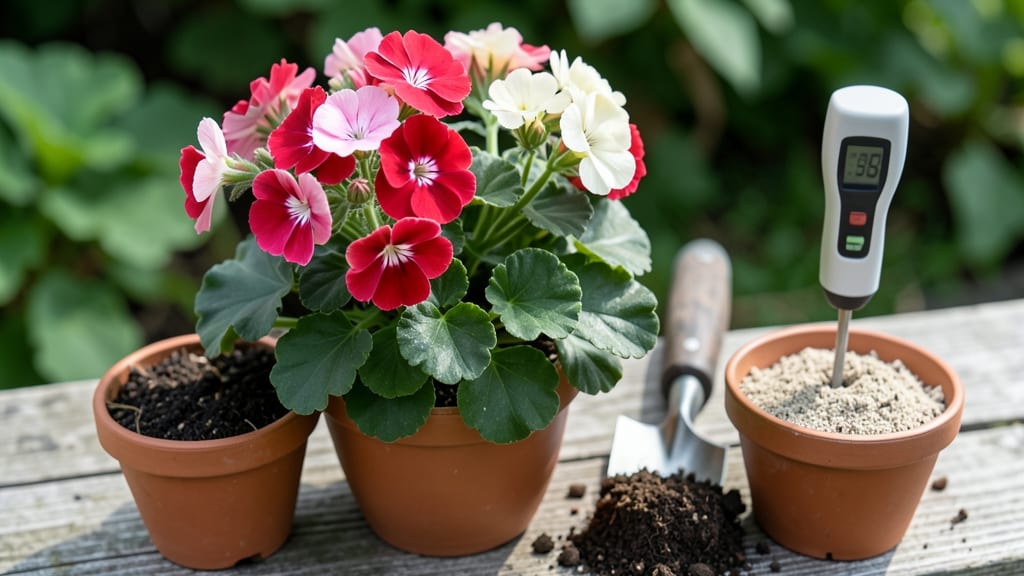
You can't reliably use garden soil as potting soil because it compacts easily, drains poorly, and may contain pests or diseases. Instead, mix it with perlite, sand, or compost to improve aeration and drainage before repurposing for containers.
Garden soil is heavy and dense, packed with clay and silt that smother plant roots by blocking oxygen flow. 🌱 Potting mixes, on the other hand, are designed to stay loose and drain freely, preventing root rot.
I've found that even a 50/50 blend with coarse sand or coconut coir transforms garden soil into a usable medium—just avoid pure garden soil for delicate plants like ferns or seedlings.
For best results, combine garden soil with 30% perlite or 20% compost to create a balanced mix. This approach mimics commercial potting soil's structure while leveraging your garden soil's natural nutrients. Always sterilize the mix by baking it at 200°F for 30 minutes to kill pathogens before use.
💡 In This Article
- Why Garden Soil Fails as Potting Mix
- Safe DIY Potting Soil Blends Using Garden Soil
Why garden soil fails as potting mix
Garden soil's heavy clay and silt particles create a dense matrix that suffocates roots by reducing oxygen availability. Most garden soils contain 40-60% clay, which holds water tightly and creates waterlogged conditions—ideal for fungal growth but deadly for container plants.
Potting mixes, by contrast, use lightweight components like peat moss or coconut coir that maintain 30-50% air pockets for healthy root respiration.
The particle size difference is dramatic: garden soil's average particle is 0.002mm (clay) while perlite expands to 2-4mm when heated, creating channels for water and air movement. Without these air gaps, roots can't access oxygen, leading to yellowing leaves and stunted growth.
I've seen tomato plants in pure garden soil develop root rot within 2 weeks—their roots simply couldn't breathe.
Nutrient imbalances also plague garden soil. While it may contain organic matter, the nutrients are often locked in mineral forms that plants can't access quickly. Potting mixes use fast-release fertilizers and balanced organic amendments to provide consistent nutrition.
For example, a 10-10-10 NPK ratio in commercial mixes ensures plants get nitrogen for leaves, phosphorus for roots, and potassium for overall health—something garden soil rarely provides in usable amounts.
Pathogen risks make garden soil particularly dangerous for containers. Soil from your yard may harbor nematodes, fungal spores, or bacterial infections that thrive in the confined space of pots. Even healthy-looking garden soil can contain Phytophthora (a deadly root rot pathogen) that becomes concentrated in containers.
The closed system of pots creates perfect conditions for these microbes to multiply rapidly.
Texture differences are immediately noticeable when you handle both soils. Garden soil feels gritty and dense—almost like wet sandpaper—while proper potting mix crumbles easily between your fingers with a light, fluffy texture.
This physical difference translates directly to plant health: roots in dense soil struggle to spread, while those in airy mixes explore their entire pot volume for nutrients.
Consider this comparison: a 1-gallon pot filled with garden soil might only provide 10% usable air space for roots, while the same pot with proper potting mix offers 40-50% air space.
This 4-5x difference in aeration explains why container plants often outperform their in-ground counterparts when given the right mix.