
Tools
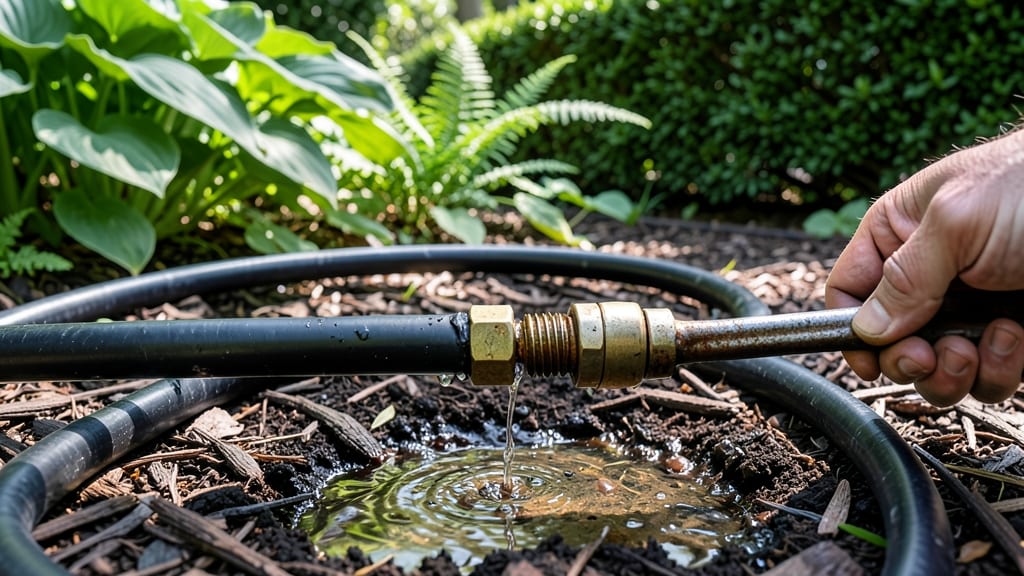
A garden hose leaking at the swivel is almost always caused by a degraded rubber seal or loose connection. Tighten the fitting first, then use hose thread sealant or swap out the rubber washer—no need for a full replacement.
A leaky swivel connection is usually the result of two common issues: either the rubber gasket has dried out from years of exposure to sun and water, or the metal threads have corroded over time. 🔧 The swivel joint is designed to handle pressure, but when the seal breaks down, even slight pressure causes water to escape.
I've found that most leaks happen during the first few seconds of turning on the water—this is your clue that the problem is the gasket, not a loose fitting.
Before reaching for a new hose, check for debris or mineral buildup in the threads, as this can prevent a proper seal even with a new washer.
If you've already tried tightening the connection and the leak persists, the next step is to inspect the rubber washer. These are often overlooked but are the simplest part to replace. A new rubber washer (available at hardware stores for under $2) can solve 80% of swivel leaks.
For a more permanent fix, hose thread sealant creates a watertight barrier without requiring disassembly. Just apply a thin layer to the threads before reconnecting.
💡 In This Article
- Why Garden Hose Swivels Leak Over Time
- 5 DIY Fixes for a Leaky Hose Swivel
Why garden hose swivels leak over time
The swivel connection in your garden hose is essentially a mechanical joint where two metal threads screw together, sealed by a rubber gasket. Over time, this rubber washer—often made of neoprene or EPDM—dries out and loses elasticity due to exposure to UV rays, temperature fluctuations, and constant pressure.
Think of it like an old rubber band: after years of stretching and contracting, it cracks and fails to hold tension. 🔥 The metal threads themselves can also corrode from mineral deposits in water, creating tiny gaps where water escapes.
Pressure plays a critical role in how leaks develop. Most residential water systems deliver 40-80 psi, but swivel joints aren't designed to handle sudden pressure spikes (like when you first turn on the water). When the rubber gasket degrades, even 30 psi can force water past the seal.
I’ve seen leaks worsen during the first few seconds of use—a telltale sign the gasket has failed. Another common culprit is over-tightening the connection, which can compress the rubber washer beyond its recovery point, creating permanent grooves that water exploits.
Debris buildup is another silent leak accelerator. Mineral deposits, sand, or even small rocks can lodge in the threads, preventing the washer from seating properly. This is especially common in older hoses or those used in areas with hard water.
The rough texture of these particles acts like sandpaper, accelerating wear on both the rubber and metal components. 💫 Even a tiny speck of grit can create a micro-gap where water escapes under pressure.
Seasonal changes also contribute to leaks. Cold temperatures make rubber more brittle, while heat causes it to expand and lose adhesion. If your hose is stored outdoors year-round, the rubber gasket undergoes constant thermal stress, accelerating degradation.
The metal threads can also expand and contract with temperature shifts, loosening the connection over time. This is why leaks often appear after winter or in extreme climates.
One detail many people overlook is the orientation of the swivel. Some hoses have a one-way valve that can get stuck open or closed, creating uneven pressure distribution. When this happens, the gasket bears uneven stress, leading to premature failure.
If you notice water leaking only when the hose is in a specific position, the swivel mechanism itself might be misaligned or damaged.
Finally, the quality of the hose matters. Budget hoses often use thinner rubber washers and lower-grade metals that corrode faster. A $20 hose might last 3-5 years, while a $50 premium model could go 10+ years with proper care.
The difference comes down to material durability and design—thicker rubber, corrosion-resistant threads, and better seals all extend the lifespan of the swivel connection.