
Plants
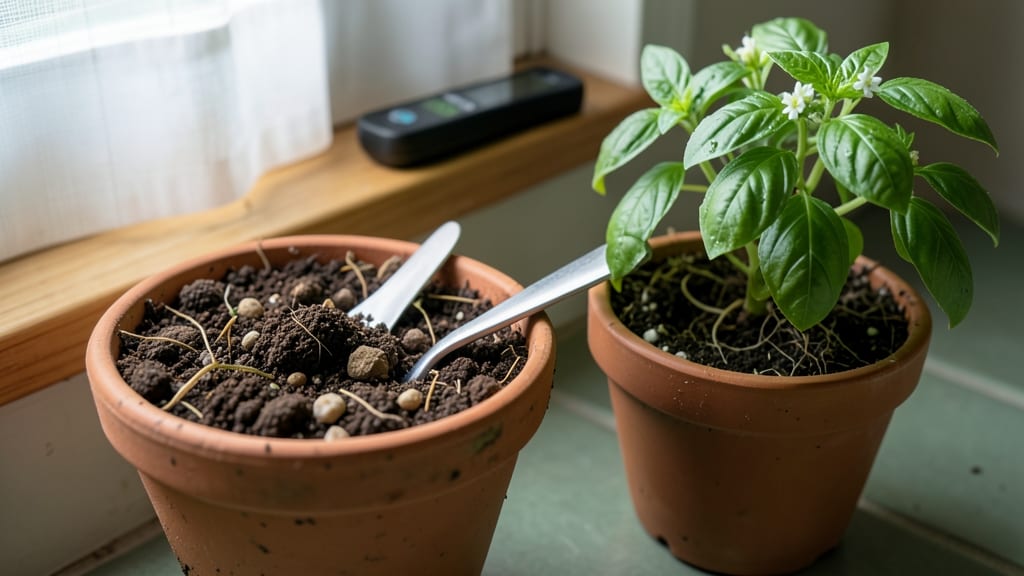
You shouldn't use garden soil for potted plants because it compacts easily, drains poorly, and may harbor pests or diseases. Instead, mix it with perlite or coconut coir to improve aeration and drainage for healthier root growth in containers.
Garden soil is designed for in-ground planting where roots can spread freely, but potted plants need a looser, more breathable medium. 🌱 Without proper amendments, garden soil becomes dense and waterlogged, suffocating roots and encouraging rot.
I've seen containers where plants struggled because the soil didn't allow excess moisture to escape—leading to yellowing leaves and stunted growth. The key is creating a blend that mimics the natural aeration of outdoor soil while preventing compaction.
For best results, combine garden soil with 20-30% perlite or coconut coir to create a fluffier texture. This improves drainage while retaining enough moisture for roots.
If you're growing moisture-sensitive plants like succulents, consider using a commercial cactus mix instead—it's specifically formulated to prevent overwatering issues that garden soil often causes.
💡 In This Article
- Why Garden Soil Fails in Potted Plant Environments
- Best Soil Mixes for Potted Plants Using Garden Soil
Why garden soil fails in potted plant environments
Garden soil is engineered for in-ground planting where roots can expand freely, but potted plants face a completely different challenge. In containers, soil lacks the natural compaction resistance of outdoor beds.
When you water potted plants, the confined space causes garden soil to settle tightly, reducing pore space by up to 40% compared to its original volume. This compaction creates anaerobic pockets where roots suffocate, leading to poor oxygen exchange and stunted growth. 🌱
The organic matter in garden soil breaks down much faster in pots because of higher temperatures and moisture retention. What starts as a rich, crumbly medium can turn into a dense, clay-like mass within weeks.
This breakdown also releases nutrients too quickly, causing a "flush" that benefits weeds more than your potted plants. The microbial activity that thrives in outdoor soil becomes unbalanced in containers, often leading to harmful pathogens like Phytophthora that rot roots.
Drainage becomes another critical issue. Garden soil holds water like a sponge, but without proper amendments, excess moisture has nowhere to go in a pot. This creates the perfect conditions for fungal diseases like root rot, which can kill plants within weeks.
The lack of airflow in compacted soil also makes it easier for pests like fungus gnats to lay eggs—something I've seen firsthand in poorly amended potting mixes. These pests thrive in the damp, anaerobic conditions that garden soil creates when used unmodified.
Consider the texture difference: garden soil feels heavy and clumps together when wet, while ideal potting soil should crumble easily between your fingers. The particle size distribution in garden soil contains too much clay and silt, which bind tightly when moist.
In contrast, potting mixes incorporate coarse materials like perlite or vermiculite that create air pockets, allowing roots to breathe while still retaining moisture. This structural difference explains why container-grown plants often struggle when planted directly in garden soil.
One common misconception is that "any soil will work if the pot has drainage holes." While drainage is crucial, the soil composition matters more. Even with holes, garden soil's high clay content can form a waterproof barrier at the bottom of the pot, trapping moisture against the roots.
This is why professional growers use 10-20% sand or grit in their mixes—not to improve drainage alone, but to prevent this dangerous moisture buildup at the container's base. 💫
The temperature factor also plays a surprising role. Garden soil in pots heats up faster under sunlight, creating thermal stress for roots. The lack of natural insulation found in ground soil means temperature fluctuations can be extreme, further stressing plant health.
This is particularly problematic for tropical plants that prefer stable conditions—something garden soil simply can't provide in container environments.