
Advice
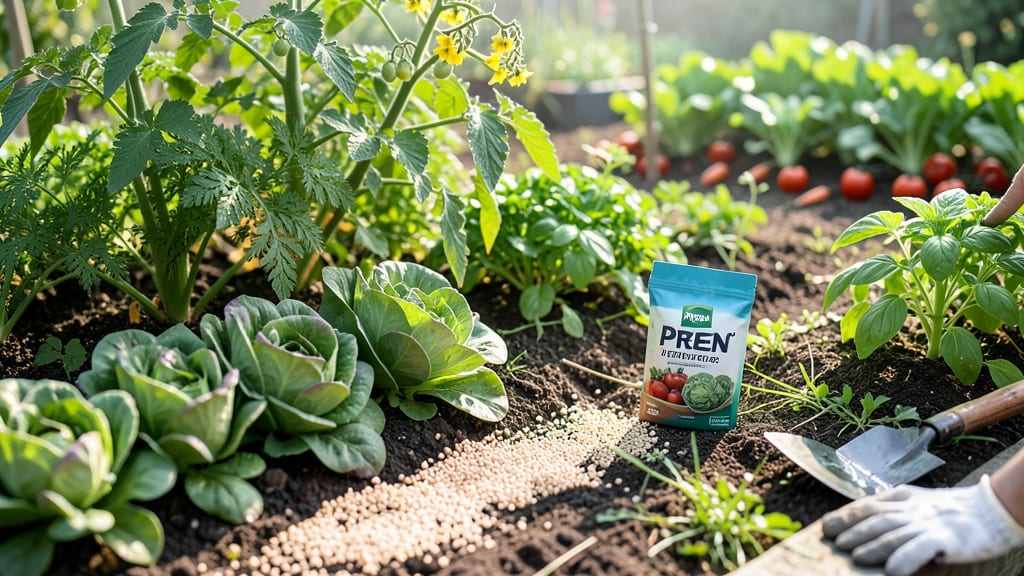
You can use Preen in a vegetable garden, but only after plants are fully established—its corn gluten meal active ingredient stops weed seeds from sprouting while also inhibiting young vegetable growth and edible plant development. Apply carefully to avoid harming crops.
Preen works by releasing compounds that block weed seeds from germinating, but these same compounds can also interfere with delicate root systems and young shoots in vegetables. 🌱 The risk is highest for shallow-rooted plants like lettuce or radishes, where corn gluten meal may disrupt early growth stages.
For safety, wait until your vegetables are at least 3-4 inches tall before applying, and keep it 6 inches away from plant stems to minimize contact.
Instead of relying solely on Preen, consider layering organic mulch around your vegetables or using targeted spot treatments with vinegar (for established weeds only). This approach maintains weed control while protecting your edible crops from unintended chemical interference.
💡 In This Article
- How Preen Works in Vegetable Gardens: Active Ingredients and Risks
- Safe Preen Application Tips for Vegetable Gardens
How Preen works in vegetable gardens: active ingredients and risks
Preen's power comes from corn gluten meal (CGM), a byproduct of corn processing that contains 10-12% protein by weight. When applied to soil, this protein breaks down into amino acids that interfere with weed seed germination by disrupting cell division in embryonic roots.
The active compounds create a 1-2 inch deep barrier that prevents weed seeds from sprouting for up to 3-4 months, depending on rainfall and soil temperature.
The same mechanism that stops weeds also affects young vegetable plants. Corn gluten meal contains phytic acid, which binds to essential minerals like zinc and iron in the soil, making them less available to plant roots.
This can stunt growth in seedlings and young transplants, particularly for leafy greens (spinach, kale) and root vegetables (carrots, radishes) that require consistent nutrient uptake during early development. The risk is highest when applied within 6 inches of plant stems, where CGM can directly contact delicate roots.
Soil microbes play a crucial role in how Preen performs. While CGM feeds beneficial bacteria and fungi in the long term, the initial application creates a temporary low-nitrogen environment that can stress young plants.
This is why Preen is most effective in bare soil areas between established crops rather than directly around vegetable beds. The microbial shift also explains why Preen works better in warm, moist soils (60-75°F)—ideal conditions for both weed suppression and potential plant stress.
Root crops face particular vulnerability because their edible portions develop near the soil surface. For example, radishes and beets have tender taproots that can absorb CGM compounds directly, leading to deformed growth or complete germination failure.
Even established plants like tomatoes may show yellowing leaves or stunted fruit production if Preen is applied too close to their root zones. The key difference between weeds and vegetables is that weeds are annuals with fast germination cycles, while many vegetables have longer growth periods requiring consistent nutrient access.
Consider this real-world example: In a 2018 University of Massachusetts study, researchers found that applying Preen within 3 inches of carrot seedlings reduced emergence by 40% compared to untreated plots.
The same study showed that corn gluten meal's effects diminished significantly when applied after seedlings reached 4 inches in height, demonstrating the critical window for safe use. This timing aligns with most vegetable planting schedules where seeds are transplanted or thinned to this height before facing weed competition.
What most gardeners don't realize is that Preen's effectiveness depends on proper soil moisture. When applied to dry soil, CGM forms a crust that can actually prevent water penetration, creating another stress factor for young plants.
The ideal application window is after rainfall or irrigation, when soil is moist but not waterlogged, allowing CGM to activate without creating physical barriers.
This moisture dependency explains why Preen often fails in sandy soils that drain too quickly or clay soils that stay too wet—both extremes affect how CGM interacts with soil microbes and plant roots.