
Pests
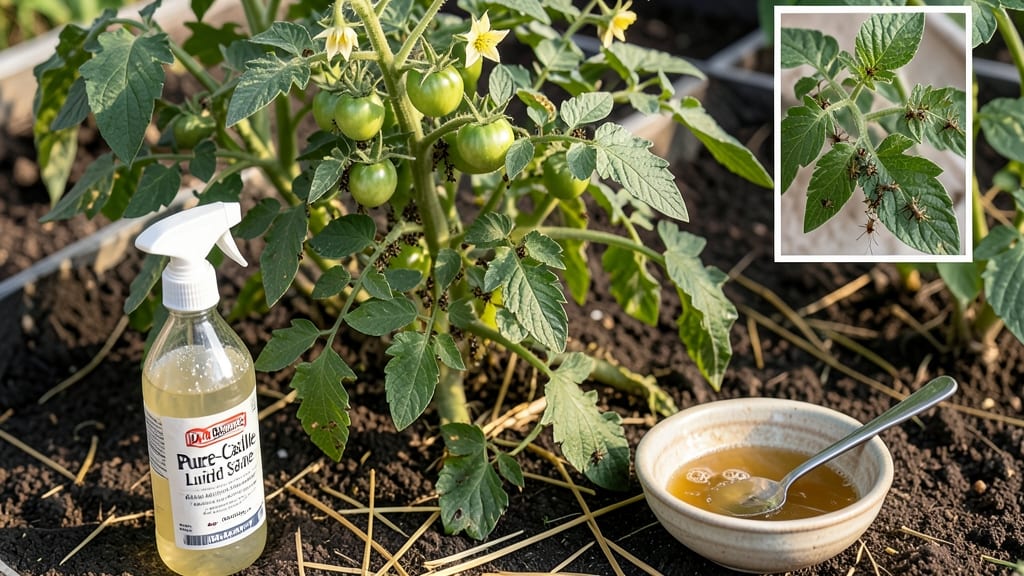
Castile soap for garden pests works by breaking down the protective wax layer on insects like aphids and mites, suffocating them while being gentle on plants when properly diluted. Mix 1-2 tablespoons per quart of water with a few drops of essential oil for enhanced effectiveness.
This natural solution targets soft-bodied pests without harsh chemicals, making it ideal for organic gardens. 🌿 The key is the soap's surfactant properties—it dissolves the insect's outer layer, leading to dehydration.
I've found that adding neem oil or garlic extract boosts the spray's potency against resistant pests while keeping plants healthy. Always test on a small leaf area first to check for sensitivity, especially with delicate plants like tomatoes or peppers.
For best results, apply in the early morning when pests are most active, avoiding direct sunlight which can dry the solution too quickly. Reapply every 5-7 days until the infestation clears, as repeated exposure is often needed for complete control.
This method is not only effective but also safe for beneficial insects like ladybugs when used correctly.
💡 In This Article
- How Castile Soap Kills Garden Pests Without Harming Plants
- 3 Best Homemade Castile Soap Spray Recipes for Targeted Pest Control
How Castile soap kills garden pests without harming plants
The magic of Castile soap lies in its natural surfactant properties, which act like a molecular disruptor for soft-bodied pests. When sprayed on insects like aphids or spider mites, the soap molecules penetrate their waxy outer layer, breaking down the protective cuticle that prevents water loss.
This causes rapid dehydration and suffocation—within minutes, you'll see pests curling up or falling off plants. The key difference from harsh chemical pesticides is that Castile soap doesn't kill by poisoning but by physical disruption, making it safer for beneficial insects when used correctly. 🔥
Dilution is absolutely critical because undiluted Castile soap can damage plant leaves through phytotoxicity—its alkaline pH (around 8-9) disrupts plant cell membranes just like it does to insects.
A 1-2% solution (1-2 tablespoons per quart of water) gives you the right balance: enough surfactant action to kill pests while keeping the pH low enough to avoid leaf burn.
For comparison, commercial insecticidal soaps typically use 0.25-0.5% concentration, but Castile's natural oils allow for slightly higher effective concentrations without plant harm.
What most gardeners don't realize is that the soap's effectiveness varies by pest type. Soft-bodied insects like aphids and whiteflies are most vulnerable because their exoskeletons offer minimal protection against the surfactant attack.
Harder pests like beetles or caterpillars have thicker outer layers, making Castile soap less effective against them—this is why it's often combined with neem oil or garlic for enhanced control.
The spray works best when applied directly to the pests, not just the foliage, as the soap needs to make direct contact with the insect's body. ✨
Temperature and humidity play subtle but important roles in the spray's performance. In hot, dry conditions, the solution dries too quickly, reducing effectiveness—this is why morning applications (when dew is still present) work best.
The ideal time is 6-9 AM, when pests are most active and the solution has time to work before evaporating. For stubborn infestations, reapplication every 5-7 days is often needed, as the soap's effects aren't cumulative but require repeated exposure to maintain control.
Plant sensitivity varies dramatically—delicate plants like tomatoes or peppers can show leaf scorch with improper use, while tougher plants like zucchini or squash handle the spray well. Always test a small leaf area first, especially with new plant varieties.
The soap's natural oils can also leave a slight residue that may attract some beneficial insects, so it's best to avoid spraying during peak pollinator activity (midday to early afternoon). 🌱
One often-overlooked factor is the water quality you use. Hard water with high mineral content can reduce the soap's effectiveness by binding with the surfactant molecules. If your tap water leaves spots on dishes, use filtered or rainwater instead for better results.
The addition of 1-2 drops of essential oil (like peppermint or rosemary) not only enhances the spray's scent but also acts as a natural fungicide, preventing secondary infections that often follow pest outbreaks.