
Advice
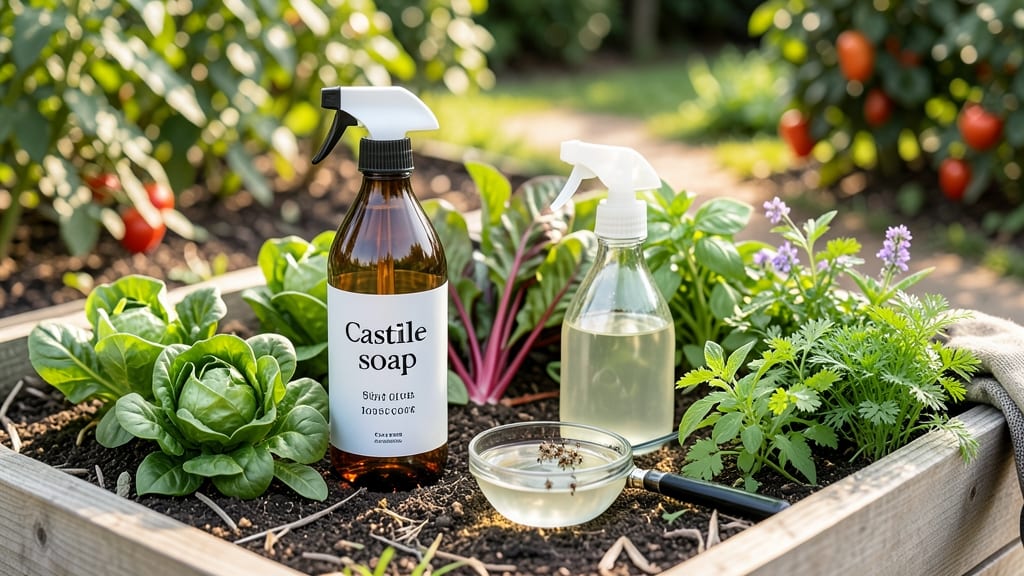
Using castile soap for garden creates an effective organic pest control solution when mixed correctly, targeting common insects like aphids and spider mites while preserving beneficial organisms and soil health. Always dilute it at 1-2 tablespoons per gallon of water and spot-test on a small leaf area first.
Castile soap works because its natural saponins break down the waxy protective layers on insect bodies, causing dehydration and death. 🌱 The key is dilution—too much soap can harm plant leaves, while proper mixing ensures it stays safe for your garden ecosystem.
I've found that adding a few drops of neem oil to the mix enhances its effectiveness against soft-bodied pests without adding harsh chemicals.
For best results, apply your homemade spray in the early morning or late evening when bees and other pollinators are less active. Always shake the bottle before each use, as the soap can separate over time.
Store your mixture in a cool, dark place to maintain its potency for up to two weeks.
💡 In This Article
- How Castile Soap Kills Pests Without Damaging Plants
- Plant-Safe Dilution Ratios for Different Garden Uses
How castile soap kills pests without damaging plants
The magic of castile soap lies in its active ingredient: saponins. These natural compounds create a chemical reaction when mixed with water, forming tiny soap molecules that cling to the waxy outer layer of insects like aphids and mites.
This disrupts their protective barrier, causing dehydration and suffocation within 24-48 hours. Unlike synthetic pesticides, saponins don't accumulate in soil or water, making them safe for beneficial insects when used correctly.
Dilution is critical because concentrated castile soap can damage plant leaves through phytotoxicity. The ideal ratio of 1-2 tablespoons per gallon of water creates enough soap molecules to kill pests while maintaining a pH level between 6.5-7.5—neutral enough to prevent leaf burn.
For comparison, commercial insecticidal soaps often contain 17-19% soap concentration, while homemade versions typically have just 0.5-1% soap when properly diluted.
What makes castile soap unique is its biodegradability. Unlike synthetic detergents that leave chemical residues, castile soap breaks down completely within 14-21 days in soil, leaving no harmful byproducts. This plant-based formula also contains glycerin, which acts as a mild humectant, helping to retain moisture in plant tissues.
The key is balance—too little soap won't kill pests, but too much can clog leaf pores and disrupt photosynthesis.
Temperature plays a surprising role in effectiveness. Applying the solution when temperatures are between 60-85°F allows the soap molecules to work optimally without evaporating too quickly. In cooler conditions, add a drop of vegetable oil to help the solution adhere better to leaf surfaces.
Always test your mixture on a small leaf area first—some plants like ferns and orchids are particularly sensitive to even diluted soap solutions.
When comparing to synthetic soaps, castile soap offers several advantages: it's non-toxic to humans and pets when used properly, doesn't contribute to antibiotic resistance (unlike some chemical pesticides), and supports a balanced garden ecosystem.
The downside is that it works best on contact—you'll need to spray directly onto pests rather than relying on residual effects. For persistent infestations, reapply every 5-7 days until the pests are eliminated.
For maximum effectiveness, combine your castile soap spray with 1 teaspoon of horticultural oil per gallon. This creates a dual-action treatment that smothers soft-bodied insects while also preventing fungal spores from germinating.
The oil adds a slight stickiness that helps the soap solution adhere longer to leaf surfaces, extending its protective window from 6-12 hours to 24-48 hours.
The science behind its safety lies in its gentle nature. Unlike synthetic detergents that contain harsh surfactants, castile soap's saponins are derived from olive oil, making them much less aggressive toward plant tissues.
This is why it's considered one of the safest organic pest control options for home gardeners—when used according to the 1-2 tablespoon per gallon guideline.