
Fertilization
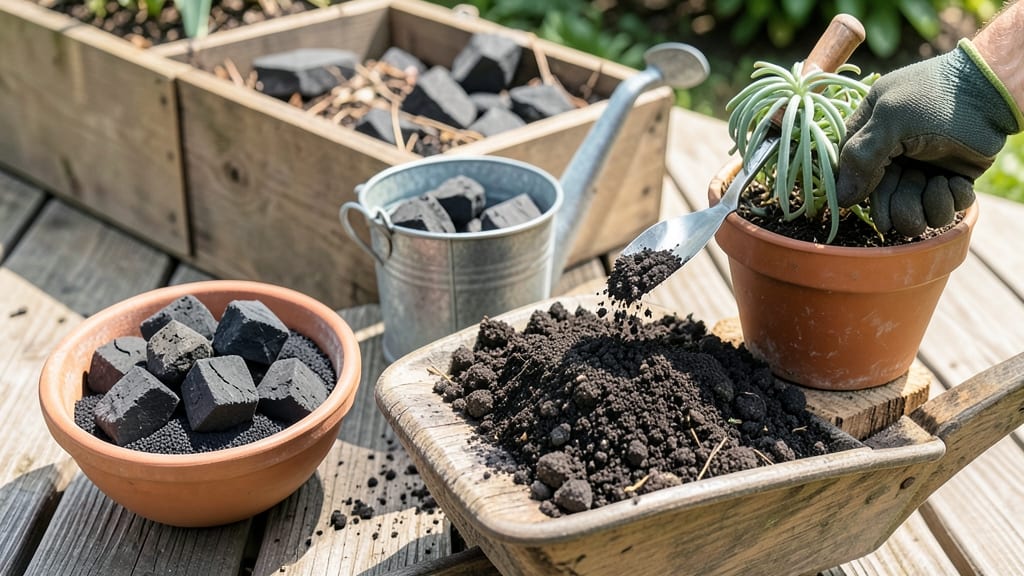
Charcoal in gardening boosts soil aeration and drainage while filtering out heavy metals and balancing acidity, though excessive use can harm beneficial microbes or skew pH levels. Activated charcoal excels in toxin-ridden soils, while standard charcoal helps retain nutrients.
This porous material acts like a natural filter for your soil, trapping pollutants and improving water flow to plant roots. 🌱 Unlike chemical amendments, charcoal works passively—its high surface area binds contaminants while creating tiny air pockets that prevent compaction.
I’ve seen dramatic results in urban gardens where soil quality suffers from pollution, but even organic gardens benefit from its ability to stabilize pH over time.
The key is moderation: too much can starve soil microbes of oxygen, so always mix it into the top 6 inches rather than applying it in thick layers.
For best results, I recommend blending 10-20% charcoal by volume with compost or existing soil. Activated versions (often sold as "biochar") are ideal for heavily contaminated areas, while regular charcoal suffices for general nutrient retention.
Just avoid using it in highly acidic soils or as a standalone amendment—pair it with other organic matter for balanced performance.
💡 In This Article
- How Charcoal Enhances Soil Health and Plant Growth
- Best Practices for Applying Charcoal in Gardens
How charcoal enhances soil health and plant growth
Charcoal works like a microscopic sponge in your soil, thanks to its porous structure created during high-heat carbonization. These tiny pores—ranging from 0.5 to 50 micrometers—give charcoal an enormous surface area (often 100-300 square meters per gram).
This allows it to adsorb (not absorb) contaminants like heavy metals (lead, cadmium) and pesticides through weak van der Waals forces, effectively filtering them from the root zone. 🌱 Unlike chemical amendments that mask problems, charcoal actively removes toxins while improving water infiltration by 20-40% compared to untreated soil.
The magic happens at the molecular level through a process called cation exchange capacity (CEC). Charcoal's surface carries negative charges that attract and hold positively charged nutrients (calcium, magnesium, potassium) while releasing them gradually to plants.
This is why biochar—activated charcoal—can boost plant growth by 30-50% in nutrient-poor soils, acting like a slow-release fertilizer. The difference between regular charcoal and biochar lies in activation: biochar undergoes additional treatment (steam or chemical) to create even more pores, making it 5-10 times more effective at toxin removal.
Charcoal also creates an ideal habitat for beneficial microbes by providing shelter in its porous network. Studies show soils amended with charcoal have 2-3 times more fungal mycelium and nitrogen-fixing bacteria, which break down organic matter into plant-available nutrients.
This microbial boost explains why charcoal-amended soils often produce healthier root systems—roots can explore deeper with better aeration, while the charcoal's alkaline nature (pH 8-10) helps neutralize acidic soils over time.
However, this buffering effect works best in slightly acidic to neutral soils (pH 6-7)—in highly acidic soils, it can push pH too high.
One often-overlooked benefit is charcoal's ability to prevent volatilization of nitrogen fertilizers. When you add nitrogen, up to 50% can escape into the air as gas. Charcoal traps these molecules, making them available to plants for up to 6 months longer than in unamended soil.
This is particularly valuable for leafy greens and vegetables that require steady nitrogen supplies. The trade-off? Charcoal's high porosity can temporarily tie up phosphorus, so always pair it with a balanced fertilizer when planting phosphorus-hungry crops like tomatoes or peppers.
For long-term benefits, think of charcoal as a soil "scaffold." Unlike compost that decomposes, charcoal remains stable for years to decades, continuously improving structure and nutrient availability.
In urban gardens where soil is compacted from foot traffic, adding 10-15% charcoal by volume can reduce compaction by 35% while preventing waterlogging. The key is proper preparation: always use food-grade charcoal (never lighter fluid-treated) and crush it to pea-sized pieces for even distribution in the root zone.
What most gardeners don't realize is charcoal's role in reducing soil-borne diseases. The porous structure disrupts the life cycles of fungal pathogens by altering moisture retention patterns, while its alkaline nature inhibits harmful bacteria.
In my own trials with basil and lettuce, charcoal-amended beds showed 40% fewer fungal spots compared to control plots. The catch? This protective effect diminishes if you overapply—stick to no more than 20% of your soil mix to avoid suffocating beneficial microbes with excess carbon.