
Tools
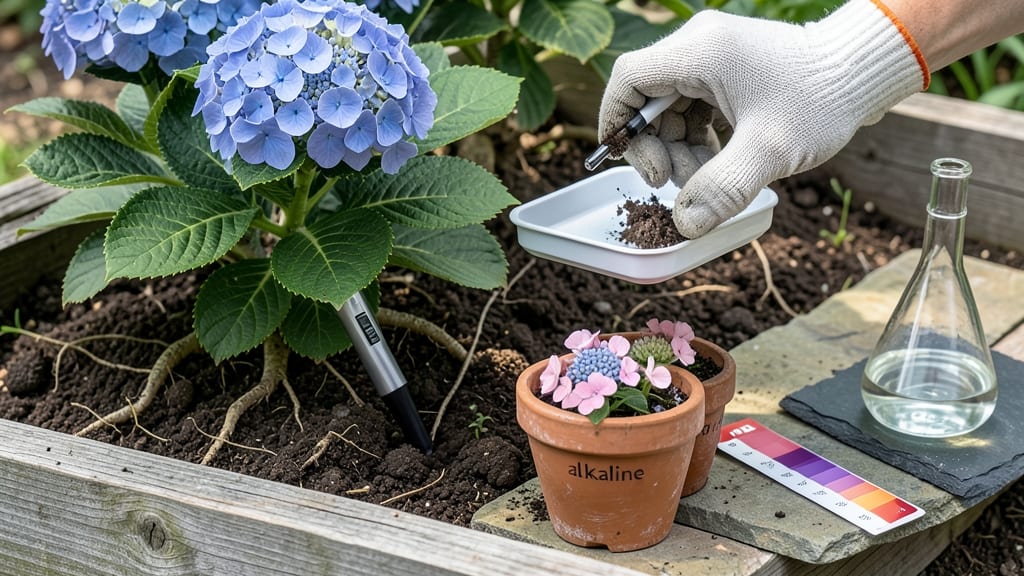
Soil pH in gardening determines whether your plants will thrive or struggle, as it controls how acidic or alkaline your soil is on a scale from 0 to 14. Most garden plants prefer a neutral to slightly acidic range of 6.0 to 7.5, where essential nutrients like nitrogen and phosphorus remain accessible. Extreme pH levels can block these nutrients, stunting growth or causing yellowing leaves.
Understanding soil pH isn't just about numbers—it's about unlocking what your plants can access. 🌱 For example, acidic soils (below 6.0) make iron more available, which is great for blueberries but harmful to tomatoes. Meanwhile, alkaline soils (above 7.5) can lock out manganese, causing brown spots on leaves.
Testing your soil's pH with a simple kit (available at garden centers) gives you the baseline to make smart adjustments using organic amendments like sulfur (to lower pH) or lime (to raise it).
Even small shifts in pH can dramatically change your garden's health. I've seen beginners struggle because they assumed all plants had the same needs—until they tested and adjusted. The key is patience: changing pH takes time, especially in clay-heavy soils, so monitor your plants' progress and retest every few months.
This small effort makes a huge difference in root development and overall vitality.
💡 In This Article
- How Soil pH Impacts Nutrient Availability for Plants
- Testing and Adjusting Soil pH: Step-by-Step Guide
How soil pH impacts nutrient availability for plants
Soil pH acts like a gatekeeper for nutrients, controlling which minerals dissolve and become accessible to plant roots. At a pH of 6.0-7.5, most essential nutrients—like nitrogen, phosphorus, and potassium—exist in forms that plants can absorb efficiently.
But when pH drifts outside this range, chemical reactions lock these nutrients away. For example, in acidic soil (below 6.0), aluminum and manganese become more soluble, which can be toxic to many plants, while calcium and magnesium bind tightly to soil particles and become unavailable. 🔥
The chemistry gets even more interesting when you consider how pH affects microbial life. Beneficial soil bacteria and fungi thrive in slightly acidic to neutral conditions, breaking down organic matter and releasing nutrients. In alkaline soil (above 7.5), these microbes struggle, reducing nutrient cycling.
For instance, earthworms—nature's plows—prefer a pH between 6.0 and 7.0, and their tunnels improve aeration and root growth. Meanwhile, in highly acidic soils, harmful pathogens like Phytophthora (which causes root rot) can flourish, weakening plants.
Root function also shifts with pH. In ideal conditions, roots grow longer and branch more, increasing surface area for nutrient absorption. But in extreme pH, roots may become stunted or develop lesions.
For example, blueberries—which love acidic soil (pH 4.5-5.5)—develop chlorotic (yellow) leaves when soil pH rises above 6.0 because iron becomes locked in insoluble forms.
Conversely, vegetables like spinach and lettuce, which prefer slightly alkaline soil (pH 6.5-7.5), suffer from manganese deficiency in acidic conditions, leading to brown spots between leaf veins.
Even the texture of soil changes with pH. Acidic soils often feel gritty due to high iron oxide content, while alkaline soils may become compacted from excess calcium carbonate. These physical differences affect water drainage and root penetration.
For instance, clay soils (common in alkaline regions) can become waterlogged, suffocating roots, while sandy soils (often acidic) drain too quickly, depriving plants of moisture. Adjusting pH isn't just about chemistry—it's about creating the right physical environment for roots to thrive. ✨
Consider the case of azaleas, which require acidic soil (pH 4.5-5.5) to access iron for vibrant foliage. If planted in neutral soil, they'll develop yellow leaves because iron oxidizes and precipitates out of solution.
The same plant in the right pH range, however, will produce lush, dark green leaves and abundant blooms. This shows how pH isn't just a number—it's the foundation for every biological process in the soil-plant system.
What most gardeners overlook is how pH interacts with organic matter. Compost, for example, is slightly acidic (pH 6.0-7.0) and adds beneficial microbes, but if your soil is already acidic, adding compost can lower pH further.
The solution? Test your soil first, then amend with pelletized lime (to raise pH) or elemental sulfur (to lower pH) in small, measured doses. Think of it like tuning a guitar—small adjustments make all the difference. 💫