
Trees
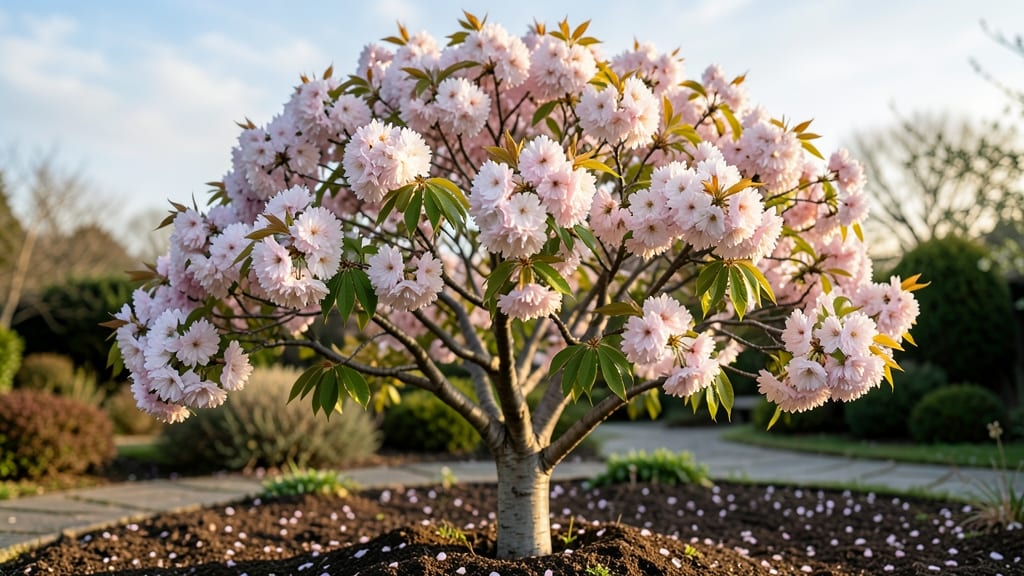
For a cherry blossom tree in your garden, prioritize cold-hardy, disease-resistant varieties like Prunus serrulata or Prunus avium that align with your climate zone and available space to guarantee stunning spring blooms with minimal upkeep.
A cherry blossom tree transforms your garden into a springtime spectacle, but not all varieties thrive equally. 🌸 The key lies in matching your local climate—most cherry blossoms flourish in USDA zones 3 through 8—while ensuring your soil drains well and receives full sun exposure.
For example, Prunus serrulata handles colder regions beautifully, while Prunus avium prefers milder climates. Smaller spaces? Dwarf varieties like Kwanzan bloom abundantly without overwhelming your yard, while standard trees like Autumnalis offer year-round interest in larger landscapes.
Beyond climate, consider bloom timing and maintenance. Some varieties like Shirotae produce pure white flowers that contrast beautifully with greenery, while others like Fugenzo offer double blooms for extra drama.
Pruning needs also vary—dwarf trees require less frequent trimming than their taller counterparts, making them ideal for urban gardens or patios.
💡 In This Article
- Climate and Soil Requirements for Cherry Blossom Trees
- Top Cherry Blossom Tree Varieties for Small and Large Gardens
Climate and soil requirements for cherry blossom trees
Cherry blossom trees thrive in USDA hardiness zones 3 through 8, meaning they adapt to everything from harsh northern winters to mild southern climates.
The cold-hardy Prunus serrulata varieties can withstand temperatures down to -30°F, making them perfect for zones 4-6, while Prunus avium (wild cherry) prefers milder zones 5-8.
Here's what's actually happening: these trees enter dormancy in winter, and their bark thickens to protect against freezing, but prolonged exposure to -20°F or colder can cause dieback in less-hardy species.
The ideal soil pH for cherry blossoms ranges from 5.5 to 6.5, slightly acidic to neutral, which mimics their natural forest floor habitats in Japan and Korea. Soil composition matters just as much—these trees prefer well-draining loam with 25-30% organic matter to prevent root rot.
In heavier clay soils, amending with compost or sand improves aeration. Sunlight is non-negotiable: cherry blossoms demand 6-8 hours of direct sunlight daily for optimal blooming, though they tolerate partial shade in hotter climates where afternoon shade prevents leaf scorch.
Regional adaptations reveal fascinating differences between species. For example, Prunus subhirtella (autumn-blooming cherry) thrives in zones 5-8 and can produce flowers in late fall or early spring, extending your garden's visual appeal.
Meanwhile, Prunus x yedoensis (Yoshino cherry) handles urban pollution better than most, making it ideal for city gardens where air quality might otherwise stress the tree. What most people don't realize is that these adaptations often come with trade-offs—like slightly smaller blooms on urban-tolerant varieties compared to their rural counterparts.
Watering needs change dramatically with tree maturity. Newly planted cherry blossoms require 1-2 inches of water weekly, while established trees need only supplemental water during droughts. Overwatering is a common mistake—soggy soil leads to fungal diseases like black knot, which can disfigure branches.
The key factor is maintaining consistent moisture without waterlogging: think of it like giving your tree a drink that soaks in gradually rather than a sudden downpour.
One often-overlooked detail is wind exposure. While cherry blossoms can handle moderate breezes, constant wind stress—especially in exposed locations—can stunt growth and reduce flowering. In windy regions, planting near a natural windbreak (like a hedge or fence) creates a microclimate that protects delicate blossoms.
For coastal gardens, salt spray becomes another challenge: choose Prunus serrulata varieties with thicker cuticles, like 'Akebono', which tolerates up to 200 parts per million of salt in soil.
Seasonal care varies by region too. In northern climates, mulching with 3-4 inches of organic mulch in late fall insulates roots against freezing. In southern zones, mulch helps retain moisture during dry summers. The science behind this involves root temperature regulation: consistent soil temps between 50-70°F promote healthy growth year-round.