
How To
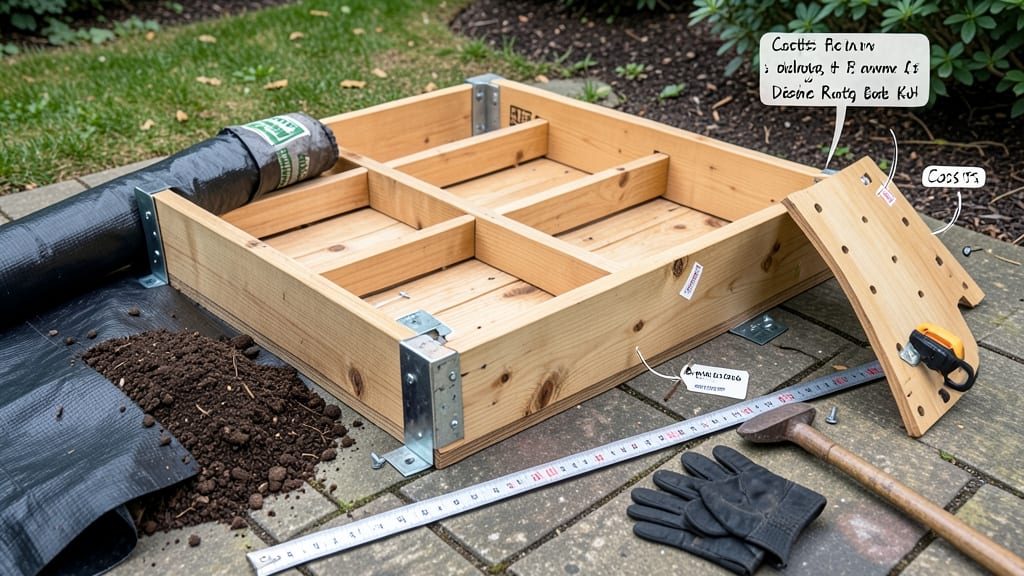
The cost of building a raised garden bed typically ranges from $100 to $1,200+, with most 4’x8’ cedar beds costing $150–$500 for DIY projects and professional builds adding $200–$800+ for labor. Smaller kits or repurposed materials can slash expenses significantly.
The price swings widely based on what you choose to build.
A 4-foot by 8-foot cedar bed—one of the most popular sizes—usually costs between $200 and $400 if you handle the assembly yourself, but that jumps to $600–$1,200 when you factor in professional installation. 🔥 The materials alone can vary drastically: cedar is pricier upfront but lasts longer than pine, while composite lumber offers rot resistance without the maintenance.
I’ve seen gardeners save hundreds by using reclaimed wood or even cinder blocks for the frame, though those options require more elbow grease.
What really drives costs is whether you’re building a simple 2-foot by 4-foot starter bed or a sprawling 6-foot by 12-foot masterpiece. Soil quality matters too—topsoil alone can add $50–$150 depending on how much you need, while premium garden mixes with compost cost even more.
If you’re handy, DIY saves thousands, but if you’re short on time or dealing with tricky terrain, hiring help might be worth the splurge for a stress-free project.
💡 In This Article
- Raised Garden Bed Material Cost Breakdown by Size
- DIY vs Professional Build: Cost-Saving Tips and Trade-Offs
Raised garden bed material cost breakdown by size
Material costs are the foundation of your raised bed budget, and they vary dramatically based on lumber type and bed dimensions. A 4-foot by 8-foot cedar bed—the gold standard for durability—typically requires 12–16 boards (2x6 or 2x8), costing $150–$300 for pressure-treated pine or $300–$500 for cedar.
Redwood runs even pricier at $400–$700 due to its natural rot resistance, while composite lumber (like Trex) can cost $800–$1,200+ but lasts 20+ years with zero maintenance. The key difference? Cedar and redwood resist rot naturally, while pine needs sealing every 2–3 years.
Hardware adds $20–$50 to the total—galvanized screws ($10–$15) and corner brackets ($5–$10 each) ensure stability, while pre-assembled corner kits can save time. For a 2-foot by 4-foot bed, materials might cost $50–$150, while a 6-foot by 12-foot monster can exceed $1,000 in lumber alone.
Soil isn’t cheap either: 1 cubic yard of garden mix costs $30–$60, and a 4’x8’ bed needs 0.5–1 cubic yard depending on height (6–12 inches deep). 🌱
Size directly impacts cost per square foot. A 4’x8’ cedar bed costs about $15–$30 per square foot in materials, while a 2’x4’ pine bed drops to $10–$20 per square foot. Custom dimensions (like 5’x6’) force you to buy extra lumber, adding 10–20% waste cost.
Pro tip: Measure twice, buy once—wasted wood can eat 20–30% of your budget if you miscalculate. For example, a 4’x8’ bed needs 16 boards at 8 feet long, but cutting errors can turn that into 18 boards.
Budget-friendly swaps can cut costs without sacrificing quality. Reclaimed wood (from pallets or fences) costs $1–$3 per board but may need sanding or sealing. Cinder blocks ($1–$3 each) create sturdy, low-maintenance frames, though they lack the polished look of wood.
For soil, mix 50% topsoil ($10–$20 per bag) with 50% compost ($5–$15 per bag) to save 30–40% vs. pre-mixed garden blends. The trade-off? Homemade mixes may lack nutrients, so test soil pH before planting.
Here’s a real-world comparison for a 4’x8’ bed:
- Cedar lumber: $300–$400 (lasts 10–15 years)
- Pressure-treated pine: $150–$250 (needs sealing)
- Composite lumber: $800–$1,000 (no maintenance)
- Soil (1 cubic yard): $50–$100 (mix of topsoil + compost)
- Hardware: $30–$50 (screws + brackets)
Durability pays off long-term. Cedar and redwood may cost 2–3x more upfront but last 15–20 years with minimal upkeep, while pine or composite might need replacing in 5–10 years.
If you’re renting or plan to move, pine or pallet wood could be smarter short-term investments. For permanent beds, splurge on cedar or composite—your wallet (and back) will thank you.