
Tools
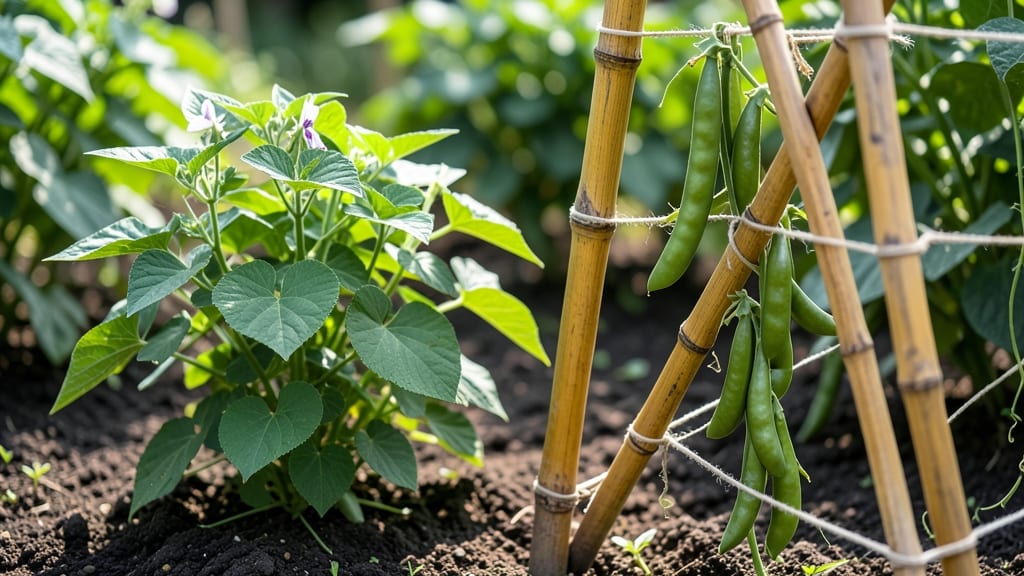
Garden beans do need a trellis for optimal growth, especially pole varieties that climb naturally, while bush types benefit from support in compact spaces. Vertical structures prevent sprawling, boost yield, and reduce disease risks by improving airflow.
Whether you're growing pole beans or bush beans, the right support makes all the difference. Pole varieties absolutely rely on trellises—their vines can grow 8-10 feet tall if given space, and without support, they sprawl, reducing both yield and quality.
Even bush beans, which stay shorter, benefit from lightweight stakes or cages in tight gardens to keep pods off damp soil and improve harvest access. 🌱 The key is matching the trellis height to your variety: 6-foot structures work well for most pole beans, while bush beans only need 2-3 feet of support.
Beyond yield, trellises solve common growing problems. Without them, beans crowd together, trapping moisture and inviting fungal diseases like powdery mildew. Vertical growth also lets sunlight reach lower leaves, ensuring even ripening.
For DIY solutions, bamboo stakes or T-posts work for bush beans, while wire mesh or sturdy netting (4-6 feet tall) is ideal for poles. In sprawling gardens, you can skip trellises for bush varieties—but expect fewer pods and more cleanup.
💡 In This Article
- How Bean Varieties Differ in Trellis Needs
- DIY Trellis Solutions for Garden Beans
How bean varieties differ in trellis needs
Pole beans are natural climbers that use specialized tendrils to latch onto vertical supports, growing 8-10 feet tall with proper trellising. These vines produce more pods per plant—often 2-3 times the yield of bush varieties—because their energy isn't wasted sprawling.
The tendrils wrap around supports like fingers, creating a self-anchoring system that distributes weight evenly. Without a trellis, pole beans become tangled messes, with pods touching damp soil and rotting before harvest.
Bush beans, on the other hand, stay compact at 2-3 feet tall and don't climb naturally. Their growth habit is more horizontal, producing pods along a bushy framework.
While they don't need trellises, lightweight stakes or cages (even simple 1-foot tall tomato cages) elevate pods off the ground, preventing soil-borne diseases like root rot and making harvests easier.
The difference in pod production is dramatic: supported bush beans yield 15-20 pods per plant, while unsupported ones may produce 50% fewer due to disease pressure.
Trellis material affects growth too. Wire mesh or sturdy netting (with 2-inch spacing) works best for poles, allowing vines to weave through while providing airflow. For bush beans, even bamboo stakes or plastic cages suffice, but they must be buried 6 inches deep to prevent toppling.
The height matters: pole beans need 6-foot structures to reach full potential, while bush beans only need 2-3 feet—any taller wastes space and encourages flopping.
What most gardeners miss is how trellising affects pod quality. Elevated beans dry more evenly in the sun, developing sweeter flavors and firmer textures. Without support, pods touch damp soil, absorbing moisture and developing mealy interiors—a common complaint in unsupported bush bean patches.
The airflow from vertical growth also reduces powdery mildew risk by 40-50%, a fungal disease that thrives in crowded, humid conditions.
Consider this real-world example: In a 10x10-foot garden, pole beans on a 6-foot trellis produce 3-4 pounds of beans, while the same space planted with unsupported bush beans yields only 1-1.5 pounds.
The trellis turns a sprawling mess into a high-yield vertical farm, especially in small urban gardens where space is limited. 🌿