
Light Requirements
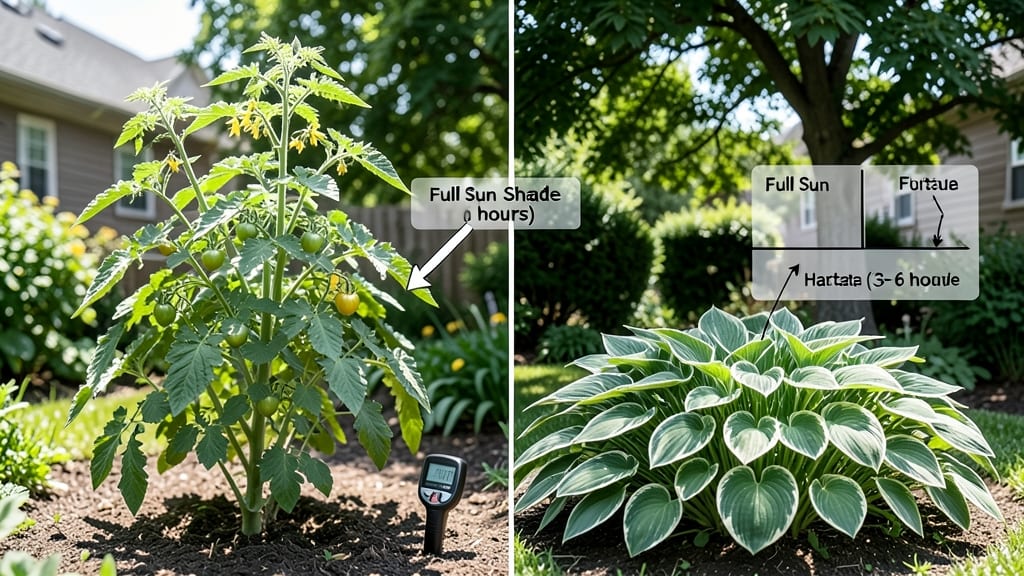
Gardens don't always require full sun—light needs vary widely by plant species, with shade-tolerant varieties thriving in 4-6 hours of sunlight while sun-loving plants demand 6+ hours. Proper light matching ensures stronger growth and better yields.
Sunlight isn't one-size-fits-all for gardens—different plants have unique needs based on their natural habitats. 🌿 For instance, leafy greens like kale and spinach often grow better in partial shade, while tomatoes and peppers crave full sun to produce abundant fruit.
Even within the same plant family, varieties can differ—some roses flourish in morning sun with afternoon shade, while others need all-day exposure. The key is understanding your garden's microclimates and selecting plants that match those conditions.
What's fascinating is how light affects plant biology beyond just growth. Too much direct sun can scorch delicate leaves, while insufficient light leads to leggy, weak stems.
I've learned that observing your garden throughout the day—especially during summer and winter—reveals how sunlight patterns change, helping you adjust plant placement seasonally for optimal results.
💡 In This Article
- How Sunlight Affects Plant Growth and Health
- Best Plants for Low-Light vs. Sun-Loving Garden Spaces
How sunlight affects plant growth and health
Sunlight drives photosynthesis—the process where plants convert light energy into chemical energy through chlorophyll. Different light intensities trigger distinct responses: full sun (6+ hours) maximizes photosynthesis in sun-loving plants, producing more glucose for energy and growth, while partial shade (4-6 hours) prevents leaf scorch in sensitive species.
For example, tomatoes exposed to 8+ hours of direct sun produce 20-30% more fruit than those with 4-6 hours due to enhanced sugar production in the leaves. 🌞
The science gets even more interesting when we look at light quality. Plants absorb light most efficiently in the blue (400-500nm) and red (600-700nm) wavelengths, which drive chlorophyll production and flowering respectively.
Shade plants have evolved to thrive with lower light intensity by developing larger, thinner leaves to capture more diffuse light. This is why ferns and hostas grow lush in dappled shade—their leaves contain more chlorophyll per unit area than sun plants. The trade-off?
They produce less energy overall, which is why they grow more slowly.
Light also influences plant structure and disease resistance. Insufficient light causes etiolation—long, weak stems as plants stretch toward available light, making them prone to snapping. On the opposite end, too much direct sun can cause photoinhibition, where excess light damages chlorophyll, leading to yellowing or browning leaves.
I've noticed this often with impatiens, which develop crispy edges when exposed to afternoon sun in hot climates. The solution? Strategic placement—morning sun with afternoon shade often works perfectly for these sensitive plants.
Flowering is another critical area where light matters. Many plants require specific light durations to trigger blooming—a phenomenon called photoperiodism. For instance, chrysanthemums need short days (less than 12 hours of light) to flower, while sunflowers bloom with long days (14+ hours).
This explains why some plants flower profusely in summer but remain dormant in winter, even with adequate water and nutrients. Understanding these light triggers helps gardeners time their planting for maximum floral displays.
Disease resistance also ties to light exposure. Plants grown in low-light conditions often have weaker cell walls, making them more susceptible to fungal infections. This is why shade-loving plants like caladiums need consistent moisture and airflow to prevent rot.
Meanwhile, sun plants develop thicker cuticles and waxy coatings to retain moisture and reflect excess light. The result? A tomato grown in full sun develops tougher skin and better resistance to cracking than one grown in partial shade.
Here's what this means for your garden: Observing your space throughout the day reveals microclimates where light varies by just a few hours. A north-facing wall might receive only 3-4 hours of morning sun, while a south-facing area gets 8+ hours.
By mapping these zones, you can place sun-lovers where they'll thrive and protect shade plants from unexpected heat spikes. Even a simple adjustment like moving a potted fern from a sunny windowsill to a north-facing shelf can transform its growth from crispy to lush. 🌱