
Pests
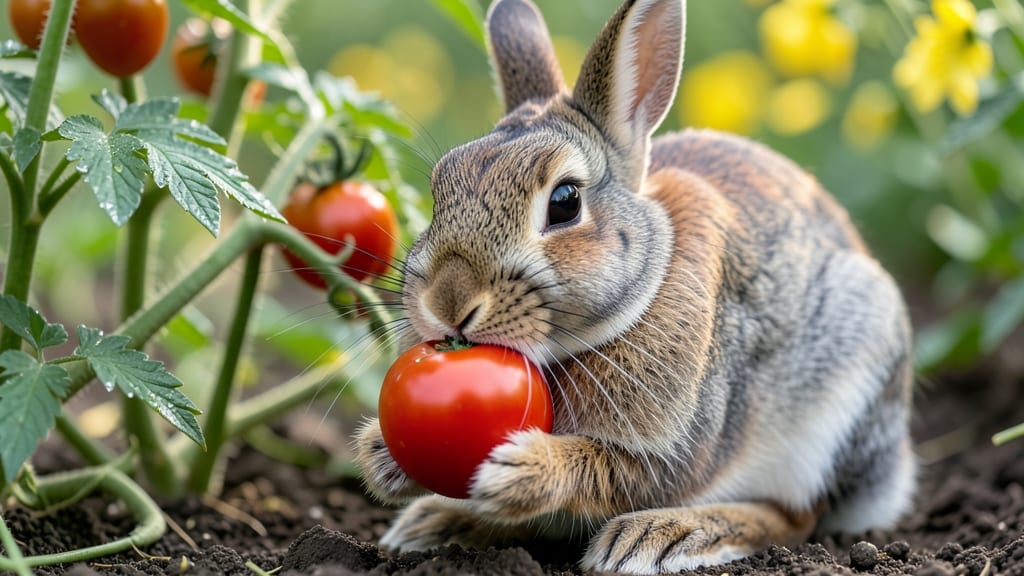
Rabbits do eat tomatoes in the garden, but they should avoid them because nightshade toxins like solanine and tomatine can trigger serious digestive issues, including lethargy or even paralysis. Stick to safe greens like cilantro, parsley, or lettuce instead.
While tomatoes might tempt your garden rabbits with their vibrant color and sweet smell, their nightshade compounds pose real risks. 🌱 These chemicals irritate a rabbit's sensitive digestive system, leading to symptoms like drooling, vomiting, or even neurological problems in severe cases.
The good news? Your garden can still provide fresh, safe snacks—just swap tomatoes for rabbit-approved plants like dandelion greens or basil, which offer similar nutrients without the danger.
For extra protection, consider adding physical barriers like chicken wire around your tomato plants. This keeps curious bunnies at bay while letting you enjoy your harvest. 🐇 Many gardeners also swear by planting rabbit-resistant herbs like rosemary or thyme nearby—they act as natural deterrents while adding beauty to your yard.
💡 In This Article
- Why Tomatoes Are Dangerous for Garden Rabbits
- Safe Vegetable Alternatives for Rabbit Gardens
Why tomatoes are dangerous for garden rabbits
Tomatoes belong to the nightshade family, which contains two key toxins: solanine and tomatine. These compounds act as natural pesticides for the plant, protecting it from insects and herbivores. In rabbits, solanine disrupts the nervous system by blocking acetylcholine receptors, leading to muscle weakness or paralysis.
Tomatine, meanwhile, irritates the digestive tract, causing cramping and diarrhea. 🌱 The green parts of tomatoes are especially dangerous—they contain 10-15 times more solanine than ripe fruit, making even accidental nibbles risky.
Rabbits have delicate digestive systems optimized for high-fiber, low-toxin foods like grasses and leafy greens. When they consume tomatoes, their gut bacteria struggle to process the alkaloids, leading to fermentation and gas buildup.
This creates a vicious cycle: the rabbit feels bloated and lethargic, then stops eating entirely, worsening the condition.
Symptoms often appear within 6-12 hours of ingestion and can include drooling, pawing at the mouth, or even seizures in severe cases. 🐰 A single ripe tomato might not kill a healthy adult rabbit, but repeated exposure or consumption of green parts can be fatal.
The toxicity risk varies by tomato variety and ripeness. Cherry tomatoes, for example, have lower solanine levels than beefsteak varieties, but they're still dangerous. Ripe red tomatoes contain about 5-10 mg of solanine per 100g, while unripe green ones can reach 20-30 mg per 100g.
For comparison, a rabbit's lethal dose of solanine is estimated at 0.2-0.5 mg per pound of body weight—meaning a 5-pound rabbit could be at risk from just 1-2 tablespoons of green tomato.
The bright red color doesn't guarantee safety, as some heirloom varieties retain high toxin levels even when ripe.
What makes this particularly tricky is how tomatoes smell and taste to rabbits. Their sweet aroma and juicy texture can override their natural caution, especially for young rabbits exploring new plants. Unlike cows or deer that avoid nightshades instinctively, rabbits lack this evolutionary warning system.
This is why gardeners often find rabbits happily munching on tomato vines while leaving nearby lettuce untouched. 🍅 The deception lies in how nightshades evolved to attract seed-dispersing animals while repelling browsers—rabbits fall into this trap every gardening season.
Even small amounts can cause long-term digestive issues. Chronic low-level exposure to solanine disrupts a rabbit's gut microbiome, leading to malabsorption and weight loss. Their hindgut relies on precise bacterial balance to break down fiber, and nightshade toxins throw this system into chaos.
The result? A rabbit that becomes picky about eating, develops scour (diarrhea), or suffers from painful gas buildup. These secondary effects are often what land rabbits in veterinary care—not the immediate poisoning most people assume.