
Tools
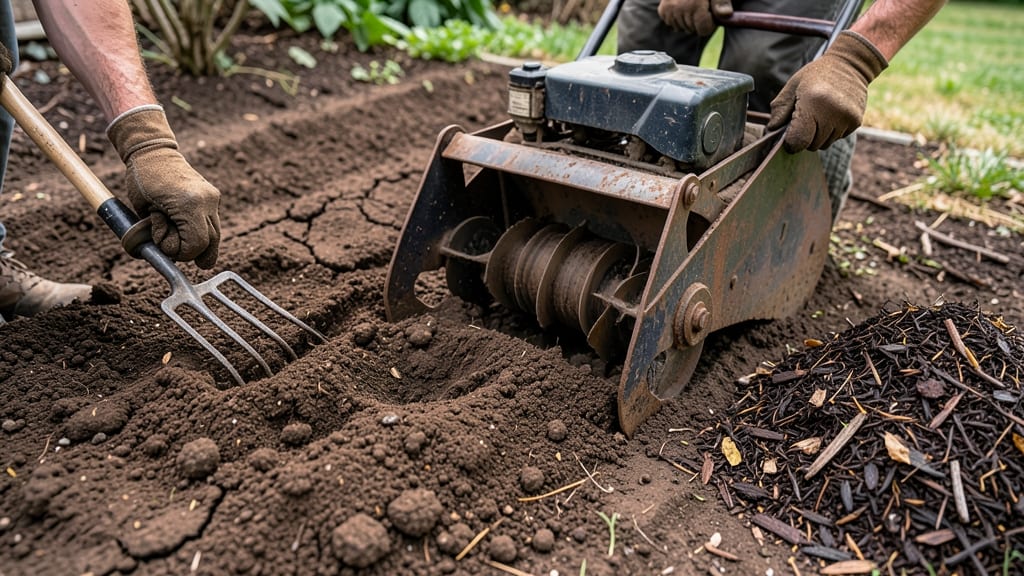
You don’t have to till a garden—many soil-health experts recommend no-till methods to preserve soil structure, microbial life, and moisture retention, though tilling may be necessary for compacted or heavily weeded soil.
Tilling disrupts the delicate ecosystem beneath your soil, breaking up beneficial fungi networks and exposing organic matter to rapid decomposition. 🌱 Instead of turning over the earth, consider alternatives like sheet mulching or cover crops, which improve soil health over time without the same level of disturbance.
I’ve found that gardens using no-till methods often retain moisture better and require less watering—especially in dry climates.
That said, tilling isn’t always harmful. If your soil is heavily compacted or choked with weeds, tilling can help aerate the roots and create a cleaner planting surface.
The key is timing—do it in the off-season when soil is moist but not frozen, and limit the depth to 6-8 inches to avoid damaging deeper root systems.
💡 In This Article
- How Tilling Affects Soil Health and Plant Growth
- When and How to Till a Garden Responsibly
How tilling affects soil health and plant growth
Tilling physically disrupts the intricate soil food web—a network of fungi, bacteria, and other microorganisms that work together to break down organic matter and release nutrients.
When you till, you sever these fungal filaments (called hyphae), which can take years to regenerate. 🌱 Studies show that tilling reduces fungal biomass by up to 50%, weakening the soil’s natural ability to retain water and nutrients.
This is why no-till gardens often require less watering—the undisturbed soil holds moisture better, similar to how a well-structured sponge retains liquid.
The process also exposes organic matter to oxygen, accelerating its decomposition into carbon dioxide. Over time, this reduces the long-term fertility of your soil, as carbon is lost instead of being stored as stable humus.
In contrast, no-till methods like sheet mulching (layering cardboard, compost, and mulch) or cover crops (like clover or vetch) build soil structure gradually while protecting microbial life. These techniques mimic natural ecosystems, where roots and decomposers work together without mechanical disruption.
One benefit of tilling is aeration—loosening compacted soil improves root penetration, especially in clay-heavy gardens where water pools and air can’t circulate. However, this advantage is short-lived. Within weeks, the soil often recompacts, and the initial boost in plant growth may not justify the long-term damage.
For example, a heavily tilled clay garden might yield better early tomatoes, but the same plot could struggle with erosion and poor drainage in subsequent years.
Erosion is another critical factor. Tilled soil loses 10-20 times more topsoil to wind and water than undisturbed soil, according to USDA data. The loose particles are easily swept away, taking precious nutrients with them.
This is why many regenerative farmers avoid tilling entirely, opting for broadforks (manual tools that loosen soil without turning it) or chisel plows (which disturb only the top layer). These tools preserve the soil’s structure while still improving plantability.
For visual comparison, imagine two gardens side by side: one tilled annually and one left undisturbed with mulch. The tilled garden might look fluffy and inviting at first, but its soil will feel powdery and lifeless after a few years.
The no-till garden, however, will develop a rich, crumbly texture—almost like a well-aged compost—thanks to the protected microbial activity. 🌿 This difference becomes especially noticeable in drought-prone areas, where no-till soils retain 20-30% more moisture during dry spells.
If you’re considering tilling, ask yourself: Is the immediate benefit worth the long-term trade-off? For most home gardens, the answer is often no—unless your soil is severely compacted or overrun with weeds.
In those cases, a single, shallow tilling (no deeper than 6 inches) in early spring can help, but pairing it with cover crops afterward will mitigate the damage.