
Fertilization
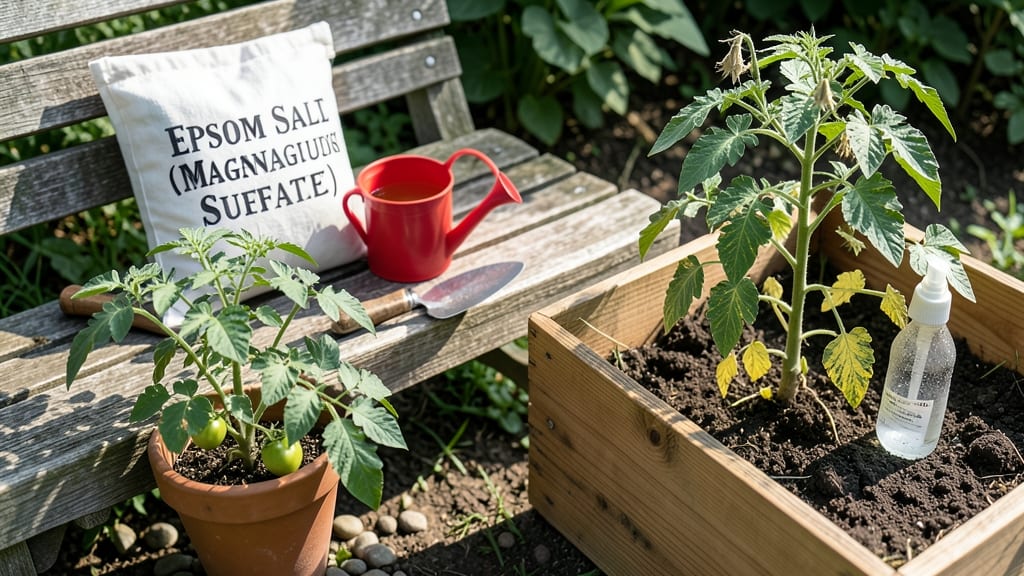
The myth about Epsom salt in gardens providing universal magnesium benefits is false—most soils already contain adequate magnesium, and overuse actually harms plants by altering soil chemistry and increasing salt buildup.
Most gardeners believe Epsom salt (magnesium sulfate) acts like a magical nutrient booster, but the reality is far less dramatic. 🌱 While magnesium is essential, standard soils already contain enough for healthy plants—what Epsom salt offers is often absorbed too slowly to make a meaningful difference.
The real danger lies in overapplication, which can create salt stress, causing yellowing leaves or stunted growth in sensitive plants like roses or ferns.
That said, there are very specific cases where diluted Epsom salt might help—like correcting magnesium deficiencies in acid-loving plants (blueberries, azaleas) or boosting flowering in tomatoes. But even then, organic amendments like compost provide magnesium more efficiently without the risk of soil damage.
Think of Epsom salt as a last-resort supplement, not a routine fertilizer. For most gardeners, the time and money spent on it would be better directed toward improving soil structure or using balanced organic fertilizers.
💡 In This Article
- The Science Behind Epsom Salt in Soil
- When and How to Use Epsom Salt Safely
The science behind Epsom salt in soil
Epsom salt—chemically magnesium sulfate (MgSO₄)—dissolves rapidly in water, releasing magnesium and sulfate ions that plants can absorb through their roots. However, the key misconception lies in how efficiently this happens.
Magnesium is already abundant in most soils (typically 500-5,000 ppm in healthy topsoil), and plants primarily uptake it from soil minerals like dolomitic limestone or organic matter—not from soluble salts like Epsom salt. The sulfate component, while beneficial in trace amounts, rarely becomes a limiting factor for plants.
Here’s the catch: Epsom salt’s magnesium is highly soluble, meaning it washes out of the root zone quickly unless applied in frequent, tiny doses. Studies show that even when plants do absorb magnesium from Epsom salt, they prefer it from less soluble sources like calcite or organic amendments.
For example, a 1 tablespoon of Epsom salt per gallon of water (a common "foliar spray" recommendation) provides only about 0.005% of a plant’s daily magnesium needs—far less than what’s already available in the soil.
The real issue isn’t magnesium deficiency (unless your soil test confirms it) but salt stress. Epsom salt raises the soil’s electrical conductivity (EC), which can disrupt water uptake in plants. Think of it like drinking saltwater—your body struggles to absorb the water because of the dissolved salts.
In gardens, this manifests as crispy leaf edges or yellowing between veins, especially in sensitive species like caladiums or hydrangeas. 🌿 The sulfate ions also acidify the soil over time, which can harm acid-sensitive plants like blueberries if overused.
What most gardeners overlook is that magnesium moves slowly in plants. Even if you apply Epsom salt, it may take weeks or months to reach the older leaves where deficiencies first appear—by then, the damage (or nutrient imbalance) is already done.
Compare this to organic sources like composted manure or greensand, which release magnesium gradually and improve soil structure simultaneously.
For a real-world example, consider tomatoes. While some gardeners swear by Epsom salt for "better blossoms," research from the University of Florida shows that calcium and potassium deficiencies (not magnesium) are the actual culprits behind blossom-end rot.
The same study found that Epsom salt applications didn’t increase yield or fruit quality in controlled trials—yet many still use it as a "quick fix."
So why does the myth persist? Partly because Epsom salt is cheap and marketed as a "natural" solution, but also because magnesium deficiencies are often misdiagnosed. Yellowing leaves between veins (a classic deficiency symptom) can also signal poor drainage, iron toxicity, or even overwatering—not just low magnesium.
Always test your soil before reaching for Epsom salt!