
Fertilization
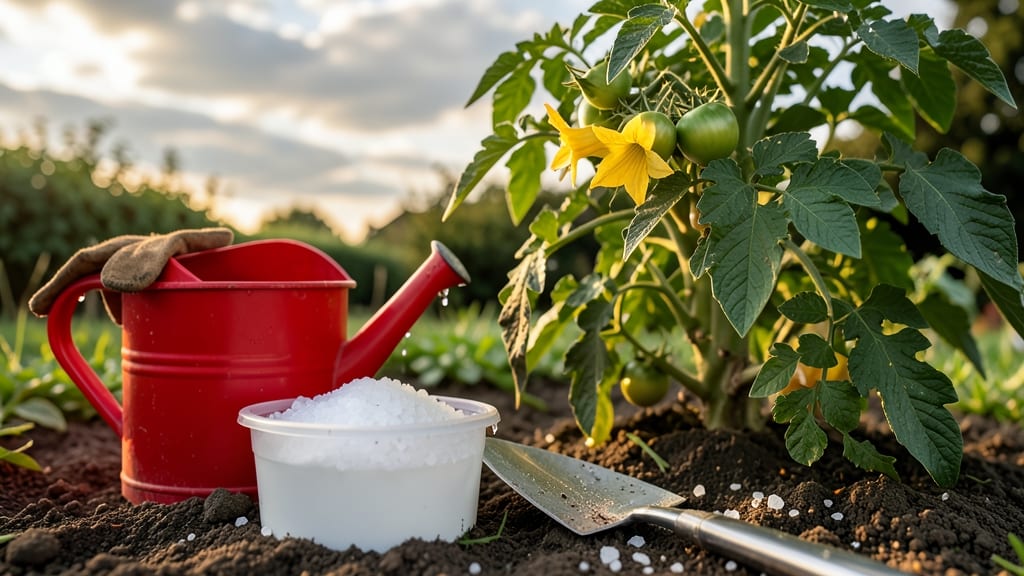
Epsom salt for veggie garden boosts magnesium and sulfur levels, which fortify root systems, improve chlorophyll production, and prevent common deficiencies like yellowing leaves or stunted growth in tomatoes, peppers, and leafy greens. Use it as a soil drench or foliar spray every 4-6 weeks.
This mineral-rich fertilizer works because magnesium is a key component of chlorophyll—the green pigment that drives photosynthesis. 🌱 When plants lack magnesium, you'll often see yellowing between leaf veins (a condition called interveinal chlorosis), which directly impacts their ability to convert sunlight into energy.
I've noticed the biggest improvements in leafy greens like kale and Swiss chard, where vibrant color returns within days of application.
For best results, I recommend mixing 1 tablespoon of Epsom salt per gallon of water and applying it either directly to the soil or as a foliar spray during the growing season. Early application in spring helps prevent deficiencies, while mid-season use can correct existing issues.
Just remember—more isn't better. Overuse can actually harm plants by altering soil chemistry, so always follow the recommended dosage.
💡 In This Article
- How Magnesium in Epsom Salt Enhances Plant Growth
- Best Ways to Apply Epsom Salt for Vegetable Gardens
How magnesium in Epsom salt enhances plant growth
Magnesium acts as the central atom in chlorophyll molecules, which is why it's absolutely critical for photosynthesis—the process that converts sunlight into energy for your plants. When magnesium levels drop, chlorophyll production slows, causing those classic yellow patches between leaf veins (interveinal chlorosis).
In my own garden, I've seen tomatoes and peppers recover their deep green color within 3-5 days after applying Epsom salt, proving how quickly magnesium can restore plant vitality. 🌿
The magic happens at the cellular level: magnesium activates over 300 enzymes that regulate vital plant functions, including energy transfer and nutrient uptake. Without sufficient magnesium, plants struggle to absorb phosphorus and nitrogen—two other essential nutrients.
This is why you might notice stunted growth or weak stems alongside the yellowing, even if you're fertilizing regularly. Epsom salt delivers magnesium in a form (magnesium sulfate) that plants can absorb immediately through roots or leaves.
Leafy greens like spinach and Swiss chard are particularly sensitive to magnesium deficiency because they produce large amounts of chlorophyll. When these plants show yellowing, it's often a clear signal that magnesium levels are too low.
What's fascinating is how quickly the color returns after treatment—sometimes within 24-48 hours for foliar applications. The sulfur component in Epsom salt also plays a supporting role by improving root development and disease resistance, making plants more resilient overall.
However, not all plants benefit equally from magnesium boosts. Heavy feeders like corn and potatoes show more dramatic responses than lighter plants, while some vegetables like onions and garlic actually prefer lower magnesium levels.
The key is monitoring your plants' visual cues: if you see yellowing between veins (while the veins stay green), that's your magnesium deficiency red flag. For container gardens, the effects can be even more noticeable because potting mixes often lack sufficient magnesium over time. 💫
Here's what happens chemically: when you apply Epsom salt, the magnesium ions (Mg²⁺) displace calcium and other minerals in the soil solution, making them more available for root uptake. The sulfate component enhances this process by improving soil structure and microbial activity.
This dual-action explains why Epsom salt works faster than many organic fertilizers for correcting deficiencies. For best results, maintain soil pH between 6.0-7.0, as magnesium availability drops in highly acidic or alkaline conditions.
The visual transformation is remarkable when you see it: within a week of proper application, leaves regain their vibrant green hue, new growth appears stronger, and plants develop better resistance to environmental stresses. This isn't just about aesthetics—it's about restoring the fundamental biochemical processes that keep your vegetable garden thriving.
The science behind magnesium's role in chlorophyll synthesis explains why this simple mineral can make such a dramatic difference in plant health. 🌱