
Picking
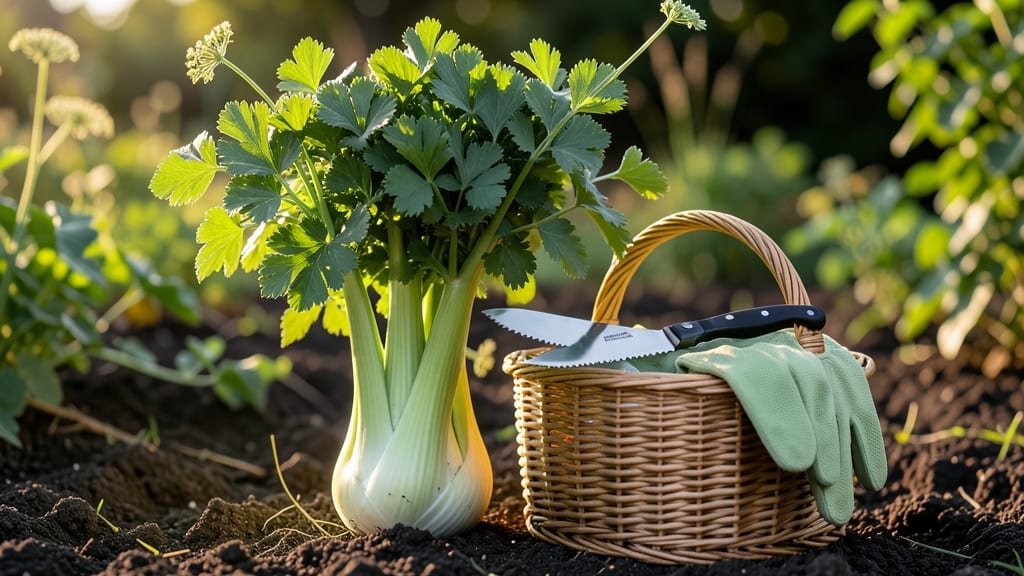
Harvesting garden celery at the right time transforms your 🥬 plants from tough stalks into sweet, crisp perfection—just like the market variety, but better.
Picture this: you’ve nurtured your celery for months, and now the moment has arrived. But one wrong cut or missed signal, and you’re left with bitter, stringy disappointment instead of that satisfying crunch. The difference? Knowing when those stalks are truly ready—and how to harvest them without sacrificing future growth.
Timing is everything, especially in Zone 6a, where June through September is your window. Too early, and the flavor won’t develop; too late, and the stalks toughen up.
I’ll show you exactly how to spot the perfect moment—thick bases, deep green leaves, and all—and the best techniques to keep your garden producing all season.
Ready to turn your celery patch into a flavor powerhouse? Let’s dive into the signs of readiness, the right way to cut (or pull), and how to store your harvest so it stays crisp for weeks.


Optimal harvest timing for garden celery by variety type
Harvesting garden celery at the right time transforms your homegrown crop from bland to exceptionally crisp and flavorful. Unlike store-bought celery, homegrown varieties mature differently based on their type—self-blanching vs. standard—and each requires distinct visual cues.
Missing these signs can result in tough, fibrous stalks or premature bolting. Let’s break down the key maturity indicators for each variety so you never miss peak harvest again.
Celery varieties generally fall into two categories: self-blanching (like 'Utah' or 'Tall Utah') and standard (such as 'Golden Self-Blanching' or 'Prism'). Self-blanching types naturally develop paler stalks as they mature, while standard varieties rely on gardeners to blanch them artificially.
Understanding these differences is crucial because harvest timing varies by 10-14 days between types. For example, self-blanching celery often reaches maturity 100-110 days after planting, while standard types may take up to 130 days.
Here’s the game-changer: stalk thickness is the #1 indicator of readiness. Aim for stalks that measure 1-2 inches in diameter at the base. Thin stalks (under 1 inch) are still developing, while overly thick stalks (over 2.5 inches) become woody and lose sweetness.
Pair this with deep green, crisp leaves—any yellowing or wilting means the plant is stressed or overripe. The base should also feel firm when gently squeezed; a mushy base signals rot or overmaturity.
The leaf color and arrangement also reveal maturity. Healthy celery leaves should be vibrant dark green with a slight waxy sheen, not dull or pale. Look for tightly clustered stalks; sparse growth indicates the plant needs more time.
Pro tip: Morning harvests yield the crispest celery because afternoon heat can make stalks limp. Always harvest on a cool, cloudy day to preserve texture.
Seasonal timing also plays a role in celery maturity. In cooler climates (USDA Zones 3-6), aim to harvest between mid-July and early September for the sweetest flavor. A light frost can actually enhance celery’s sweetness—just don’t let it freeze solid.
In warmer zones (7-10), harvest in spring or fall to avoid bolting (flowering) triggered by heat. If your celery bolts prematurely, the stalks become bitter and inedible, so monitor plants closely during heatwaves.
One common mistake gardeners make is harvesting too late because they assume bigger stalks mean better flavor. Reality check: Over-mature celery loses moisture and develops a tough, fibrous texture. To test readiness, gently pull a stalk—if it resists slightly but doesn’t snap, it’s ready.
If it pulls out easily, it’s underripe; if it snaps cleanly, it’s past its prime. For continuous harvests, cut the outer stalks first, leaving the inner ones to thicken over 2-3 weeks.
Pro tip: Blanching standard celery artificially improves tenderness. To do this, tie the stalks together loosely with twine or use a cardboard sleeve to block sunlight for the final 2-3 weeks before harvest. This prevents chlorophyll production, making the stalks paler and sweeter.
Self-blanching varieties skip this step—they naturally develop lighter stalks as they mature. Always use sharp pruners or a knife to cut stalks at a 45-degree angle to prevent water from pooling and causing rot.
After harvesting, store celery in the crispest drawer of your fridge (usually the high-humidity section) and use within 1-2 weeks for peak quality. For long-term storage, wrap stalks in a damp paper towel and place them in a plastic bag.
This mimics the moist garden conditions celery thrives in, keeping it fresh for up to 4 weeks. If you notice stalks becoming limp or leaves yellowing post-harvest, it’s a sign of overcrowding or drought stress—adjust your future planting spacing to 12-18 inches apart.
Remember: Patience pays off
How to harvest celery without ruining future growth
Harvesting celery at the right time ensures crisp, flavorful stalks while preserving your plant's ability to regrow. The key lies in selective cutting—removing only what you need without damaging the central growing point.
Unlike many vegetables, celery can produce multiple harvests if handled correctly, but improper techniques can turn your plant into a bitter, woody mess. Let’s break down the proper way to harvest so you get maximum yield without sacrificing future growth.
Timing matters just as much as technique. Fall harvests (late summer to early autumn) often yield the sweetest celery, especially after a light frost, while spring harvests may produce thinner stalks. Always check for thick, crisp stalks (at least 1-2 inches in diameter) and deep green leaves before cutting.
If your celery is past its prime, you’ll end up with tough, fibrous stalks that even boiling can’t salvage.
Step-by-Step Celery Harvest Guide
- Step 1: Choose the outer stalks first. These are the oldest and thickest, leaving the younger inner stalks to mature for future harvests.
- Step 2: Use a sharp knife or pruners to cut stalks at a 45-degree angle, about 1 inch above the base. This prevents water from pooling and causing rot.
- Step 3: Avoid cutting into the central growing point (the heart of the plant). This ensures the plant keeps producing new stalks for 3-4 harvests per season.
- Step 4: Harvest in the morning when stalks are crispest. Rinse gently and store in the fridge for up to 2 weeks to maintain freshness.
- Step 5: After harvest, water deeply and fertilize lightly with a balanced 10-10-10 to encourage regrowth. Avoid heavy feeding, which can lead to leafy growth at the expense of stalks.
If you’re harvesting for regrowth, never remove more than one-third of the stalks at once. Over-harvesting stresses the plant and can stunt future production.
For self-blanching varieties (like 'Utah' or 'Golden Self-Blanching'), you can harvest the entire plant once it’s fully mature, but standard varieties will reward you with multiple cuts if you’re patient.
Seasonal timing also plays a role. In cooler climates, aim for a fall harvest (September-October) when stalks naturally sweeten after frost. In warmer regions, harvest in late summer to avoid heat stress. Always avoid harvesting during extreme heat or drought, as stressed plants produce tough, bitter stalks.
Pro tip: If your celery starts to bolt (send up flower stalks), it’s past its prime for harvesting. Bolted celery is tough and loses its signature crunch. To prevent bolting, ensure your plants get consistent moisture and partial shade during hot afternoons.
Mulching with straw can also help maintain even soil temperatures and reduce stress.
With the right technique, your celery plant can keep producing crisp, flavorful stalks for months. Just remember: cut selectively, harvest in the morning, and avoid overdoing it. Your garden—and your soups—will thank you!