
Tools
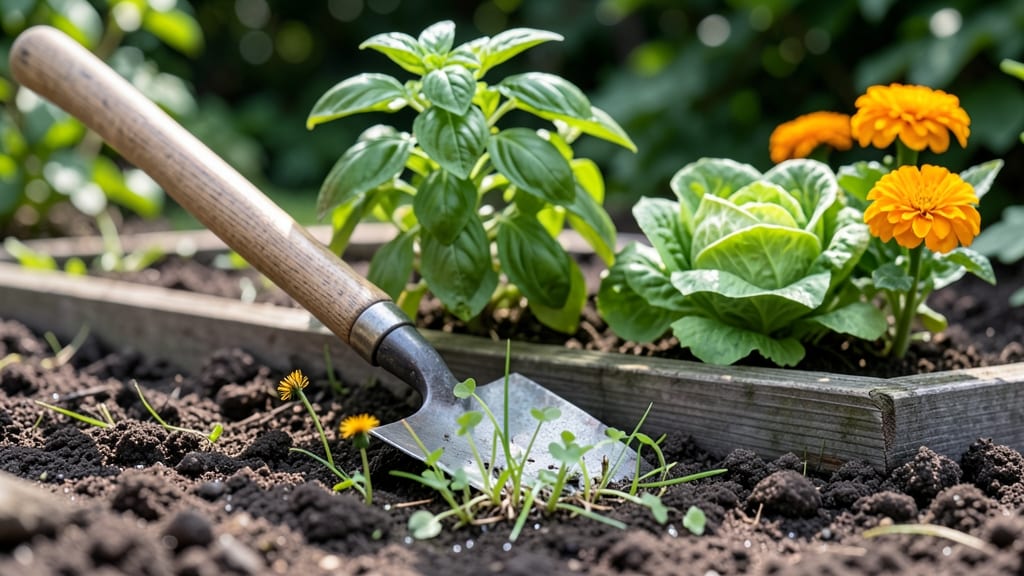
Garden hoes have versatile uses beyond weeding—they break up compacted soil, uproot weeds from the root, create precise planting furrows, and smooth garden beds while enhancing aeration and drainage.
A garden hoe is a workhorse in any gardener's toolkit, far more than just a weeding tool. 🌱 The secret lies in its blade design—whether it's a flat stirrup hoe for slicing through weeds or a warren hoe for chopping soil.
I've found that using the right hoe for the job saves time and reduces strain, especially when working with dense clay or rocky soil where aeration is key.
For example, a draw hoe's sharp edge can carve clean furrows for seeds, while a scuffle hoe's flat blade levels beds after planting.
The versatility doesn't stop there—hoes excel at creating mulch beds, harvesting shallow root crops like radishes, and even pruning small plants. 💫 The key is matching the blade angle to your task: steep angles cut through tough soil, while flat blades glide over surfaces.
Many gardeners overlook how a hoe can replace a trowel for some planting tasks, making it a must-have for both small and large-scale gardens.
💡 In This Article
- How Different Garden Hoe Types Work for Specific Soil Tasks
- 10 Unexpected Ways to Maximize Your Hoe’s Efficiency in Gardening
How different garden hoe types work for specific soil tasks
The garden hoe's effectiveness comes from its blade design, which varies dramatically between types. A stirrup hoe, for example, features a flat, rectangular blade that slices through weeds just below the soil surface, severing roots without disturbing surrounding plants.
This precision works because the blade's sharp edge creates a clean cut—ideal for maintaining lawn edges or weeding between rows. The stirrup's long handle also allows for a wider reach, making it perfect for large garden beds where bending over would be exhausting.
For chopping and breaking up compacted soil, the warren hoe shines with its pointed, triangular blade. When pushed forward, the blade chops soil vertically, creating a granular texture that improves aeration.
This design mimics a pickaxe's action but on a smaller scale—perfect for preparing seed beds or turning over small patches of soil.
The blade's angle (typically 45-60 degrees) ensures it bites into the earth rather than skimming the surface, making it ideal for heavy clay soils where drainage is poor.
When planting in rows, the draw hoe becomes indispensable. Its blade is angled backward, allowing you to drag it through soil to create furrows for seeds or transplants. The key here is the blade's 1-2 inch width, which creates uniform planting lines while aerating the soil beneath.
Many gardeners use this technique for direct sowing carrots or radishes, where precise depth is critical. The hoe's action also loosens soil ahead of the blade, reducing the need for additional tilling.
A scuffle hoe takes a different approach with its flat, wide blade that glides over the soil's surface. Instead of cutting or chopping, it pushes soil sideways, leveling beds and covering seeds with a thin layer of dirt.
This method is gentle enough for young seedlings but firm enough to suppress weeds. The blade's shallow angle (10-20 degrees) makes it perfect for maintaining mulch beds or smoothing soil after planting, where deep disturbance would damage roots.
Material matters too—steel blades hold their edge longer but require more effort to push through tough soil, while aluminum blades are lighter but may dull faster.
For rocky gardens, a heavy-duty steel hoe with a thicker blade (3-4mm) resists bending, while organic gardeners prefer carbon steel for its sharper edge and ability to be honed without chemicals. The right choice depends on your soil type and the task's demands.
What most gardeners don't realize is how blade thickness affects performance. A thin blade (1-2mm) slices weeds cleanly but bends under pressure, while a thick blade (3-4mm) lasts longer but requires more force.
For example, a stirrup hoe with a 2mm blade glides through loose soil but struggles in compacted clay, where a 3mm warren hoe would excel. Matching the tool to the soil's resistance saves time and prevents frustration.