
Diseases
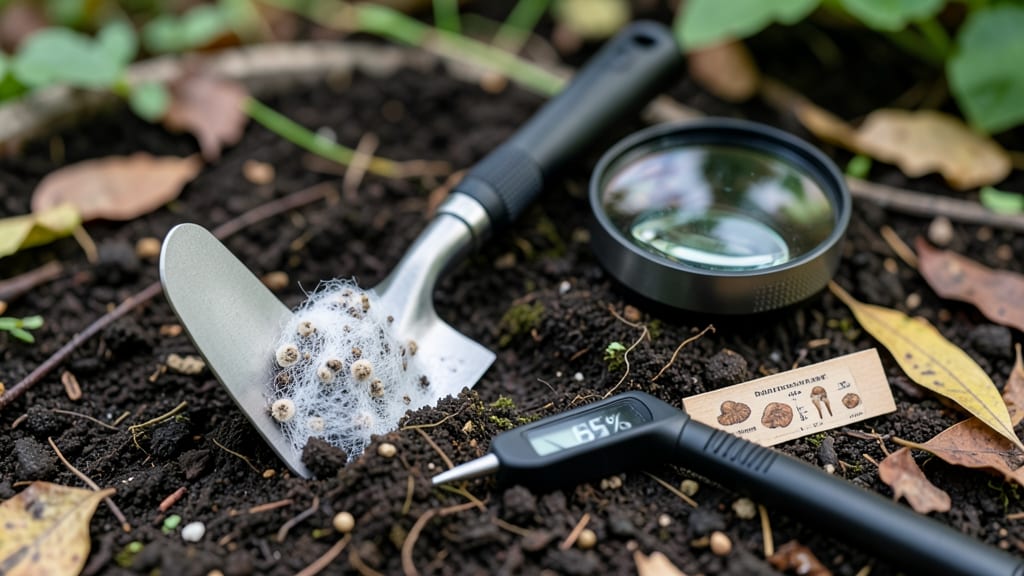
When your garden soil has white fungus, it’s usually harmless mold like Penicillium or Aspergillus, but thick patches may indicate overwatering or rotting plant matter. Fix it by letting the soil dry out, improving drainage, and adding a thin layer of compost or sand to stop regrowth and protect your plants.
Most white fungal growth in garden soil isn’t dangerous—it’s just nature’s way of breaking down organic material. 🌱 However, if you notice plants wilting or soil staying damp for long periods, this could signal deeper issues like poor drainage or excess moisture.
The key is balancing moisture levels while keeping soil aerated, which prevents mold from spreading to roots. I’ve found that mixing in a little perlite or coconut coir helps maintain airflow without harming beneficial microbes.
For stubborn cases, a light application of neem oil or hydrogen peroxide (mixed with water) can act as a natural antifungal treatment. Just avoid overdoing it—too much can disrupt the soil’s microbial balance.
Always check the soil’s moisture level first, as many gardeners accidentally worsen the problem by overwatering after seeing fungus.
💡 In This Article
- Identifying Safe vs Harmful White Fungus in Soil
- Natural Soil Fungus Prevention Methods for Healthy Plants
Identifying safe vs harmful white fungus in soil
White fungal growth in soil often belongs to harmless molds like Penicillium or Aspergillus, which thrive on decaying organic matter. These molds typically appear as soft, powdery patches with a blue-green or white hue, often near the surface.
Unlike dangerous pathogens, they don’t spread aggressively to plant roots and rarely cause wilting or yellowing in healthy plants. Think of them like nature’s recyclers—breaking down dead leaves and compost while keeping soil fertile.
The key to telling safe mold apart from harmful pathogens lies in plant symptoms and soil conditions. Dangerous fungi like Sclerotium (white mold) or Rhizoctonia create dense, cottony white webs that spread rapidly, often accompanied by darkened stems, rotting roots, or sudden plant collapse.
These pathogens thrive in consistently moist soil (above 60% moisture content) and cooler temperatures (50-75°F), creating ideal conditions for root infections. A simple test: Gently dig near the fungus—if roots appear healthy and soil drains within 1-2 hours, it’s likely harmless mold.
Soil pH also plays a crucial role in identifying risks. Most beneficial molds prefer slightly acidic to neutral soil (pH 6.0-7.5), while harmful pathogens often dominate in highly acidic (below 5.5) or alkaline (above 8.0) conditions.
Test your soil with a pH meter or kit—if readings fall outside this range, adjust with lime (to raise pH) or sulfur (to lower it). This small tweak can prevent mold from becoming a threat while supporting beneficial microbes that outcompete pathogens naturally.
Visual texture offers another clue: harmless Penicillium grows in fuzzy, almost velvety clusters, while dangerous Rhizoctonia forms hard, crusty sclerotia (dense survival structures) that persist even when soil dries. Run your fingers through the growth—if it crumbles easily without resistance, it’s likely safe.
For stubborn cases, place a small sample in a sealed bag for 24 hours; if the smell is earthy (like fresh compost), it’s decomposing matter. If it’s musty or rotten, you’re dealing with a potential pathogen.
Consider the season too: white mold flourishes in spring and fall when temperatures hover around 60-70°F and humidity spikes after rains. During these periods, monitor soil moisture closely—never let it stay soggy for more than 48 hours.
A quick fix is to spread a 1-inch layer of coarse sand or perlite over affected areas to absorb excess moisture while improving airflow. This simple step can prevent harmless mold from becoming a breeding ground for harmful fungi.
For peace of mind, observe your plants’ response over 5-7 days. If leaves yellow, stems weaken, or growth stalls despite proper watering, the fungus may be pathogenic. In that case, isolate affected plants and treat with a 1:10 hydrogen peroxide solution (3% concentration) applied lightly to the soil surface.
The bubbles help dislodge fungal spores without harming beneficial microbes—just avoid over-saturating the soil.