
Vegetables
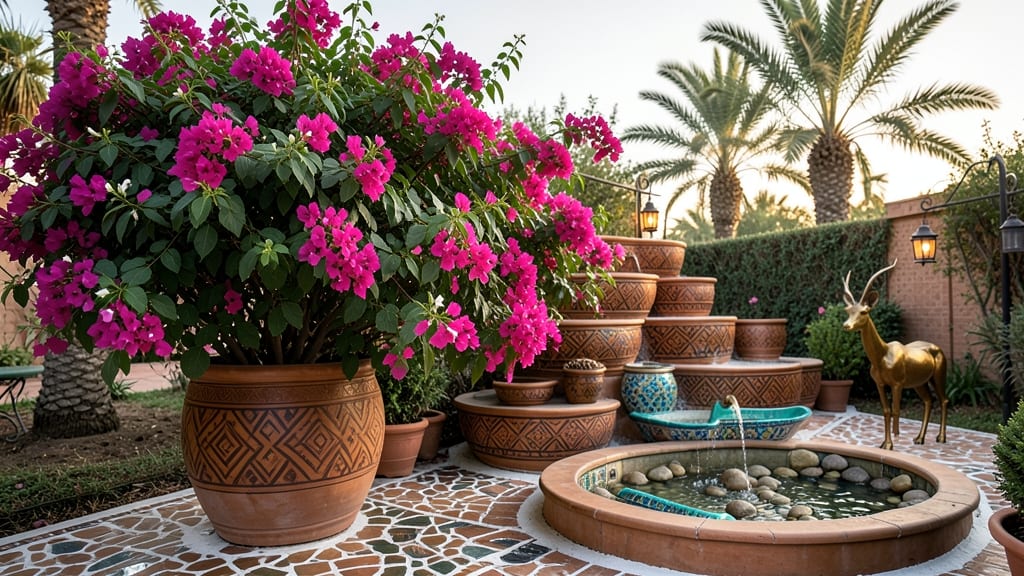
The Gardens of Marrakech feature stunning Islamic-inspired designs that harmonize geometric patterns with hardy Moroccan plants like citrus trees, fragrant bougainvillea, and drought-resistant species. Iconic gardens such as Majorelle and Menara incorporate cascading fountains, mosaic tilework, and terraced layouts that celebrate both artistic tradition and water conservation in arid climates.
The Gardens of Marrakech aren't just beautiful—they're masterclasses in blending art and survival. 🌿 These spaces use intricate tile patterns and reflective pools to create microclimates that reduce evaporation, while their plant selection prioritizes species like pomegranate and olive trees that thrive with minimal water.
What's fascinating is how these gardens double as cultural storybooks, with every fountain and mosaic tile telling a tale of Morocco's Islamic heritage and desert ingenuity.
Beyond their visual appeal, these gardens offer practical lessons in sustainable landscaping. The layered terraces, for example, slow water runoff while creating dramatic visual depth, while the carefully chosen flora—like fragrant jasmine and drought-resistant cacti—demonstrate how to make lush spaces in harsh climates.
Whether you're admiring Majorelle's cobalt-blue walls or wandering through Menara's olive groves, you're seeing centuries of horticultural wisdom in action.
💡 In This Article
- Marrakech Garden Architecture: Islamic Design Meets Desert Botany
- Visiting Marrakech’s Hidden Gardens: Practical Tips for Exploring
Marrakech garden architecture: Islamic design meets desert botany
The gardens of Marrakech represent a brilliant fusion of Islamic geometric principles and desert-adapted botany. At their core, these spaces follow the four-part Islamic garden design—water, plants, pathways, and shelter—each element carefully positioned to create harmony.
The geometric layouts, often featuring 8-pointed stars or interlocking polygons, aren't just decorative; they're rooted in mathematical precision that maximizes shade and water distribution. The angles of these patterns are designed to reflect sunlight in ways that reduce heat absorption, creating cooler microclimates within the garden. 🌟
Water plays a pivotal role in this architecture, with features like qanats (underground channels) and cascading fountains serving both aesthetic and functional purposes. These systems don't just create visual drama—they're essential for irrigation in Morocco's arid climate.
The Menara Garden, for example, uses a massive central fountain that creates a misting effect, increasing humidity by up to 15-20% in the surrounding area. This technique, known as evaporative cooling, has been used for centuries to make desert gardens habitable.
The fountains also serve as acoustic elements, with water sounds masking the city's noise and creating a meditative atmosphere.
The plant selection in these gardens is equally strategic, focusing on species that thrive with minimal water while adding sensory richness. Pomegranate trees, with their deep red fruits and drought-resistant roots, are staples, while bougainvillea provides vibrant color without heavy water demands.
Even the olive trees, which can survive on as little as 10 liters of water per week, are arranged in precise geometric patterns that create visual rhythm.
The combination of these plants with fragrant jasmine and citrus groves creates a multisensory experience that's both practical and luxurious—a testament to Morocco's horticultural ingenuity. ✨
One of the most fascinating aspects is how these gardens incorporate terracing techniques that prevent soil erosion while creating dramatic visual layers. The terraces at Majorelle Garden, for instance, are built at precise 1.2-meter intervals, each level planted with different species to maximize biodiversity.
This layering isn't just for show—it mimics natural desert topography, allowing water to percolate slowly through the soil rather than running off. The result is a garden that's not only beautiful but also self-sustaining in an environment where water is precious.
The materials used in construction further demonstrate this thoughtful design. Zellige tiles, with their intricate mosaic patterns, aren't just decorative—they're made from locally sourced clay that reflects sunlight rather than absorbing heat.
The cobalt blue tiles at Majorelle Garden, for example, reflect up to 30% more light than traditional white tiles, helping to keep the space cooler. Even the pathways are designed with purpose, often using pebble mosaics that allow water to seep through rather than creating runoff.
Every element, from the largest fountain to the smallest tile, serves multiple functions in this architectural symphony. 💫
What makes these gardens particularly remarkable is how they've adapted over centuries to Morocco's changing climate. While traditional designs prioritized water conservation, modern interpretations like the Jardin Secret incorporate drip irrigation systems that use 90% less water than conventional methods.
The principles remain the same—harmony between design and environment—but the techniques have evolved to meet contemporary challenges. This adaptability is what makes Marrakech's gardens not just historical artifacts, but living examples of sustainable design that can inspire modern landscaping practices worldwide.