
Tools
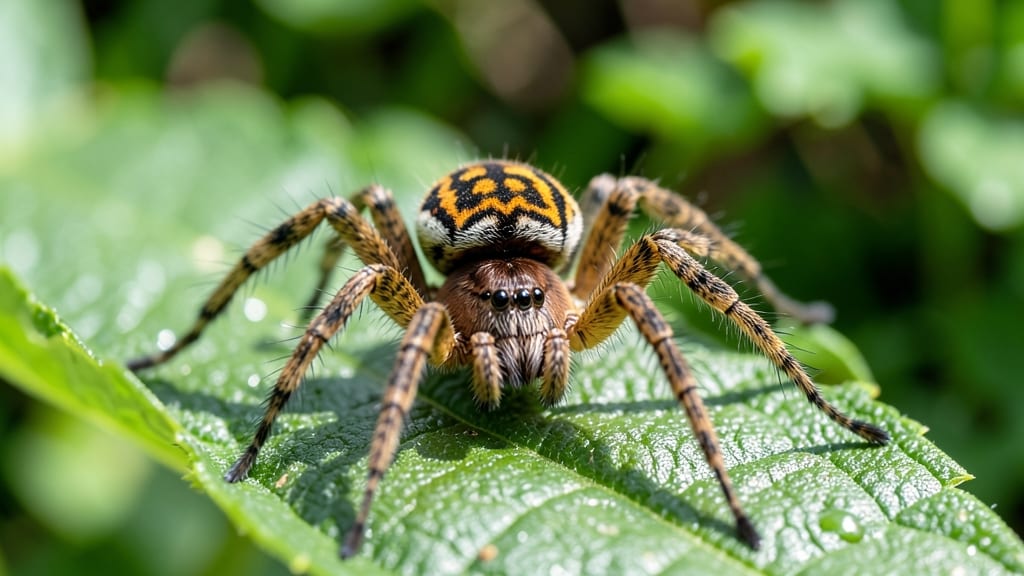
Identifying Georgia garden spiders helps distinguish these harmless orb-weavers from dangerous species. Look for their large size, black-and-yellow bodies with striped legs, and round webs in gardens—then relocate them safely at night using a cup-and-paper method.
These common backyard spiders are often confused with aggressive species like black widows, but their round webs and calm demeanor set them apart. 🕷️ Unlike hunting spiders, Georgia garden spiders build intricate orb webs between plants or structures, making them easy to spot during daylight hours.
The key to safe removal is timing—wait until evening when they're less active, then use a glass jar and paper to guide them outdoors without harm.
If you're unsure whether a spider is a garden variety, check for these telltale signs: a rounded abdomen, distinctive yellow-and-black coloration, and striped legs. These features help differentiate them from wolf spiders, which lack webs and have hairy bodies.
Remember, these spiders play a crucial role in controlling pests—so relocating them humanely benefits your garden ecosystem.
💡 In This Article
- How to Identify Georgia Garden Spiders vs Other Spider Species
- Safe Removal Methods for Garden Spiders Without Harming Them
How to identify Georgia garden spiders vs other spider species
Georgia garden spiders (Argiope aurantia) stand out with their striking black-and-yellow bodies measuring about 1.5 to 2 inches in length, including legs. Their most distinctive feature is the zigzag white stripe running down their abdomens—this pattern helps differentiate them from black widows, which have red hourglass markings.
Unlike wolf spiders (which hunt actively on the ground), garden spiders build large, round orb webs between plants, fences, or garden structures, often spanning 2 to 3 feet in diameter. 🕸️
Their leg patterns are another key identifier: garden spiders have thick, striped legs with alternating black and yellow bands, while yellow sac spiders (which are smaller and more aggressive) have smooth, pale legs.
Black widows, by contrast, have shiny black bodies with no stripes and build tangled, messy webs in dark corners. Habitat matters too—garden spiders thrive in sunny, open areas, while black widows prefer sheltered spots like woodpiles or sheds.
Behavior also sets them apart: garden spiders are diurnal (active during the day), often seen repairing their webs in the morning sunlight, whereas most spiders are nocturnal. Their webs are sticky but not tangled, designed to catch flying insects efficiently.
This contrasts with funnel-weaving spiders, whose webs have a central tunnel for ambush hunting. The garden spider’s web structure is radial and symmetrical, with a distinct stabilimentum (zigzag silk decoration) that some researchers believe may help deter predators or attract prey.
If you’re still unsure, check for these red flags: a red hourglass on the underside means it’s a black widow; small size (0.25 inches) with smooth legs suggests a yellow sac spider.
Garden spiders, however, are docile—they’ll freeze or slowly retreat when approached, never lunging like aggressive species. Their webs are another dead giveaway: a perfectly circular, sticky orb in your garden is almost certainly a garden spider’s handiwork. 🌿
One common misconception is that garden spiders are aggressive—they’re not. Their size and striking colors make them intimidating, but they’re actually beneficial predators, consuming pests like mosquitoes, flies, and even small beetles.
This makes them valuable allies in gardens, where their presence indicates a healthy ecosystem. The key to peaceful coexistence is proper identification before taking any action.
For a quick visual comparison, imagine three scenarios: a large, striped spider in a round web (garden spider), a small, smooth-legged spider in a messy web (yellow sac spider), or a shiny black spider with an hourglass (black widow).
The garden spider’s web is the most distinctive clue—it’s neat, circular, and often decorated with silk patterns, unlike the chaotic webs of other species.
When in doubt, observe the spider’s behavior: garden spiders stand still in the center of their webs, waiting for prey, while wolf spiders roam the ground actively hunting. This difference in hunting strategy is a surefire way to tell them apart without risking a bite.
Most importantly, garden spiders won’t bite unless provoked, making them harmless to humans. 🕷️