
Plants
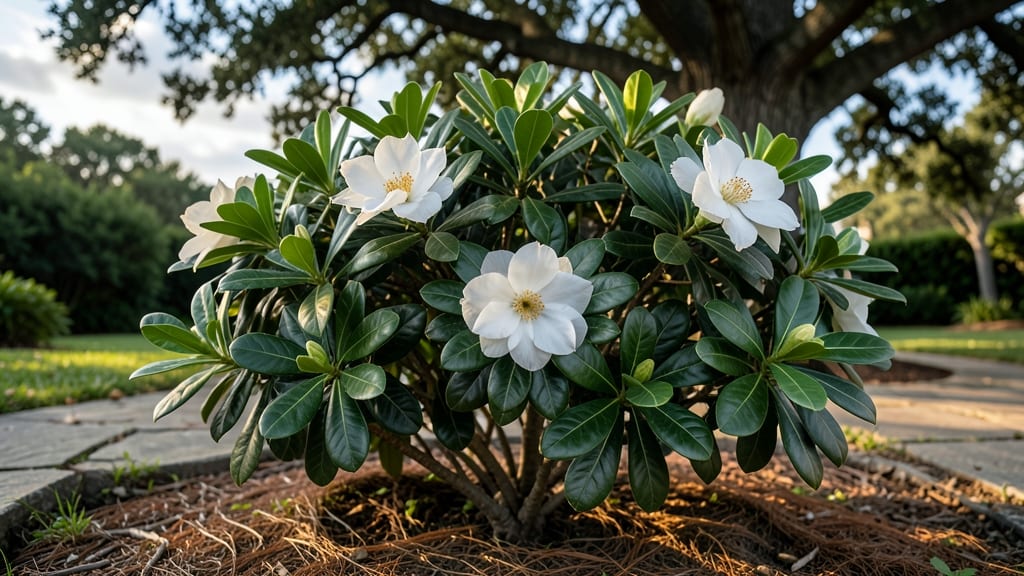
Gardenia plants grow anywhere from 2 to 6 feet tall—depending on the variety and how you prune them—so you can easily fit them into your garden or even a patio container.
If you’re dreaming of fragrant gardenias but wondering whether they’ll dwarf your garden or fit neatly in a container, the answer depends entirely on the variety—and we’ve got the exact measurements to help you plan.
For example, the classic Gardenia jasminoides 🌸 typically reaches 4 to 6 feet at maturity, while dwarf varieties like ‘Kleim’s Hardy’ stay compact at just 2 to 3 feet.
That means you can choose a size that matches your space, whether you’re planting in the ground or keeping them in pots.
Below, I’ll break down how growth habits differ by type, how to control size with pruning, and the best placement tips to keep your gardenias thriving without overcrowding.
Gardenia plant size by variety: height, spread & growth habits
If you’re planning to add gardenias to your landscape, knowing their mature size helps you choose the right variety for your space. These fragrant shrubs come in dwarf, semi-dwarf, and standard sizes, with growth habits varying from compact mounds to tall, upright forms.
Understanding these differences ensures you pick a gardenia that thrives in your garden or container without outgrowing its home.
Most gardenias belong to the Gardenia jasminoides species, but other varieties like Gardenia augusta and Gardenia radicans offer unique sizes and shapes. For example, dwarf varieties like 'Kleim’s Hardy' stay under 3 feet tall, while standard types like 'Radicans' can reach 6 feet or more.
Below, we break down the exact dimensions and growth habits for popular gardenia types to help you plan.
Mature size isn’t the only factor—growth rate also matters. Gardenias typically grow 6 to 12 inches per year, but this can slow down in shady conditions or speed up with rich, acidic soil and proper care. Pruning can also shape their growth, so we’ll cover that in the next section. For now, let’s focus on the varieties and their natural sizes.
The dwarf varieties, like 'Kleim’s Hardy,' are perfect for containers or small gardens where space is limited. Their compact size—typically 2 to 3 feet tall and wide—makes them ideal for patios, balconies, or even as bushy accents in flower beds.
These types also grow slower, so they’re easier to maintain if you prefer low-maintenance plants.
On the other hand, standard varieties like 'Radicans' or 'Fortuniana' are better suited for larger landscapes or privacy screens. These can reach 6 feet or taller, with spreads up to 8 feet wide, so they need ample room to thrive.
If you’re planting them near a fence or wall, give them at least 5 feet of clearance to avoid overcrowding.
For medium-sized gardenias, like 'Veitchii,' you’ll find a balance between height and spread, making them versatile for borders or mixed shrub beds. These varieties typically grow 3 to 4 feet tall and wide, which works well for creating layered garden designs.
If you’re unsure about spacing, err on the side of giving them extra room—they’ll fill in over time!
One key factor that influences gardenia size is pruning habits. Regular pruning can control height and encourage a bushier shape, while neglecting pruning can lead to leggy growth.
For example, if you prune 'Radicans' back by one-third each year, you can keep it at a manageable 4 to 5 feet tall instead of letting it grow to its full 6 feet.
Another consideration is container gardening. Dwarf varieties thrive in 15- to 20-gallon pots, while semi-dwarf types may need 25-gallon containers to accommodate their root systems.
Standard varieties, however, are best planted in the ground unless you’re prepared for large, heavy containers and frequent watering to prevent root bound conditions.
When planning your garden, also consider the growth rate of each variety. Faster-growing types, like 'Fortuniana,' can add up to 2 feet per year in ideal conditions, while slower growers like 'Kleim’s Hardy' may only add 6 inches annually. This difference affects how quickly your gardenia will fill
How to control gardenia size: pruning, container tips & best practices
Keeping your gardenia at the perfect size doesn’t require guesswork—just a few strategic techniques. The key is pruning at the right time and using container constraints to guide growth.
I’ve found that gardenias respond best to pruning right after they finish blooming in late spring or early summer, when the plant is actively growing but before new buds form.
For standard varieties, aim to trim back one-third of the oldest stems each year to encourage bushier growth. This prevents leggy, overgrown branches while maintaining that lush, fragrant appearance.
If you’re growing dwarf varieties, you can be even more aggressive with pruning—cutting back by half in early spring will keep them compact and manageable.
- 🪴 Prune after flowering (late spring/early summer) to shape and encourage new growth.
- ✂️ Cut back 1/3 of oldest stems annually for standard varieties to maintain height.
- 📏 Use 15-gallon containers for dwarf varieties to limit root expansion.
- 💧 Water deeply 2x/week in containers to prevent stress-induced overgrowth.
- 🌱 Fertilize with acidic 10-10-10 in spring/summer to support controlled growth.
Container gardening is my go-to method for controlling gardenia size, especially in small spaces. Choose pots that are just slightly larger than the plant’s root ball—15-gallon containers work perfectly for dwarf varieties like ‘Kleim’s Hardy’.
The confined roots force the plant to grow outward rather than upward, creating a fuller, more compact shape. Just remember to use well-draining soil mixed with perlite or orchid bark to prevent root rot, which can stress the plant and lead to erratic growth.
Another game-changer is soil acidity. Gardenias thrive in acidic soil (pH 5.0-6.5), and maintaining this balance is crucial for controlled growth. I recommend amending your soil with sulfur or peat moss and using an acid-loving plant fertilizer like 10-10-10.
Over-fertilizing with alkaline products can cause rapid, unchecked growth and reduce flowering. A little goes a long way—stick to light feedings every 4-6 weeks during the growing season.
If you notice your gardenia growing too quickly or becoming leggy, it’s often a sign of overwatering or excess nitrogen. Cut back on watering slightly and switch to a balanced, low-nitrogen fertilizer to slow growth.
For container plants, I’ve found that letting the top inch of soil dry out between waterings helps maintain a steady, controlled growth rate.
Finally, don’t forget that light exposure plays a role in size control. While gardenias love morning sun, too much direct afternoon sun can stress the plant and lead to rapid, weak growth. If your gardenia is in a hot climate, provide afternoon shade to keep it compact and healthy.
With these simple adjustments, you can keep your gardenia at the perfect size—whether you want a tall, statement shrub or a bushy container plant for your patio.