
Picking
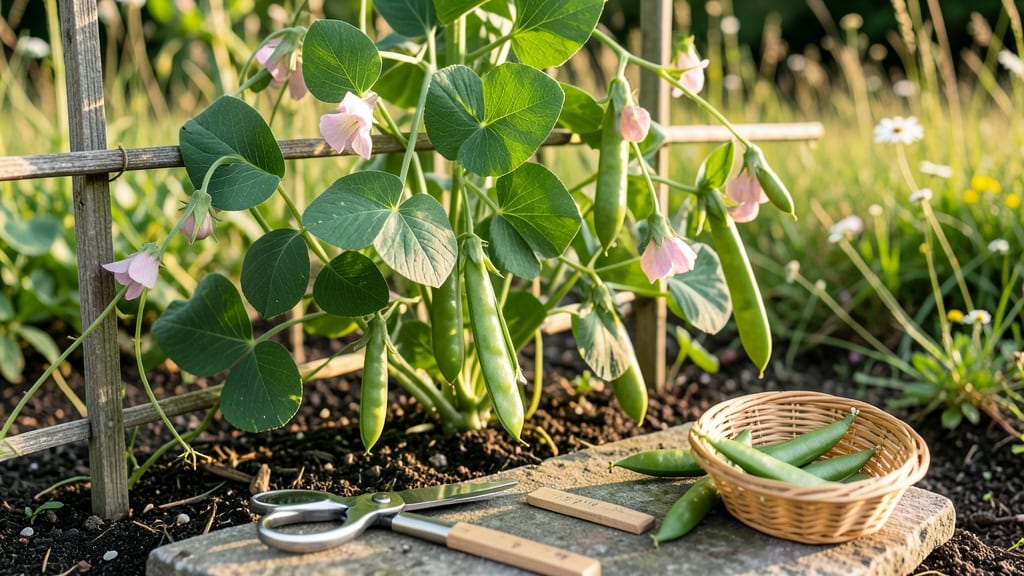
Harvest garden peas when pods are bright green, plump, and about 1.5 to 2 inches long for peak sweetness—this is the sweet spot before the peas inside start filling the pod.
Picture this: you’ve waited 60-70 days for your 🌱 garden peas to mature, and now the moment has arrived. But wait too long, and those tender pods turn tough and mealy, ruining the flavor you’ve been dreaming of.
The key is catching them at just the right moment—when they’re firm but yield slightly when gently squeezed.
Climate plays a role too. In cooler zones like 6a, peas often ripen earlier in the season, while warmer regions might see a fall harvest. Morning harvests are ideal because the pods are cooler and firmer, making them easier to pick without damaging the plant.
Here’s what you’ll discover: how to spot the perfect pod, test ripeness with a simple finger press, and keep your harvest coming all season long. Let’s get those peas off the vine at their sweetest!


3 Clear visual signs your garden peas are ready to harvest
Harvesting peas at the right moment transforms your garden into a sweet, flavorful feast instead of a tough, mealy disappointment. The key lies in recognizing three visual cues that signal peak ripeness: pod size, color, and shell firmness.
Each pea variety—sugar snap, snow peas, and shelling peas—has unique traits, but these universal signs apply across the board.
Timing matters because peas lose their delicate sweetness quickly once picked. Overripe pods become fibrous, while underripe ones lack flavor. By mastering these three indicators, you’ll enjoy a continuous harvest of tender, sweet peas all season long.
Let’s break down each sign so you can confidently pick at the perfect moment.
- Pod Size: 1.5–2 inches long and slightly swollen. For sugar snaps, aim for 2–3 inches—they’re harvested whole. Snow peas should be flat and 2–3 inches when fully ripe.
- Color: Bright, uniform green with no yellowing or browning. Shelling peas may show faint stripes, but avoid pods with dull or mottled hues—this signals overripeness.
- Shell Firmness: Gently press a pod between your thumb and forefinger. It should feel firm but slightly yielding, like a ripe avocado. If it’s rock-hard, it’s underripe; if it crushes easily, it’s past its prime.
For sugar snap peas, focus on pods that are crisp and bright green with a slight curve. These varieties are harvested whole, so their thickness and snap are critical. If you hear a satisfying crunch when bitten into, you’ve nailed the timing.
Snow peas stand out with their flat, edible pods. At peak ripeness, they’ll be 2–3 inches long and bright green, with tiny peas just beginning to form inside. Avoid harvesting when the pods start to bulge or yellow—this means the peas inside are overgrown.
When dealing with shelling peas, prioritize pods that are plump and firm but not oversized. The peas inside should be small and barely visible through the shell. If you see large, round peas filling the pod, you’ve waited too long—they’ll be starchy and less sweet.
Regional climate plays a role too. In cooler zones (like USDA Zone 6a), peas mature faster, so check pods every 2 days in late spring. In warmer climates, growth slows, so extend your checks to every 3 days to avoid missing the harvest window.
One common mistake is harvesting based on plant age alone. While peas typically mature in 60–70 days, environmental factors like temperature and sunlight can shift this timeline. Always inspect visually—never rely on days since planting.
To maximize your harvest, pick pods in the morning when they’re cool and crisp. Use clean scissors or fingers to snap pods from the vine, leaving the stem attached to preserve freshness. Store harvested peas in the fridge for up to 5 days or freeze them for longer storage.
By mastering these three visual cues, you’ll transform your garden into a pea-picking paradise, enjoying sweet, tender pods all season. Happy harvesting! 🌱
How to test pea ripeness: the finger-press method for perfect sweetness
There’s nothing like biting into a perfectly ripe garden pea—sweet, tender, and bursting with flavor. But how do you know when those pods are ready? The finger-press method is my go-to trick for testing ripeness without guessing.
This simple tactile check tells you exactly when to harvest for maximum sweetness and tenderness.
Start by selecting a pod that’s 1.5 to 2 inches long—this is the ideal size range for most pea varieties. Hold the pod gently between your thumb and forefinger, then apply light pressure.
If the pod feels firm but yields slightly, like a ripe avocado, it’s ready to pick. This slight give means the peas inside are plump and tender, not yet overripe.
Here’s the catch: if the pod feels rock-hard or refuses to give at all, it’s underripe. On the flip side, if it’s too soft or mushy, the peas inside have likely overmatured, turning starchy and tough. The finger press gives you that instant feedback to avoid both extremes.
Peas left on the vine too long develop large, hard seeds that turn the entire pod mealy and bitter.
Once seeds fill the pod completely, the plant’s energy shifts from producing sweet peas to saving seeds for next year. Harvest every 2-3 days during peak production to keep your peas tender and sweet.
Timing your harvests is just as important as testing ripeness. In cool climates like Zone 6a, peas often ripen quickly in spring, so I check my plants daily during the first flush of pods.
In warmer regions, a fall harvest might stretch out, so I adjust my frequency to every 3-4 days once the plants start producing.
Pro tip: Harvest in the morning when pods are cool and firm. This reduces bruising and makes the finger-press test more accurate. Plus, morning-harvested peas stay fresher longer, whether you’re eating them fresh or storing them in the fridge.
To keep your pea plants producing continuously, pinch off flowers that aren’t setting pods yet. This redirects the plant’s energy to the existing pods, ensuring a steady supply of tender, sweet peas all season long.
With the finger-press method and consistent harvesting, you’ll enjoy a bountiful crop of garden-fresh peas that taste like summer in every bite.