
Light Requirements
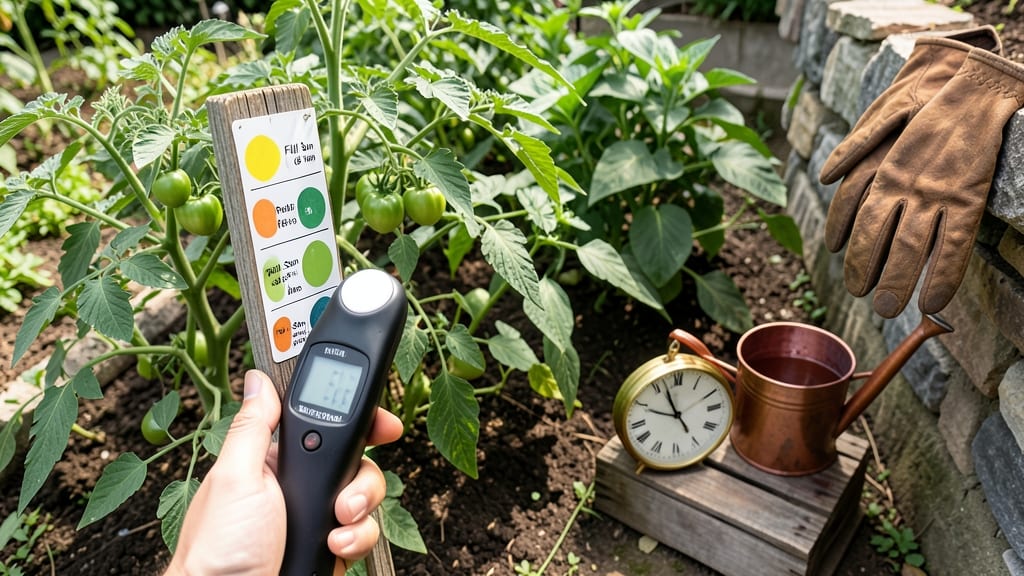
A vegetable garden needs 6 to 8 hours of sunlight daily to thrive, but too much or too little can ruin your harvest before it starts.
Struggling to decide where to plant your tomatoes or watching your lettuce wilt in the afternoon heat? Sunlight is the secret ingredient that makes or breaks your garden’s success—and most gardeners get it wrong.
Some veggies like peppers and cucumbers crave full sun, while leafy greens and root crops tolerate partial shade. The key is matching your plants to the light your garden actually gets, not what you think it gets.
Below, I’ll break down the sunlight needs by plant type, how to measure your garden’s light, and simple fixes for when the sun just won’t cooperate.


Sunlight requirements by vegetable type: full sun vs. partial shade breakdown
Understanding how many hours of sunlight your vegetable garden needs is the first step to a thriving harvest. Most vegetables fall into two main categories: full-sun lovers that crave 6-8 hours of direct sunlight daily, and shade-tolerant varieties that thrive with 3-6 hours.
Getting this wrong can mean the difference between juicy tomatoes and sad, wilted plants. Let me break down the essentials so you can place every seed and transplant with confidence.
First, let's clarify what these terms mean. Full sun means your plants should receive uninterrupted sunlight for most of the day, while partial shade refers to areas that get filtered or dappled sunlight for part of the day.
Some vegetables, like carrots and beets, fall into a mixed-light category—they prefer 4-6 hours of sun but can handle a little shade, especially in hot climates.
Here's where things get interesting: even within the same plant family, sunlight needs can vary. For example, tomatoes and peppers are both heavy sun-seekers, but basil (a tomato relative) actually prefers morning sun and afternoon shade to prevent bolting.
This is why knowing the exact sunlight requirements for each vegetable is crucial for optimal growth.
Let’s dive into the details with this handy summary table to help you visualize which vegetables belong where in your garden.
Now that you have a clear breakdown, let’s talk about full-sun vegetables first. These are the powerhouses of your garden, like tomatoes, peppers, and cucumbers. They need at least 6 hours of direct sunlight to produce fruit and grow vigorously.
If you’re planting these in containers, place them where they’ll get the most sunlight possible—like on a south-facing patio or rooftop garden.
For shade-tolerant vegetables, think of leafy greens like spinach, kale, and lettuce. These thrive with 3-5 hours of sunlight and are perfect for areas that get morning sun only or filtered light from nearby trees.
These are great options if you have a woodland garden or north-facing yard with limited sunlight.
Don’t overlook the mixed-light vegetables either! Carrots, beets, and radishes prefer 4-6 hours of sun but can handle a little afternoon shade, especially in hot climates. This flexibility makes them ideal for transition zones in your garden where sunlight varies throughout the day.
One common mistake I see is assuming
How to measure and adjust sunlight exposure for your garden layout
Your garden’s sunlight exposure isn’t just about morning sun—it’s the total daily hours that matter. Many gardeners overestimate their yard’s light by assuming a sunny spot gets 6+ hours when it might only receive 3-4 hours due to trees or buildings.
Before planting, I recommend tracking sunlight for a full week to account for seasonal shifts.
Start by marking potential garden spots with stakes or flags. Use a simple sunlight tracker (like a DIY chalk mark system) to record when shadows appear and disappear.
For example, a south-facing plot in my garden gets 8 hours in summer but only 4 in winter—this affects what I plant each season.
- 1 Full sun plants (6-8 hours) like tomatoes and peppers thrive in south-facing beds with no afternoon shade. Use a sunlight meter app to verify—my tomato plants wilted last year because I underestimated the 3-hour shade from a nearby oak.
- 2 Partial shade (3-6 hours) suits leafy greens and root crops. My lettuce bolts in summer because it gets too much midday sun—I fixed this by adding a 30% shade cloth during peak hours. Test with a shadow tracking log to identify hotspots.
- 3 Adjust with shade cloth or companion planting. Tall plants like corn can provide natural shade for heat-sensitive crops. I plant bush beans near my peppers to break up harsh afternoon light—this mimics the dappled shade of a forest understory.
- 4 Seasonal shifts matter. A spot with full sun in summer may get only 4 hours in winter. Use seasonal sunlight maps (available from local extension offices) to plan. My kale thrives in winter because it gets enough light, but my cucumbers fail in spring due to early shade.
If your garden has uneven sunlight, create microclimates by grouping plants with similar needs. For example, place heat-loving peppers in the sunniest spot and shade-tolerant herbs like cilantro near the fence line.
I also use reflective mulch (like white gravel) to bounce extra light onto low-growing crops during cloudy days.
Don’t forget to rotate crops annually to prevent soil depletion and adjust sunlight exposure. Last year, I moved my zucchini from a shady corner to a sunny bed, and my yield doubled.
Small tweaks like this can turn a struggling garden into a high-producing one—without spending a dime on new soil.
Pro tip: Use string lines to mark sun paths. Hang a white string between two stakes and adjust it daily to track shadows. This visual guide helps me spot hidden shade sources like overhanging branches or neighboring structures that block light unexpectedly.