
Light Requirements
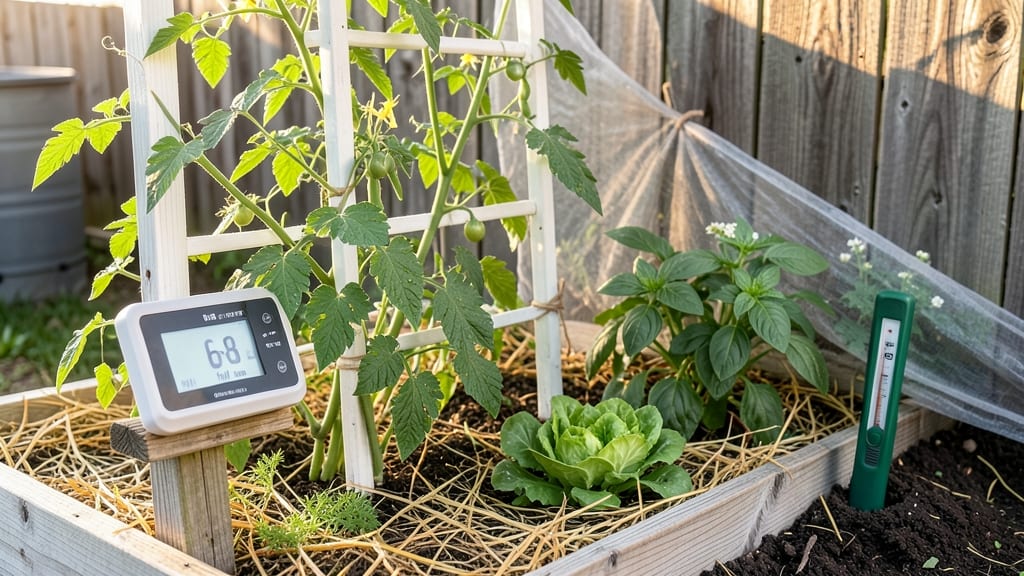
To grow a thriving vegetable garden 🥬, you’ll need 6 to 8 hours of sun daily for most crops—but not every plant demands the same amount.
Struggling to decide where to plant your tomatoes or leafy greens? Sunlight needs vary dramatically between vegetables—and getting it wrong can mean the difference between a thriving harvest and wasted effort.
Some, like peppers and cucumbers, crave full sun and wilt in shade, while others, such as lettuce and spinach, thrive with just 4 to 6 hours of morning light. Even the wrong placement can stunt growth or invite pests.
Below, I’ll break down the exact sun requirements by plant type, how to measure sunlight in your space, and 5 shade-friendly crops that still deliver big yields—so you can maximize every square foot of your garden.

Sunlight requirements for vegetable gardens: full sun vs partial shade explained
Understanding sunlight requirements for your vegetable garden is the first step toward a bountiful harvest. Most vegetables thrive with 6-8 hours of direct sunlight, but some—like leafy greens—do just fine with less.
Getting this right means placing your plants in the perfect spot, whether that's a sun-drenched raised bed or a partially shaded corner under a tree.
I’ve learned the hard way that tomatoes and peppers wilt in shade, while lettuce and spinach bolt in too much sun. The key is matching each plant’s needs to your garden’s microclimates. Let’s break it down so you can plan your layout like a pro.
Full sun (6+ hours) is non-negotiable for heavy feeders like tomatoes, cucumbers, and squash. Partial shade (3-6 hours) suits leafy greens and root vegetables in hot climates. And yes, there are even low-light champions like arugula and radishes that thrive with just 3 hours.
If you’re planting tomatoes or peppers, prioritize the sunnest spot in your yard—these plants are sun-hungry and won’t produce well with less than 6 hours of direct light.
I once planted my peppers under a partial shade cloth thinking it would help, but they ended up stunted and produced only a handful of peppers. Lesson learned!
For leafy greens like lettuce or spinach, aim for 3-6 hours of morning sun in hot climates. Too much afternoon sun can cause them to bolt (go to seed) prematurely. I’ve had great success growing these in spring and fall when temperatures are cooler.
Don’t overlook root vegetables like carrots or beets, which prefer 4-6 hours of sun. They’ll grow in partial shade, but their flavor and texture suffer without enough light. I’ve noticed my carrots stay sweeter and straighter when they get a few extra hours of sunlight.
Even shady spots can yield edibles! Radishes and arugula thrive with just
How to measure sunlight in your garden and adjust plant placement
Not all parts of your garden receive the same amount of sunlight—and that matters more than you might think. Tomatoes and peppers need 6-8 hours of direct sun daily, while lettuce and spinach thrive with just 3-4 hours.
Without measuring sunlight accurately, you risk under- or over-planting, leading to poor yields or wasted space. Let’s fix that with a simple, science-backed approach.
Start by observing your garden’s microclimates—those small areas where sunlight behaves differently. A spot near a fence or tree might get only 2 hours of sun, while the open south side could receive 10+ hours.
Use a sunlight tracker (or even a simple notebook) to record sun exposure over a week. This will reveal hidden opportunities for partial-shade lovers like Swiss chard or full-sun stars like zucchini.
⚠️ callout-warning
Many gardeners assume their vegetable garden gets full sun when it’s actually partial shade. For example, tomatoes wilt in 4 hours of sun, while carrots bolt in 8+ hours. Use a sunlight meter or mark shadows with stakes to avoid costly mistakes. Pro tip: Morning sun is gentler than afternoon heat, so adjust placement accordingly!
For precise measurements, invest in a $20 sunlight meter or DIY with a white board and a ruler. Place the board in your garden bed and mark the shadow’s edge every hour. Repeat for a week to account for seasonal changes.
For example, summer shadows shrink by 30% compared to spring, so adjust your plant spacing accordingly. This method works for raised beds, container gardens, and in-ground plots alike.
Once you’ve mapped your garden’s sunlight zones, group plants by their needs. Place sun-worshippers like peppers and cucumbers in the 6-8 hour zones, while shade-tolerant greens (e.g., kale, arugula) thrive in 3-4 hour spots.
Use reflective mulch (like white gravel) to boost light in shady areas by 10-15%. This trick works wonders for urban balconies or north-facing yards.
Don’t forget to account for seasonal shifts. A bed that gets full sun in June might receive only 4 hours in December due to the sun’s lower angle. Rotate crops accordingly—plant winter squash in summer spots and save spinach for fall.
Use seasonal shade cloth (30-50% coverage) to protect heat-sensitive plants like basil during peak summer sun. This flexibility ensures your garden stays productive year-round.
Finally, use vertical gardening to maximize space in low-light areas. Trellises for pole beans or cucumbers can lift plants into sunlight, while hanging baskets for strawberries or herbs catch dappled rays.
Even a simple wire shelf above a shady bed can add 2 extra hours of light to leafy greens. With these adjustments, you’ll turn every inch of your garden into prime real estate—no wasted sun, no struggling plants.