
Watering
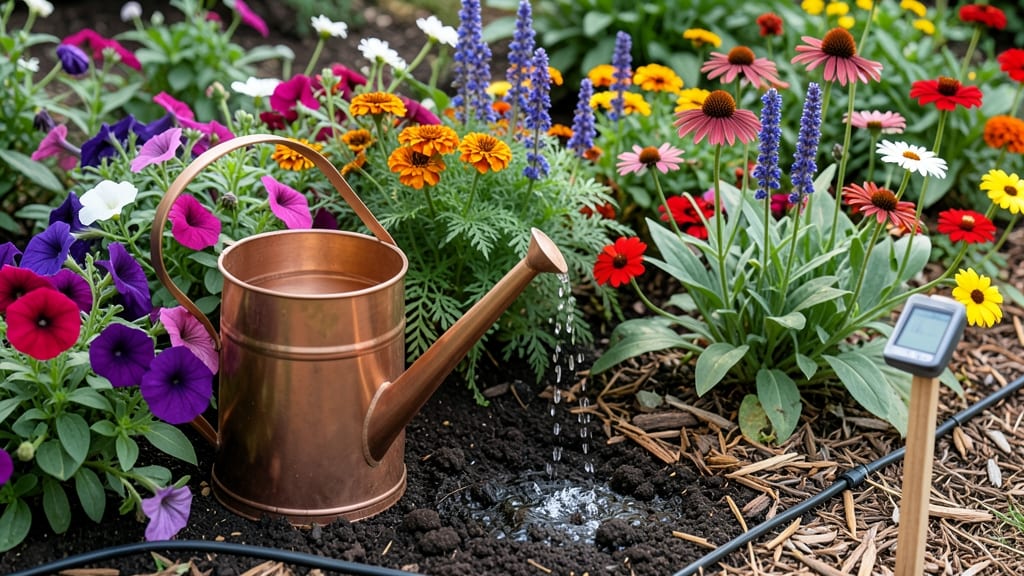
Watering your flower garden the right way keeps it thriving, but getting the frequency wrong can mean wilted blooms or wasted water.
Struggling to keep your flower garden vibrant? Overwatering or underwatering can turn your blooms into a sad, wilted mess—here’s the exact seasonal watering schedule your plants need to thrive.
In Zone 6a, where spring planting begins in April, your 🌸 flower garden needs deep watering every 3-5 days—but that changes when summer heat arrives. Annuals like marigolds demand daily checks, while perennials like lavender can wait a week.
Below, I break down the month-by-month adjustments, how to read your soil for clues, and the tools that make watering effortless—so you never guess again.
Seasonal watering schedule for flower gardens: month-by-month guide
Watering your flower garden isn’t a one-size-fits-all task—it’s a seasonal dance between root needs and weather conditions. Too much water drowns roots, while too little stunts blooms.
The key? Adjusting your watering frequency with the seasons and your local climate. Let’s break it down month by month so your flowers thrive year-round.
First, understand that spring and fall are transitional seasons where plants adjust to growth or dormancy. Summer demands the most attention, while winter often requires minimal watering. Your soil type (sandy vs. clay) and rainfall patterns also play huge roles.
For example, sandy soil drains quickly, while clay soil holds moisture longer. Always water deeply—aim for 1-1.5 inches per week—to encourage deep root growth.
Here’s your seasonal watering schedule, tailored for USDA Zone 6a (adjust for drier/humid climates). Use this as a starting point, then tweak based on your garden’s specific needs.
Let’s dive deeper into each season. In spring, your flowers are waking up from dormancy, so consistent moisture is critical. Start with every 3-4 days in dry climates, but cut back if rain is frequent.
For humid areas, wait until the top 2 inches of soil feel dry. Early spring is also the time to mulch heavily—this locks in moisture and regulates soil temperature.
When summer arrives, your watering routine becomes high-maintenance. Daily or every-other-day watering is often necessary, especially for annuals like petunias or tropical flowers. The key here is deep watering: soak the soil until water drains 6-8 inches deep.
Shallow watering encourages shallow roots, which struggle in heat. If you’re using drip irrigation or soaker hoses, set timers for early morning to reduce evaporation and fungal risks.
As fall approaches, slow down your watering. By September, most flowers are preparing for dormancy, so reduce frequency to every 5-7 days. Focus on perennials like coneflowers or black-eyed Susans, which store nutrients for next year.
Late-season watering helps roots establish before winter. Avoid watering in the evening—wet foliage can invite fungal diseases like powdery mildew.
Winter is the easiest season: water sparingly. Most flowering plants go dormant, and frozen soil blocks water absorption. Check soil moisture bi-weekly—if it’s dry 1 inch down, give a light drink. Evergreens and winter-blooming flowers (like hellbores) may need occasional water, but avoid soggy soil.
Snow acts as natural insulation, so don’t water unless you’re seeing dry patches in USDA Zone 6a.
Pro tip: Use a rain gauge or tuna can to track rainfall. Subtract that from your watering schedule—no need to overdo it if Mother Nature’s already hydrating your garden! For container gardens, water daily in summer since pots dry out faster.
And always check soil moisture before watering: stick your finger 2 inches deep—if it’s dry, it’s time.
Adjust this schedule based on your local microclimate. A south-facing bed gets more sun and dries
How often to water different flower types: drought-tolerant vs. water-loving plants
Not all flowers have the same thirst—some drought-tolerant varieties like lavender can survive on weekly watering, while tropical blooms like cannas need daily moisture in summer. Understanding these differences prevents root rot or wilting while saving water.
Below, I’ll rank the most water-hungry to least thirsty flowers and share my go-to watering tricks for each type.
For example, my annual petunias wilt by noon if I skip watering, while my succulent garden thrives on bi-weekly soaks. The key? Matching your watering schedule to the plant’s natural habitat—mediterranean plants need less, while jungle natives crave humidity.
Let’s dive into the specifics so you can water like a pro.
Start with succulents and cacti, the least thirsty flowers on the list. These desert dwellers store water in their leaves and stems, so they only need deep watering every 2-3 weeks.
I test mine by sticking my finger 2 inches deep—if it’s dry, it’s time to water. Overwatering here is the real enemy, causing mushy roots and yellowing.
Next up are perennials like lavender and Russian sage, which thrive on moderate watering—about once a week in summer and even less in cooler months.
These plants develop deep root systems once established, so they’re far more forgiving than annuals. My trick? Group them together in your garden to simplify watering routines.
On the opposite end, tropical flowers like cannas and orchids demand consistent moisture. Their broad leaves evaporate water quickly, so I water them daily in summer and ensure their pots have drainage holes.
Without this, their roots suffocate, leading to rotting stems. Mulching with orchid bark helps retain humidity around their roots.
Annuals like petunias and impatiens fall in the middle but lean toward water-loving. They need daily checks in heatwaves, especially in containers where soil dries out faster. I’ve learned to water them early in the morning to prevent fungal diseases that thrive in damp foliage.
A soaker hose is my secret weapon here—it delivers water directly to the roots without wetting the leaves.
Pro tip: Always adjust for your climate and soil type. Sandy soil drains quickly, so water more frequently, while clay holds moisture longer. And when in doubt, check the soil—if the top 1-2 inches are dry, it’s time to water.
Your flowers will thank you with vibrant blooms all season long! 🌷