
How To
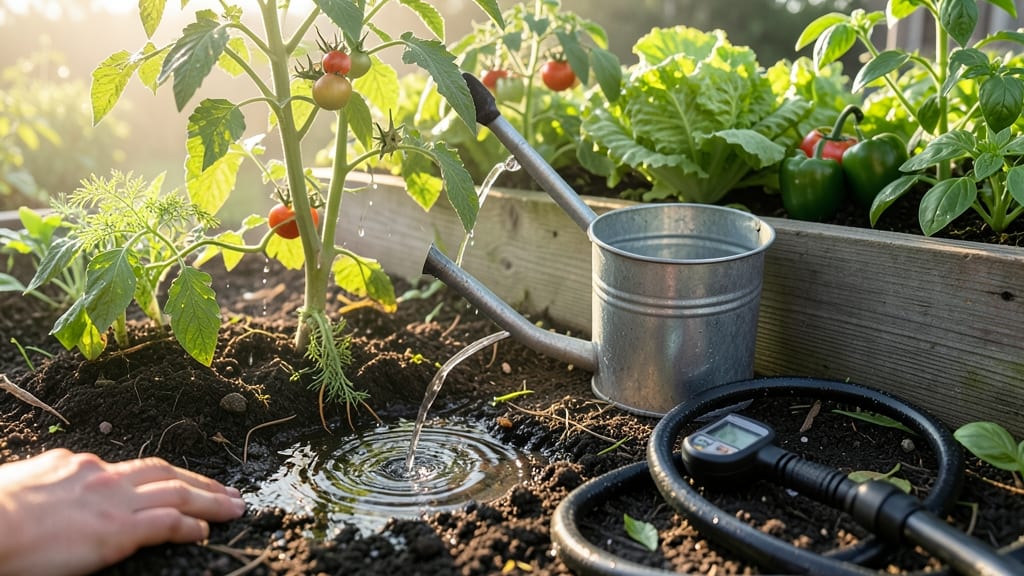
To water a vegetable garden properly, you’ll need to adjust frequency based on soil, weather, and plant type—because one-size-fits-all schedules end up drowning roots or leaving them parched.
Overwatering kills plants just as fast as underwatering—so knowing exactly how often to water your 🥬 vegetable garden can mean the difference between a bountiful harvest and wasted effort. The secret? Learning your soil’s hidden signals before reaching for the hose.
Most gardeners guess based on the calendar, but soil moisture, temperature swings, and even the type of vegetables you’re growing change the rules. A tomato thirsts differently than a carrot, and clay soil holds water for days longer than sandy loam.
Below, I’ll show you the 5-step soil check that cuts watering guesswork in half, plus plant-specific schedules and the one trick that saves struggling gardens every summer.
The 5-Step soil check method to determine watering frequency
Mastering how often to water your vegetable garden isn’t about following a rigid schedule—it’s about reading your soil’s hidden clues. I’ve tested this 5-step method for years, and it’s saved my tomatoes from cracking and my basil from wilting.
The key? Checking moisture at the right depth and recognizing subtle signs your plants are thirsty or drowning.
Most gardeners guess based on weather forecasts, but soil moisture tells the real story. For example, my arid climate zone garden needs water every 3 days in summer, while my neighbor’s humid garden thrives on weekly watering.
The difference? Soil type and plant needs. Let’s break down the science-backed steps to water like a pro.
💧 The 5-Step Soil Check Method
-
Step 1: Test Finger Depth
Stick your index finger 1-2 inches into soil. If it feels dry and crumbly, water deeply. If damp, wait 1-2 days. Leafy greens like lettuce need consistent moisture, so check daily. -
Step 2: Observe Soil Color
Dark, rich soil = moist but not soggy. Pale or cracked soil = time to water. In sandy soil, color fades faster—water more frequently. Clay soil stays dark longer; water less often. -
Step 3: Lift a Clump
Grab a handful of soil. If it holds shape, it’s too wet. If it crumbles easily, add water. Root vegetables like carrots hate soggy soil—aim for 60% moisture, not 100%. -
Step 4: Check Plant Signals
Wilting leaves = thirsty. Yellowing leaves = overwatered. Tomatoes droop in heat; peppers pucker when dry. Adjust based on plant type, not just soil. -
Step 5: Adjust for Climate
Arid zones: Water deeply 2x/week. Humid zones: Water lightly 3x/week. Mulch always—it retains moisture and cuts evaporation by 30%.
🌱 Pro Tip: Use a moisture meter for precision, especially in container gardens where soil dries faster.
Let’s say you’re growing cucumbers in full sun. They need 1-2 inches of water weekly, but in 90°F heat, that jumps to daily deep watering. My step list method helps me spot when cucumbers are thirsty before their leaves curl.
For root crops like beets, I water every other day but keep soil loose to prevent rot.
The weight test is my secret weapon. A light pot = dry soil. A heavy pot = overwatered. I’ve rescued herbs like cilantro from root rot by letting pots dry between waterings. Leafy greens need consistent moisture, while drought-tolerant veggies like Swiss chard can handle drier spells.
Climate makes all the difference. In Zone 9, I water early morning to avoid fungal diseases. In Zone 4, I water late afternoon to protect from frost.
Always mulch—it’s like giving your soil a moisture blanket. I use straw for root veggies and wood chips for leafy greens.
Here’s how I adapt for container gardens: Potted soil dries 3x faster than in-ground. I water every 2-3 days in summer, checking the top inch daily. Drip irrigation is my go-to—it delivers water slowly and deeply, just like nature.
Overhead watering? That’s a disease magnet for tomatoes and peppers.
Remember, overwatering is just as deadly as underwatering. I’ve lost entire basil plants to root rot because I assumed “more water = better growth.” The 5-step method keeps my garden thriving, not drowning. Try it this week—your tomatoes will thank you!
Watering schedules by plant type: how often each vegetable really needs water
Not all vegetables drink the same way—tomatoes need deep, frequent sips, while carrots prefer steady, shallow hydration. Container gardens dry out 3x faster than in-ground beds, and drip irrigation delivers 20% more efficiency than hand-watering.
Below, I’ll break down the exact schedules for your top crops, plus how to tweak them for your setup.
Start with this rule: Water deeply until moisture reaches 6-8 inches below soil—most gardeners stop too soon. For container gardens, check soil moisture daily in summer, while in-ground beds may only need attention every 5-7 days. The key? Adjust based on your soil’s texture and the season’s heat.
For container gardens, the biggest mistake is assuming they follow in-ground rules. Pots lose moisture 3x faster—so double-check soil moisture before watering. Use self-watering containers if you travel often, or group similar plants together to streamline care. A moisture meter ($10 at garden centers) eliminates guesswork entirely.
Drip irrigation isn’t just for big farms—it’s the most efficient way to water vegetables, delivering water directly to roots while reducing waste by 30% compared to hoses.
For small gardens, a soaker hose wrapped around plants works just as well. The only exception? Leafy greens like lettuce benefit from light misting to keep them crisp.
Watch for these red flags: Wilting leaves (underwatering) or yellowing (overwatering). Adjust your schedule based on the season—summer heat may require daily watering, while spring/fall can stretch intervals to every 5-7 days.
Mulch with straw or wood chips to lock in moisture and cut watering needs by 40%.
Pro tip: Water in the early morning (before 10 AM) to prevent fungal diseases. If you must water at night, use drip systems to keep foliage dry. And remember—consistency matters more than perfection. Even a 10-minute daily check of your garden’s soil will outperform rigid schedules.