
Watering
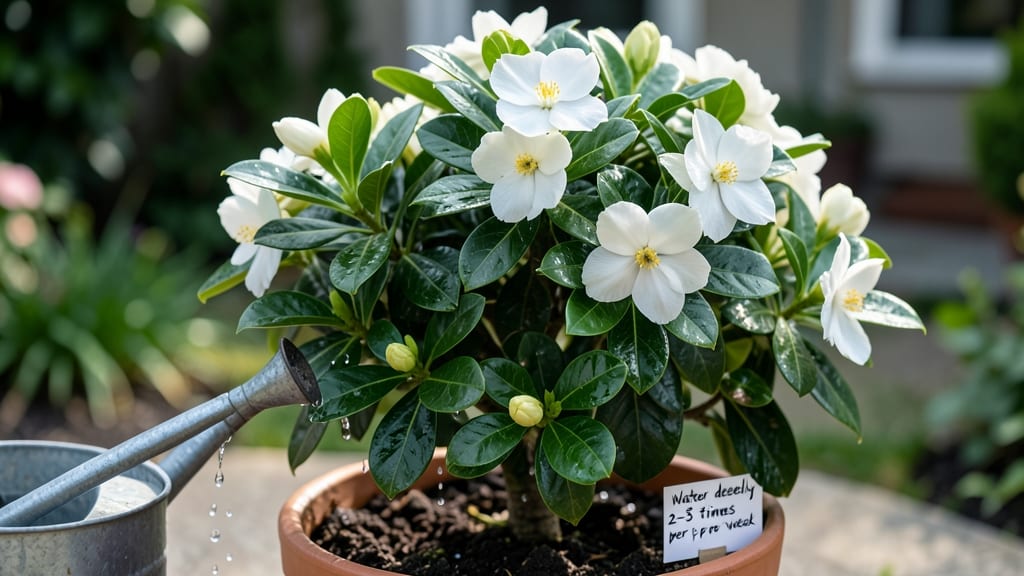
Watering a gardenia plant correctly is the key to those fragrant blooms 🌸 — and getting it wrong can mean yellow leaves or no flowers at all.
Struggling to keep your gardenia plant blooming? The secret isn’t just love—it’s precision watering. Master these moisture techniques to transform your plant from wilting to vibrant in weeks.
Gardenia plants crave consistent moisture but hate soggy roots — a tricky balance that changes with the seasons. Too much water, and you’ll drown the roots; too little, and the leaves will curl up like they’re begging for help.
In this guide, I’ll walk you through the exact watering schedule by season, how to check soil moisture like a pro, and the 5 pro tips that’ll have your gardenia flowering like crazy.
The perfect watering schedule for gardenia plants by season
Gardenia plants are finicky about water—too much and they rot, too little and they wilt. The key is finding that sweet spot of moisture that keeps their roots happy without drowning them. I’ve learned through trial and error that seasonal adjustments are everything.
In spring, your gardenia wakes up thirsty, while summer demands daily hydration, and winter slows everything down. Let’s break it down so you can keep your gardenia blooming like a pro.
First, always water your gardenia in the morning hours (before 10 AM). This timing prevents fungal diseases by letting foliage dry out during the day. Use room-temperature water—cold water shocks the roots—and aim for a deep soak that reaches 6 inches down.
The top inch of soil should dry out between waterings, but never let it become bone-dry. Stick your finger in the soil: if it feels damp up to your first knuckle, wait a day or two.
🌸 Seasonal Watering Guide for Gardenias
| Season | Frequency | Soil Check | Water Amount | Key Tips |
|---|---|---|---|---|
| Spring | Every 3-4 days | Top 1" dry | 1 gallon per plant | Increase frequency as temps rise above 70°F |
| Summer | Daily or every 2 days | Top 1" dry | 1.5-2 gallons per plant | Mulch to retain moisture; avoid wetting leaves |
| Fall | Every 5-7 days | Top 2" dry | 1 gallon per plant | Reduce watering as temps drop below 60°F |
| Winter | Every 7-10 days | Top 2-3" dry | 0.5-1 gallon per plant | Water only when soil is completely dry |
Spring is when your gardenia really wakes up after winter dormancy. Start with watering every 3-4 days and adjust based on rainfall. If you notice new growth but the soil stays damp for more than 2 days, cut back to every 5 days.
This is also the time to test your soil drainage: after watering, if puddles linger for hours, amend your soil with perlite or sand to improve airflow.
Summer is the most critical season for gardenias. With temperatures soaring, you’ll need to water daily or every other day, depending on your climate. A good rule of thumb is to check the soil every morning—if the top inch feels dry, it’s time to water.
Use a drip irrigation system or soaker hose to deliver water directly to the roots, reducing evaporation. Avoid overhead sprinklers, which can promote fungal diseases like powdery mildew.
As summer fades into fall, your gardenia’s water needs dramatically decrease. By September, you can stretch watering to every 5-7 days. The goal is to keep the soil consistently moist but not soggy.
If your gardenia is in a pot, it will dry out faster than in-ground plants, so monitor potted gardenias more closely. This is also the time to reduce fertilizer—too much can encourage tender new growth that’s susceptible to cold damage.
Winter care is all about minimal intervention. Gardenias in USDA Zone 6 or colder may go dormant, so only water when the top 2-3 inches of soil are completely dry. This could mean watering just once every 10 days or even less during freezing spells.
If your gardenia is in a pot, move it to a protected location like a garage or under an eave to shield it from wind and frost.
Potted gardenias need special attention because their roots are confined. Unlike in-ground plants, they dry out much faster due to limited soil volume. In summer, I water my potted gardenias every 2-3 days, sometimes daily in extreme heat.
Always use a pot with drainage holes and a cache pot underneath to catch excess water. In winter, reduce watering to every 7-10 days, but never let the soil dry out completely—this can shock the roots.
One of my biggest mistakes was ignoring the humidity needs of gardenias. These tropical plants thrive in 60-70% humidity, but indoor air—especially in winter—can drop to 20-30%**.
To help, I place my potted gardenias on a tray of pebbles and water, ensuring the pot doesn’t sit directly in water. For in-ground plants, a 2-3 inch layer of mulch around the base helps retain moisture and mimics their natural environment.
Always remember: consistency is key. Gardenias hate moisture fluctuations, so stick to your watering schedule even if it rains. Use a moisture meter for accuracy, especially in containers.
With the right seasonal adjustments, your gardenia will reward you with fragrant blooms all season long—and maybe even a few extra surprises! 🌸
How to tell if your gardenia is overwatered or underwatered (symptoms & fixes)
Gardenia plants are sensitive souls when it comes to water — too much and their roots suffocate, too little and they beg for a drink with wilted leaves. The key is learning their silent language of stress signals before it’s too late.
Start by checking the soil moisture with your finger: stick it 1-2 inches deep. If it feels damp, hold off on watering. If it’s bone-dry, your gardenia’s thirsty. But don’t rely solely on this — visual cues are your best early warning system.
⚠️ WARNING: Common Watering Mistakes That Kill Gardenias
Overwatering vs. Underwatering
When your gardenia’s leaves turn yellow but stay attached, that’s a classic overwatering red flag. The plant can’t process nutrients properly when its roots are waterlogged. Act fast by letting the top 2-3 inches of soil dry out completely before watering again.
For underwatered gardenias, the leaves often curl downward like sad little umbrellas. The plant is essentially wilting from thirst. Give it a thorough drink until water runs out the drainage holes, then let it recover in bright, indirect light.
Here’s my 3-step recovery protocol for both issues: First, adjust your watering schedule based on the season. Second, improve drainage by adding perlite or sand to heavy soils. Third, monitor the plant’s response daily — healthy gardenias should bounce back within 7-10 days.
Remember, gardenias love consistency more than anything. Once you’ve corrected the watering issue, stick to a regular schedule and your plant will reward you with glossy leaves and fragrant blooms all season long. 🌸